

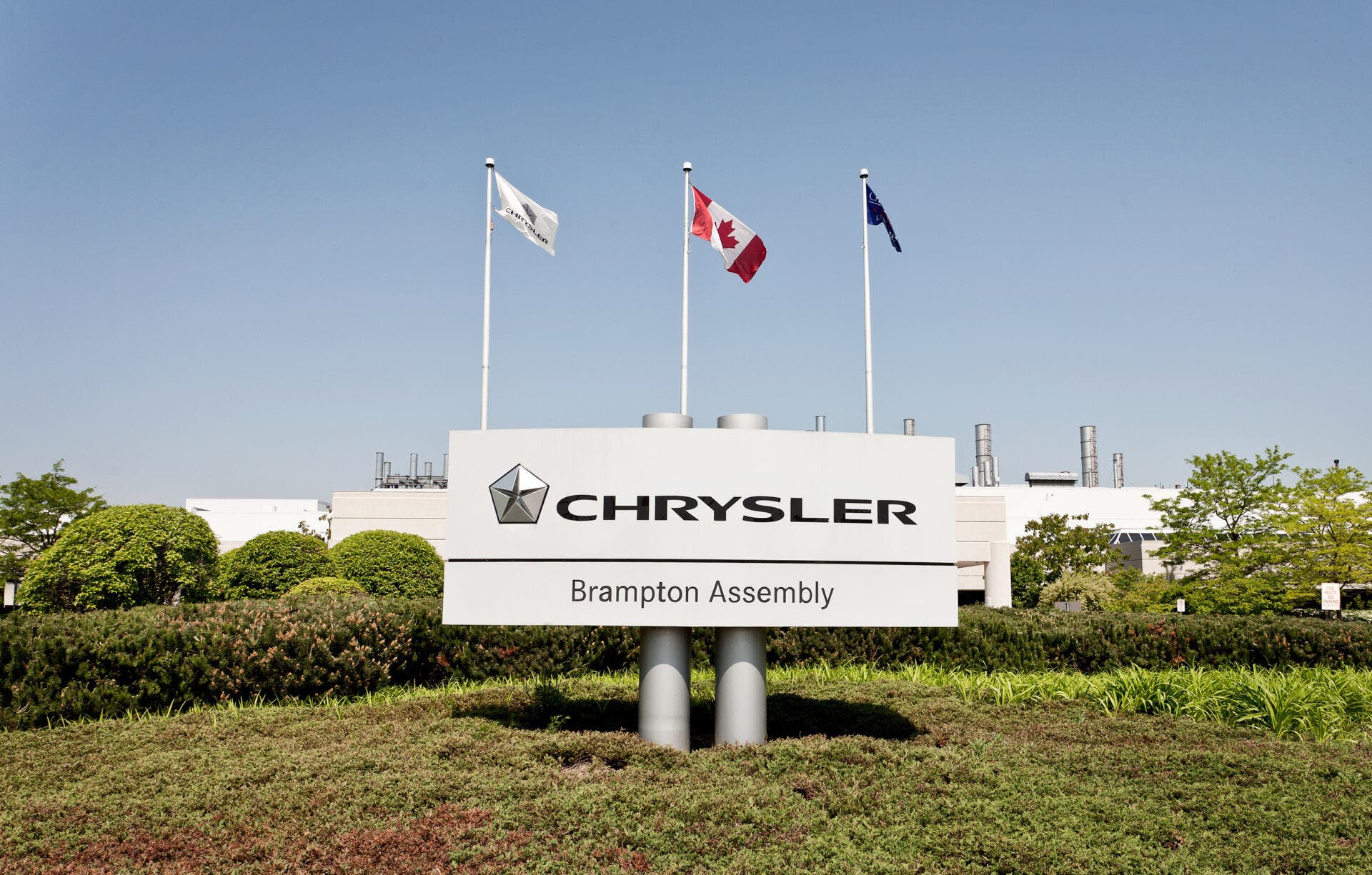
In a parallel universe, the Canadian government would be popping champagne over news that Stellantis plans to sell its idle Brampton, Ontario assembly plant to defense contractor Roshel. Politicians would praise private-sector agility, celebrate domestic military vehicle production, and cheer the creation of jobs for workers laid off nearly three years ago.
Unfortunately, we live in the universe where economic logic loses to political survival, and Ottawa is working overtime to derail a deal that makes complete business sense.
Three years ago next month, Stellantis laid off 3,000 employees to retool the Brampton facility for electric vehicle manufacturing. Under a broader strategy championed by the Trudeau, and later Carney, administrations to pour tens of billions of taxpayer dollars into a domestic EV sector, Ottawa pledged up to $529 million to convert the Brampton and Windsor plants.
Now, Industry Minister Mélanie Joly is waving that contract like a legal club, threatening lawsuits to claw back “hundreds of millions” if Stellantis proceeds with the Roshel sale. Stellantis, for its part, offered to return the $24 million it says it has actually received for Brampton so far.
Joly isn’t just swinging a stick ahead of her Friday meeting in Toronto with Stellantis CEO Antonio Filosa. She is also dangling a taxpayer-funded carrot, promising fresh subsidies if the automaker keeps the plant open and rehires the remaining 2,200 laid-off workers. Yet both tactics have glaring flaws.
Legally, the contract includes standard force majeure protections alongside clauses addressing how “trade taxes” could disrupt the EV transition, requiring both sides to negotiate modifications reasonably. A public court battle might awkwardly expose whether Ottawa held up its end of that obligation.
Politically, the favoritism is even harder to ignore. While losing a job is undeniably tough for those 2,200 autoworkers, Statistics Canada reported that 932,400 Canadians were permanently laid off over the 12 months leading up to October and remained unemployed. Where are the urgent press conferences and corporate arm-twisting sessions for them?
The answer could be simple: Ottawa might protect Liberal political optics. Funneling hundreds of millions into a foreign-owned automaker only to watch mass layoffs unfold looks disastrous at the ballot box.