

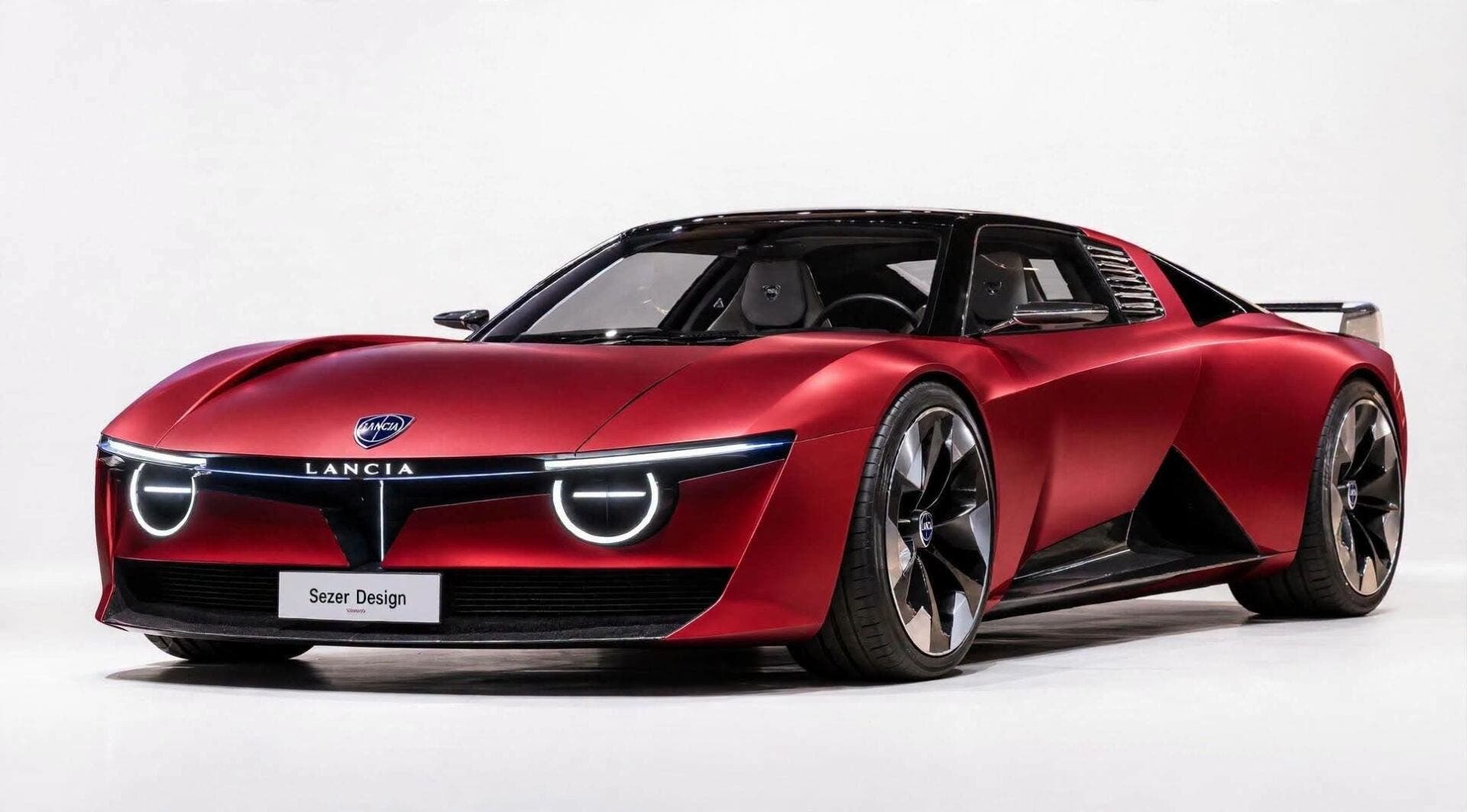
The Lancia Stratos becomes a contemporary sports car in a digital project that preserves the historic model’s wedge-shaped proportions while introducing a more elaborate interior. Sezer Design created the images with artificial intelligence as an independent exercise, with no connection to Lancia and no indication of possible production.
Lancia Stratos gets a modern makeover as Belloni considers future limited-run sports cars
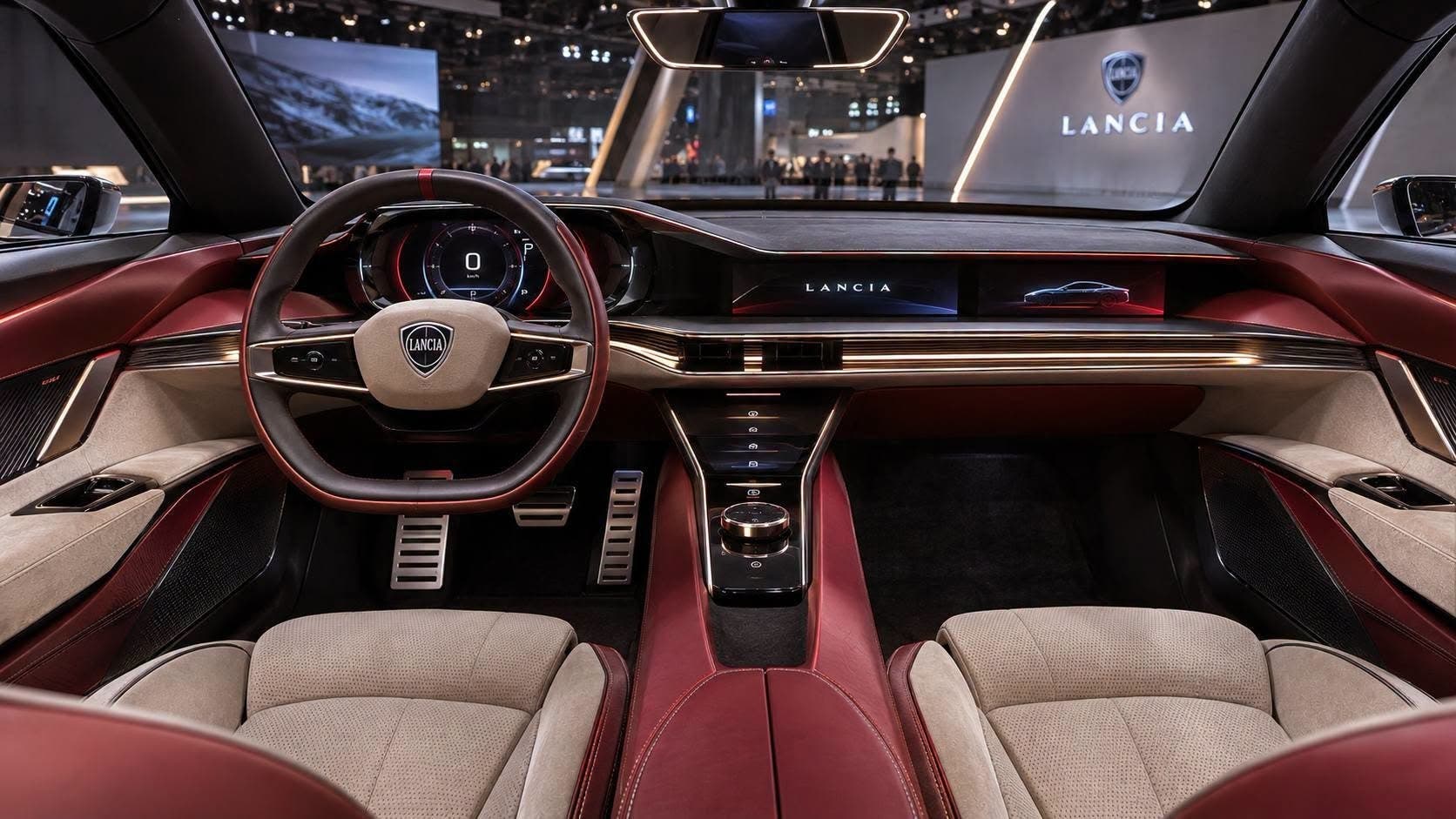
The contrast between the burgundy dashboard and light-colored seats gives the cabin a more sophisticated character than the stripped-back rally car. A digital instrument cluster joins additional screens integrated into the dashboard, while a rotary selector sits on the center console.
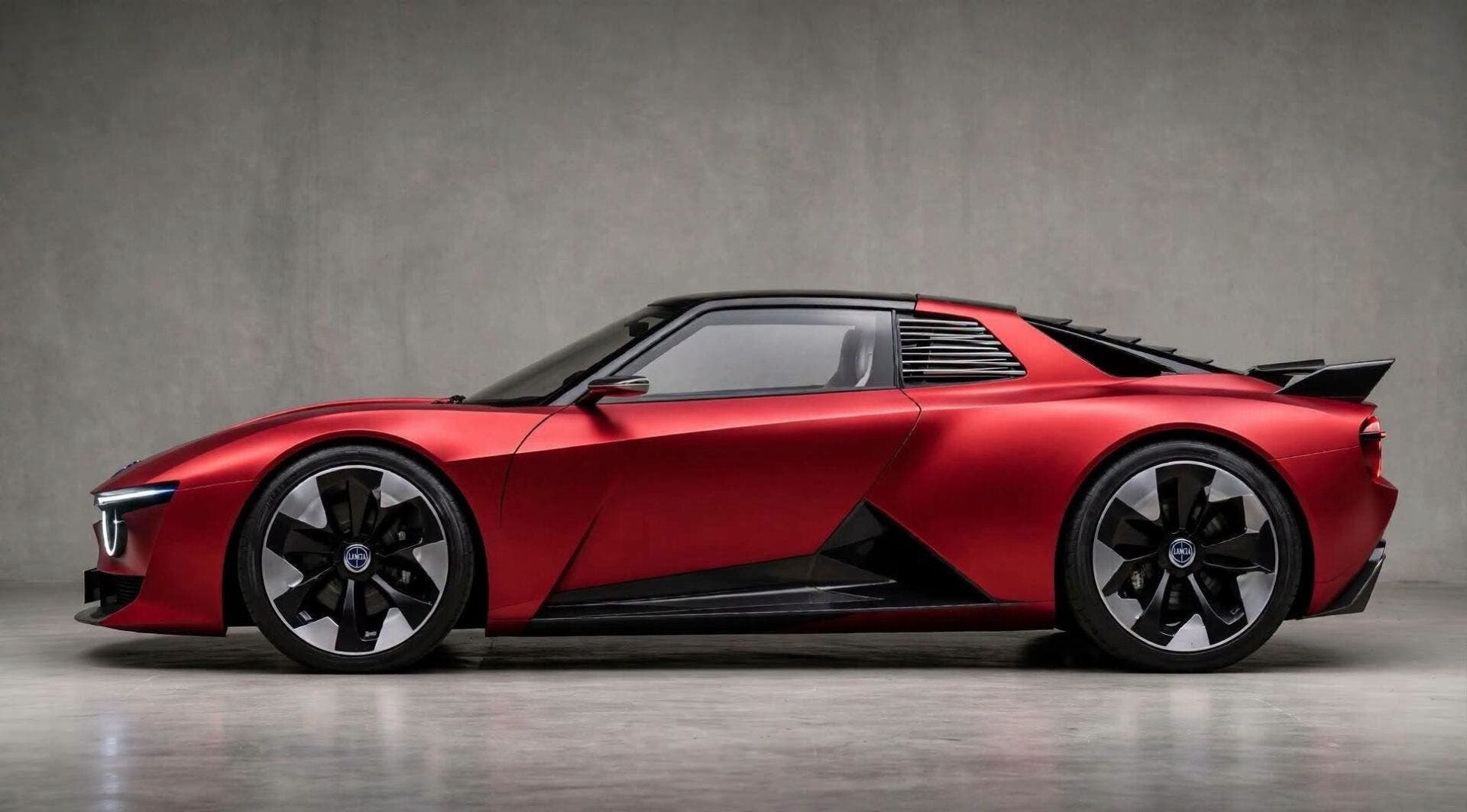
Matte cherry-red paint highlights the deeply sculpted sides and broad rear section, while the black roof emphasizes the compact cabin. Openings behind the side windows retain a visual reference to the 1970s Stratos, which also remains recognizable through its compact proportions and low nose.
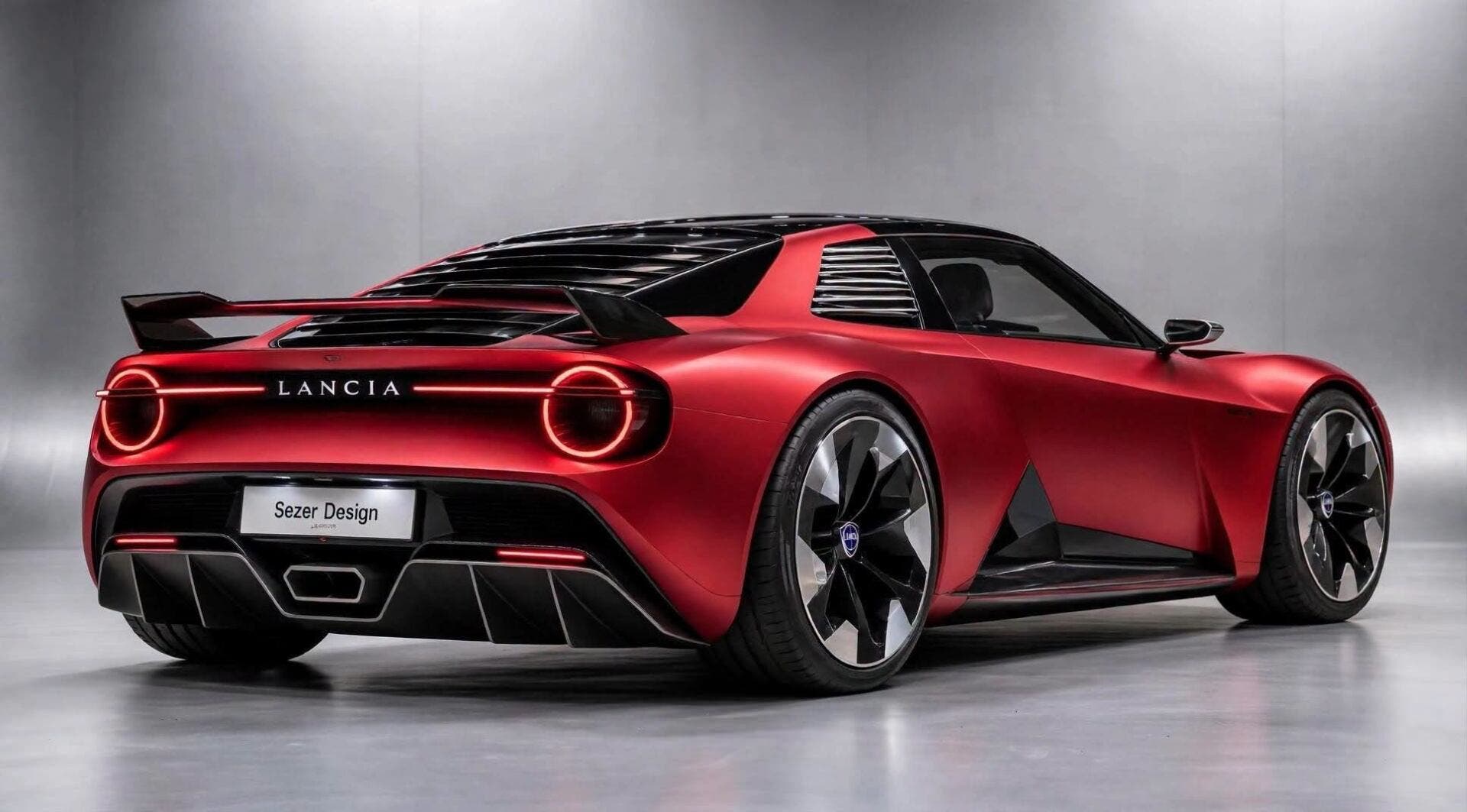
A slim light bar crosses the front and introduces a detail inspired by recent Lancia models without abandoning the proportions of the historic sports car. At the rear, horizontal elements cut through the circular taillights, while a spoiler sits above a tail dominated by the large diffuser.
Marcello Gandini created the original Stratos HF for Bertone, and Lancia unveiled it in Turin in 1971 after the Strato’s Zero concept of 1970. Its mid-mounted 2.4-liter Ferrari Dino V6 and rear-wheel-drive layout helped form the basis of a competition career that brought Lancia three consecutive World Rally Championship manufacturers’ titles from 1974 to 1976.
Arnaud Belloni recently referred to this heritage while discussing the possibility of low-volume sports cars inspired by models such as the Stratos, 037 and Delta Integrale. His comments remain preliminary, however, with no approved projects or confirmed timelines.
Belloni first wants Lancia to consolidate the commercial performance of the Ypsilon and Gamma, as those results could help support investment in additional projects. One idea under discussion involves launching special models every two years, although such a program would still require company approval and sufficient financial resources.