

Stellantis has officially declared that its current presence in India is merely a prolonged warmup act. Under the ambitious FaSTLAne 2030 roadmap, the global automotive titan is throwing down a fresh 4,000 crore rupees ($480 million) over the next three years, pushing its total cumulative investment in the country toward 15,000 crore rupees, to unleash 12 new vehicles by 2030.
Starting in the second quarter of 2027, the rollout promises seven brand-new models alongside five major vehicle overhauls, split unevenly between a hard-working Citroën and an aspiring Jeep.
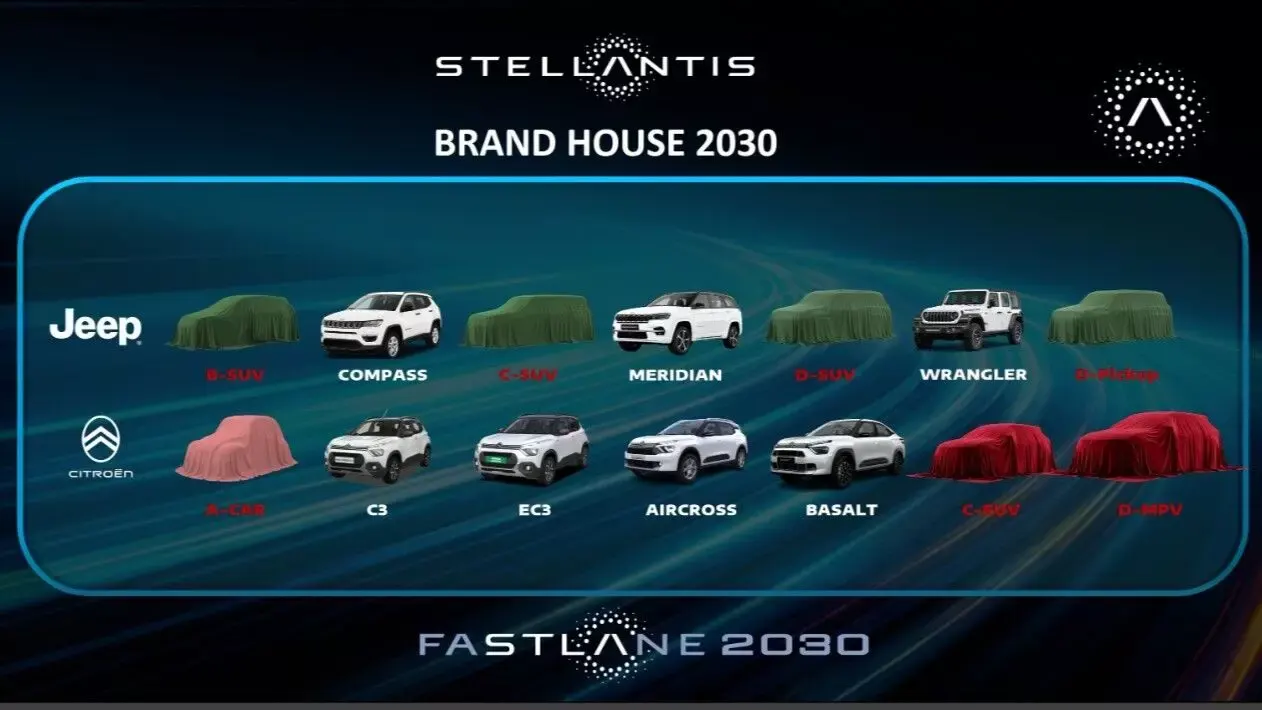
Citroën is taking on the heavy lifting with seven product launches, attempting to rescue current offerings like the C3, Aircross, Basalt, and eC3 from being swallowed whole by Suzuki and Hyundai. Meanwhile, Jeep is getting five updates and new entries to ensure its premium SUVs don’t just sit in showrooms looking handsome and overpriced.
The entire offensive spans everything from entry-level hatchbacks and MPVs to compact SUVs and premium pickups, backed by a multi-powertrain menu of gas, hybrid, plug-in hybrid, and battery-electric options.
Stellantis is leaning hard into local teamwork. Following an expanded partnership announced with Tata Motors on October 12, 2026, rumors are swirling that a new, affordable Jeep midsize SUV landing around early 2028 might actually sit on Tata’s ARGOS platform. Sharing engineering and targeting an aggressive 90% localization rate isn’t just a cost-cutting trick. It is an absolute necessity if Citroën and Jeep want to expand beyond Tier 1 capitals into Tier 2, 3, and 4 towns where Maruti Suzuki reigns supreme.
With export ambitions turned up to high, India seems set to become a primary production hub for overseas markets, spreading out developmental costs while Leapmotor’s potential local arrival remains parked on the sidelines.
These 12 new names, fancy hybrid setups, and shared Tata underpinnings could finally convince value-obsessed Indian buyers to step away from their favorite local staples. At 4,000 crore rupees, nobody can accuse Stellantis’ empire of not trying to buy its way to the top.