

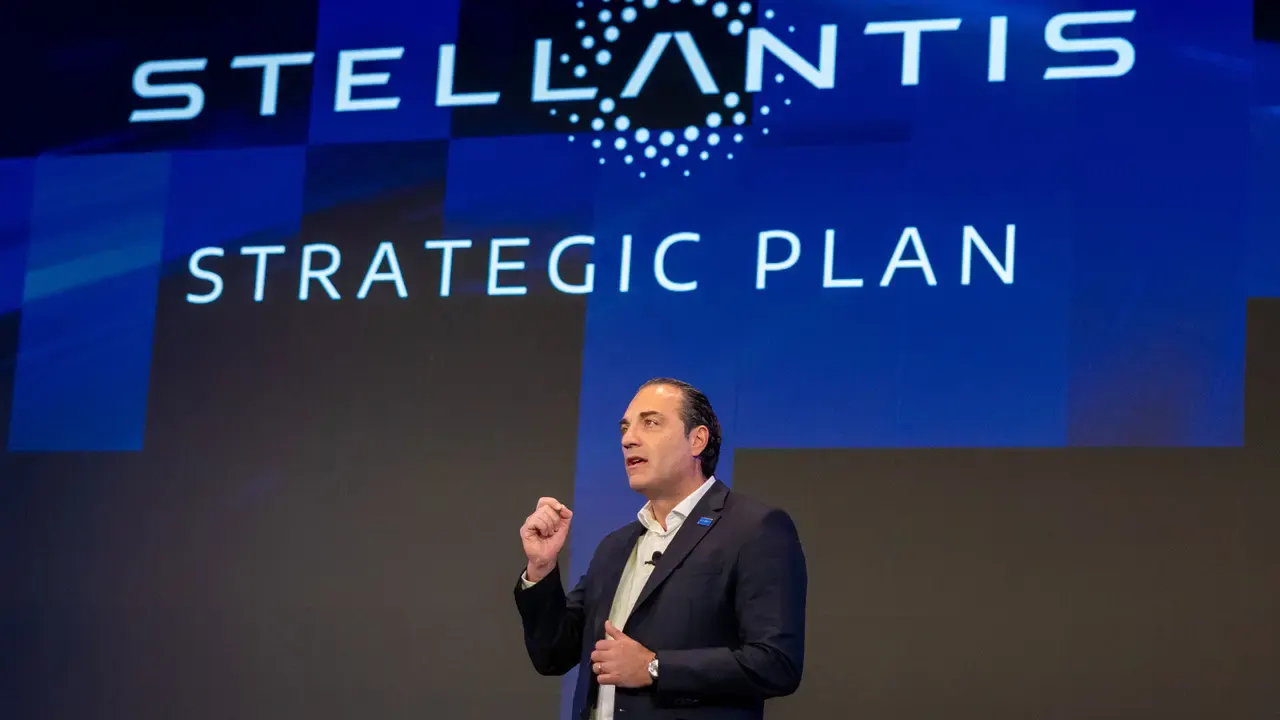
Stellantis needs to win back both car buyers and investors. Antonio Filosa acknowledged that challenge at the Paris Motor Show, explaining that results, rather than the presentation of a plan alone, will rebuild confidence. His priorities include offering vehicles that better match customer demand, making prices more competitive and improving perceived quality.
Stellantis focuses on sales, margins and factories as Filosa pushes turnaround

The Citroën 2CV Concept shows how affordable cars could fit into that strategy. The prototype previews an electric model that Citroën plans to launch by 2028, manufacture in Europe and price from around €15,000, or roughly $16,800. The production car still needs to meet those targets, but they show the part of the market where Stellantis wants to regain customers. Alfa Romeo’s upcoming SUV from Melfi will also support the commercial recovery, although it will target a different type of buyer.
Investors will focus mainly on how those new products affect the company’s financial performance. Filosa lists three priorities: meeting the 2026 financial guidance, returning to positive industrial free cash flow in 2027 and generating €3 billion, or about $3.36 billion, in cash in 2028. Stellantis therefore needs to increase sales without sacrificing progress on margins, an equation it also hopes to improve through lower costs.
Factory competitiveness forms another part of that effort. Filosa says Stellantis increased Italian production by just under 30% during the first nine months of 2026, while Mirafiori doubled its output compared with last year. The company is considering additional activities for the Turin plant, although the CEO also highlighted energy costs, which he says run at roughly twice the level Stellantis pays in Spain. The Maserati plan coming in December will also provide more information about the future of Cassino.
Filosa continues to call for greater flexibility in European Union emissions rules and measures that support local manufacturing. At the same time, Stellantis wants to extract more value from its industrial partnerships. Leapmotor has started B10 production in Zaragoza, while the expanded partnership with Tata includes development of a new Jeep in India.
None of these measures alone will restore the confidence Stellantis has lost. Customer response to the upcoming models and the company’s ability to turn higher sales into stronger profitability will ultimately show whether the FaSTLAne 2030 strategy is delivering the intended turnaround.