

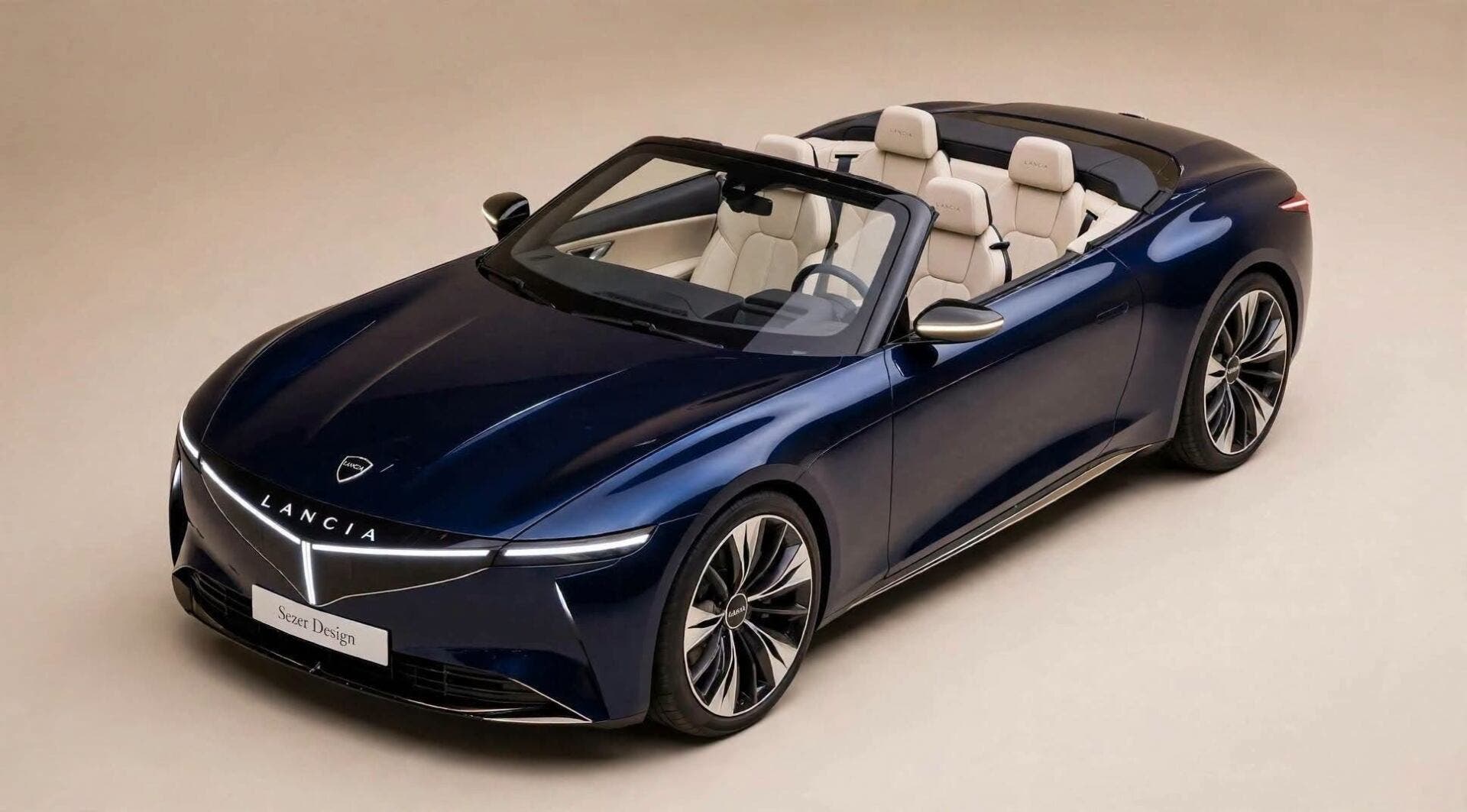
The Lancia Flavia returns in a digital project that revives the idea of a grand touring convertible. Created by Sezer Design, the render imagines an upscale model while remaining separate from Lancia’s official plans, which currently focus on strengthening the brand’s existing commercial lineup.
New Lancia Flavia render imagines the return of an Italian luxury convertible
Arnaud Belloni has identified the growth of Ypsilon and Gamma as Lancia’s main priority, while also opening the door to small elegant cars and special models inspired by the brand’s history. In the first months of 2027, a Lancia Day event will provide more details about the company’s product strategy and brand identity.
The Flavia imagined by the designer instead revisits a type of car already associated with the name in 2012, when Lancia sold a convertible derived from the Chrysler 200 Convertible. It offered four seats, a 2.4-liter gasoline engine producing 168 hp and a six-speed automatic transmission. Before that came the Vignale, based on the Flavia family launched in 1960 with Antonio Fessia’s sedan, which used a boxer engine and front-wheel drive.
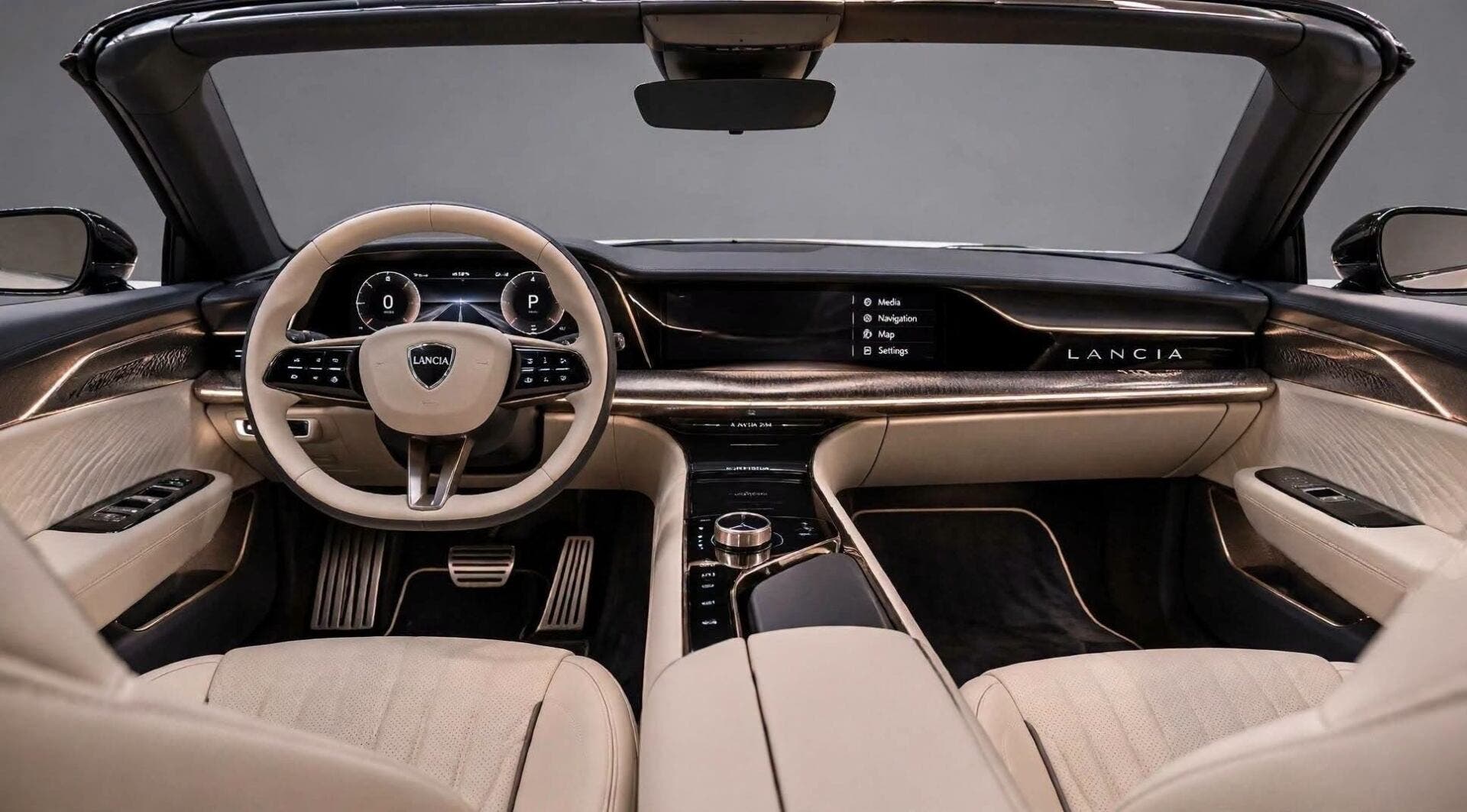
In the new project, dark blue bodywork surrounds a beige cabin that remains fully visible with the roof down. Light-colored upholstery covers the seats, doors and part of the dashboard, contrasting with black surfaces across the upper section. A digital instrument cluster and infotainment screen occupy the area in front of the driver and passenger, above a center console with a rotary controller.
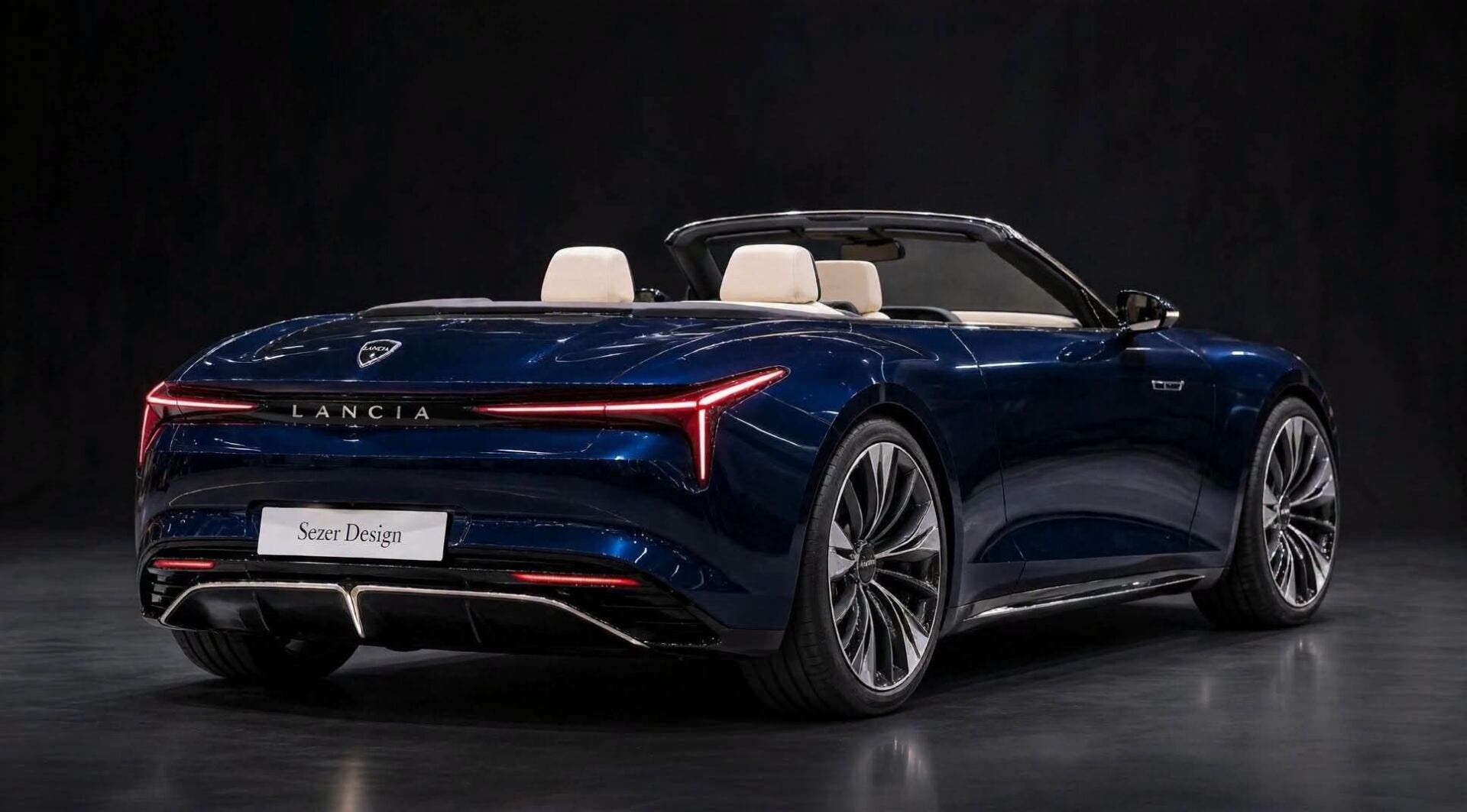
At the rear, the taillights define the shape of the body by framing the section that carries the Lancia lettering and extending downward along the outer edges. Closer to the ground, a dark lower section incorporates metallic trim, which also continues along the lower sides of the car.
Flush door handles keep the side surfaces clean between the long hood and pronounced rear fenders. A steeply raked windshield and large two-tone wheels complete the convertible’s proportions, while Sezer gives the rear a long, stretched profile.
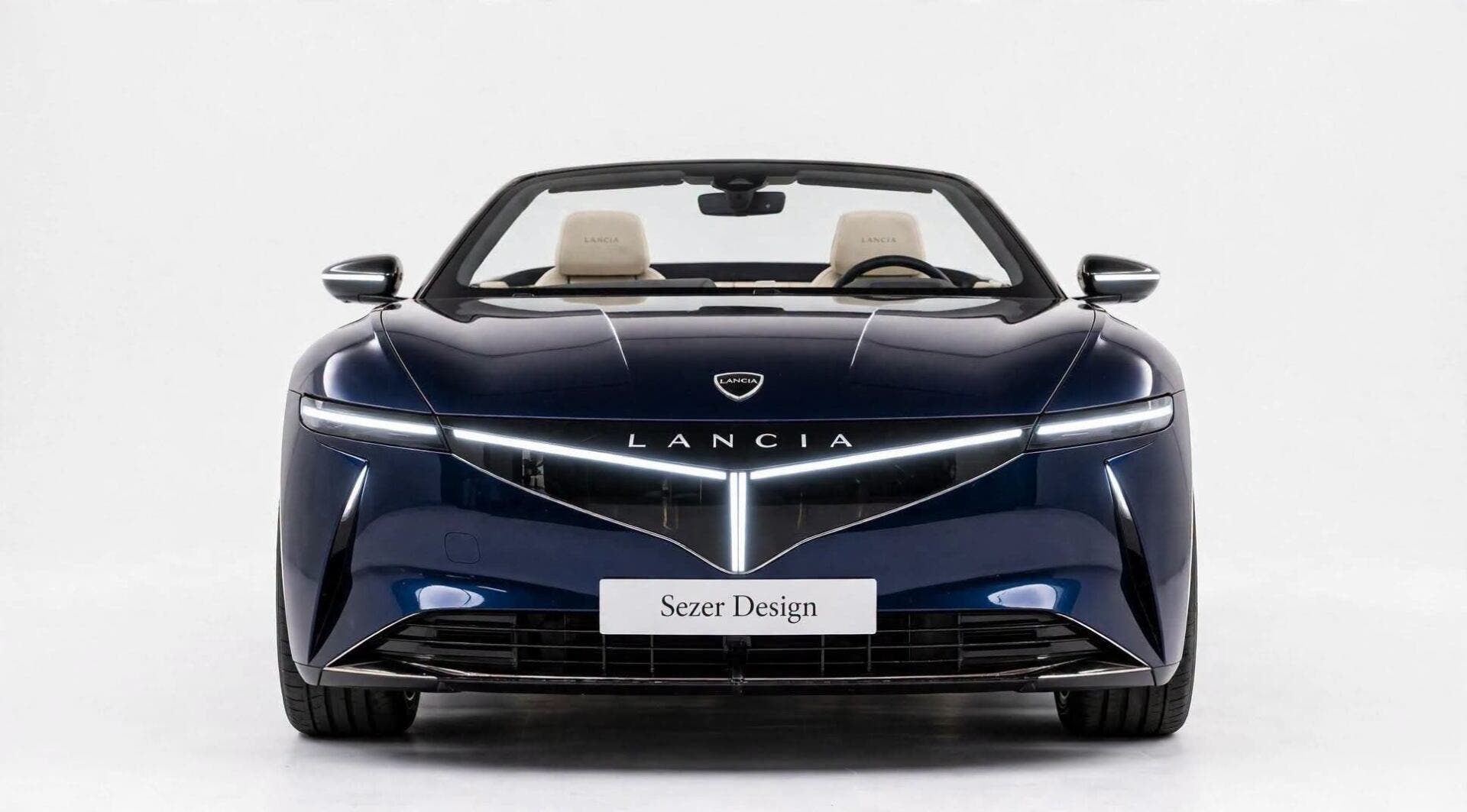
At the front, the designer recreates Lancia’s goblet-shaped signature with a light bar that crosses the grille and extends downward through the center. Slim headlights sit high on the nose, separate from vertical lighting elements positioned at the sides of the bumper. Ambient lighting inside the cabin continues across the dashboard and door panels.