

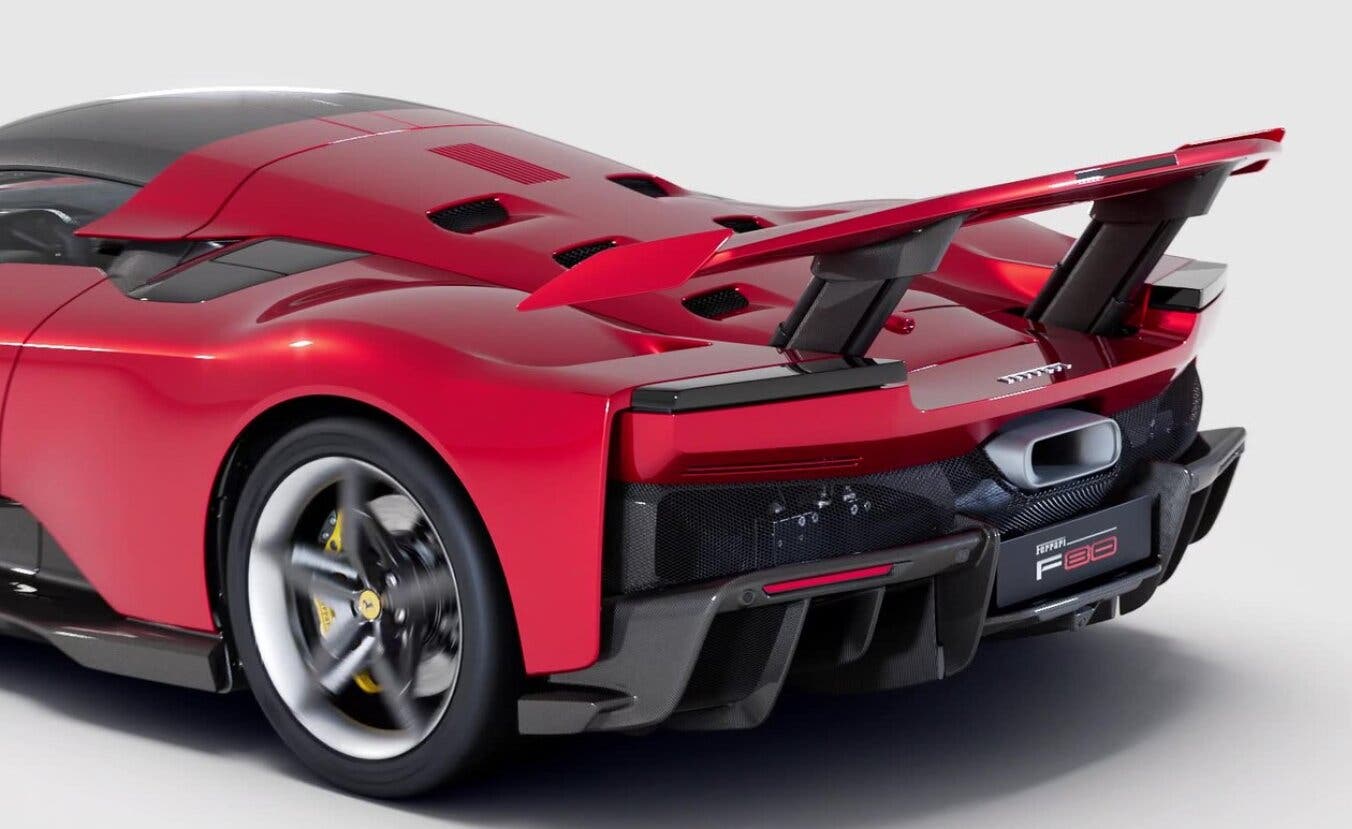
For decades, aerodynamicists have fought a quiet, losing war against safety regulators over where to put a supercar’s rear wing. To extract maximum downforce, a rear spoiler needs to work in tight harmony with the underbody diffuser, ideally hanging well past the car’s tail in clean, unobstructed air.
Global crash regulations spoil the party: during mandatory rear-impact pendulum tests, if the wing takes the hit before the bumper, it must act as a deformable crumple structure. As a result, modern wings sit several inches further forward than engineers actually want.
According to a recently uncovered patent spotted by CarBuzz, Ferrari has cooked up a delightfully sneaky workaround in Maranello. Rather than bolting the wing rigidly in place, Ferrari mounts it loosely inside dedicated slots.
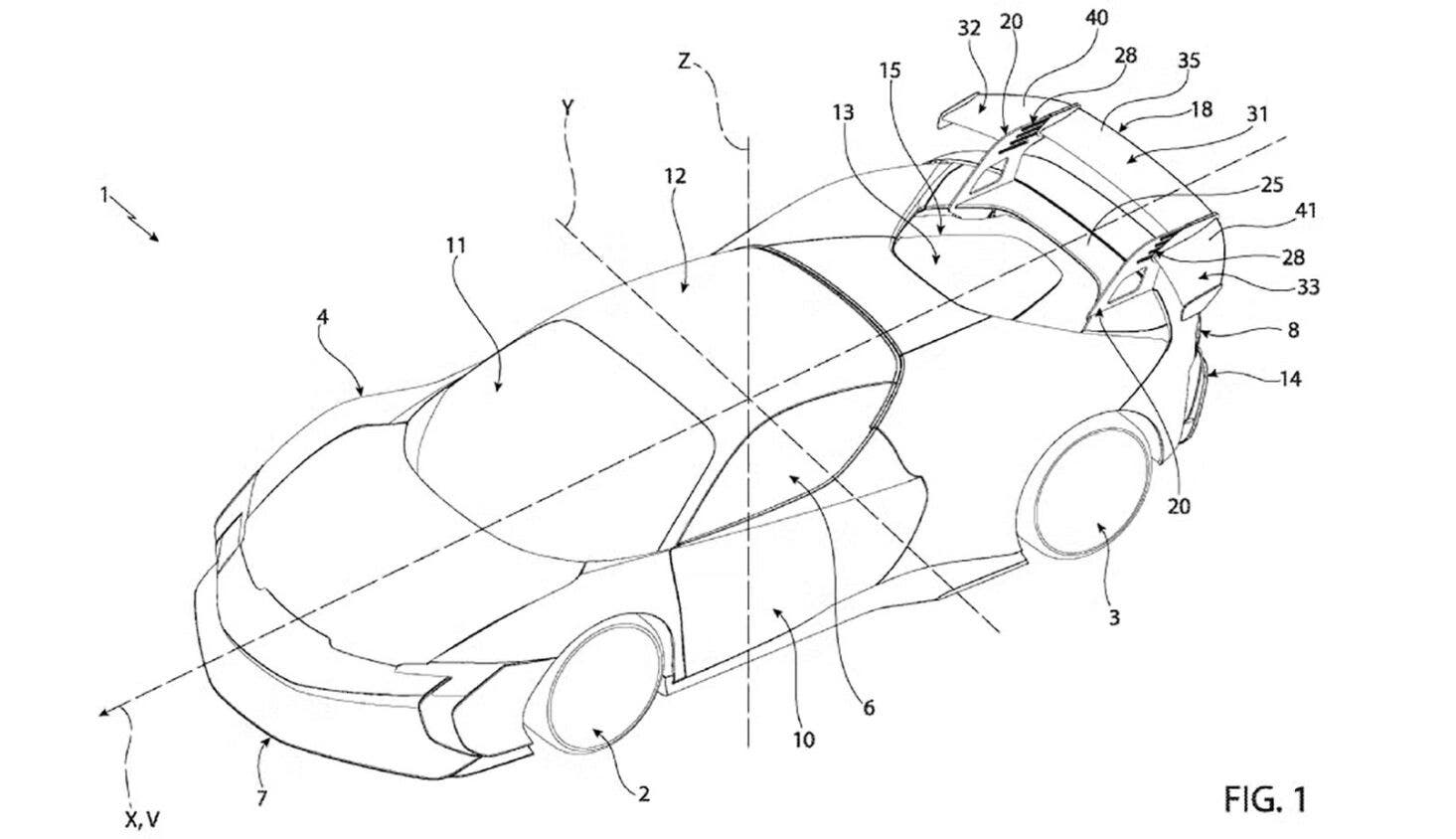
When the car is parked or creeping through traffic, the spoiler stays fully retracted inside the legal perimeter that keeps bureaucrats happy. Once speed builds, raw aerodynamic drag pushes the wing backward into its fully extended, maximum-downforce sweet spot, without needing a single heavy electric motor or hydraulic actuator.
The real party trick happens if someone rear-ends you. Even a minor impact causes the wing to snap forward into its legally compliant stowed position, pulled back by an internal cord-and-spring mechanism. Essentially, Ferrari borrowed the operating principle of a retractable household window screen, a solution so hilariously low-tech it borders on genius.
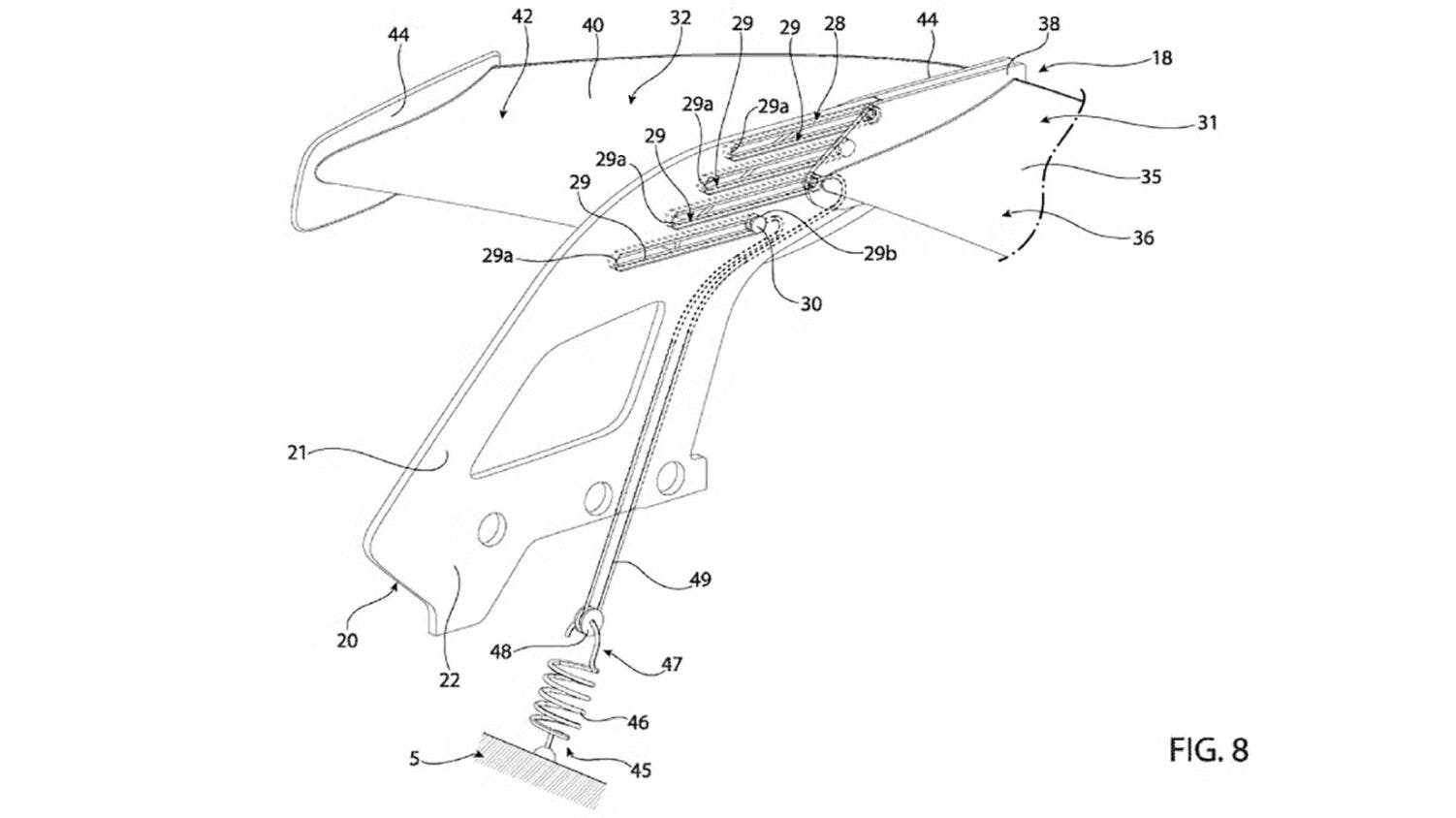
Better yet, the wing looks split into three independent sections, one center piece and two outer segments, each riding on its own rails, meaning a fender bender on the left corner only retracts that specific side.
Of course, applying Maranello engineering to window-screen hardware invites a few inevitable side effects. First, one can only imagine the eye-watering dealer invoice when a routine service calls for replacing that “bespoke Italian tension cord” or lubricating the sliding rails at Ferrari labor rates. Second, roughly five minutes after delivery, enterprising owners will undoubtedly jam the spring to lock the wing permanently in track mode, leaving homologation rules in the rearview mirror. Finally, owners will have to fend off curious pedestrians pulling on the spoiler at Cars and Coffee just to watch it boing back into place.
As usual, a patent filing doesn’t guarantee production, automakers often file paperwork purely to lock down intellectual property, so there is no confirmation this clever aero loophole will ever grace a street-legal Ferrari.