


Anyone who has ever suffered a tire blowout on the highway knows the exact sequence of events: first comes a loud, unsettling bang, followed roughly a millisecond later by the car aggressively trying to introduce you to the nearest guardrail. Human reflexes are rarely heroic in that tiny window of panic, which is precisely why Chinese automaker Leapmotor has taught its vehicles to intervene on your behalf in just half a second.
By constantly monitoring tire pressure alongside individual wheel rotation speeds, Leapmotor’s onboard electronics can spot the exact moment a tire suffers a catastrophic failure.
The instant a sudden pressure drop or abnormal wheel spin occurs, the car’s brain goes into detective mode, reading steering wheel angle, vehicle speed, lateral movement, and how quickly the nose is swinging off course. If your hands are holding the wheel straight while the car suddenly decides to veer sideways, the system immediately recognizes the unwanted yaw.
Once a blowout is confirmed, the electronic control unit applies selective braking to individual wheels, slowing one side more than the other to counteract the vehicle’s spin, while simultaneously adjusting steering torque. Working together, these two interventions keep lateral drift in check before things get ugly.
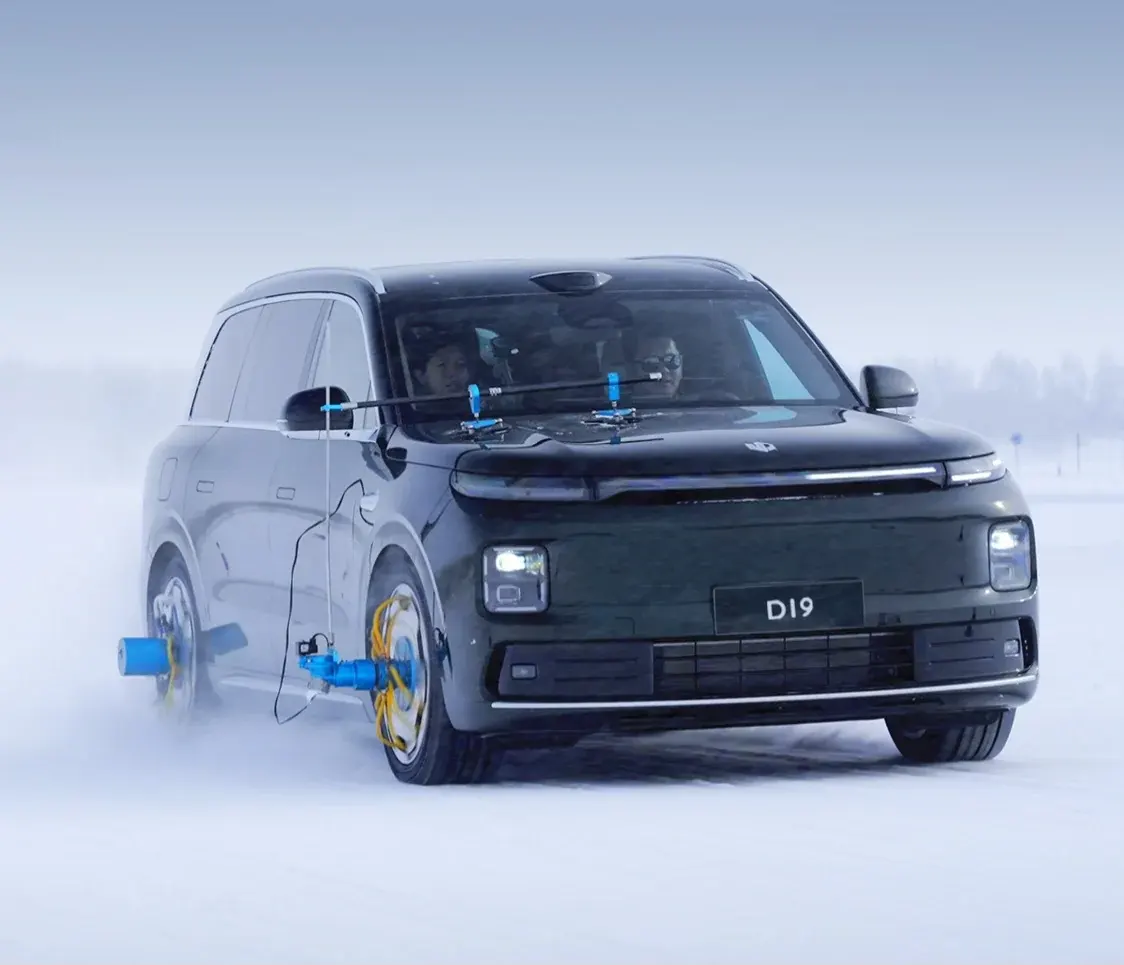
According to Leapmotor, that 0.5-second figure represents the exact time it takes to launch this corrective action after detecting the fault, a critical head start when traveling at highway speeds where every fraction of a second covers serious pavement.
The technology operates most effectively between 60 and 140 km/h (roughly 37 to 87 mph), though it can still lend a digital hand at both lower and higher velocities, even on slippery surfaces with poor grip. Rather than replacing familiar safety nets like ABS, traction control, and electronic stability control, it builds directly on top of them, triggered specifically by real-time wheel and tire telemetry.
All of this falls under the umbrella of LeapMotion Control, the central nervous system Leapmotor uses to coordinate its chassis technologies across models like the C10 and B05, depending on trim and configuration. As Danilo Annese, Managing Director of Leapmotor International, pointed out, the entire project resulted designed to solve a simple biological limitation: drivers simply don’t have enough time to react when a tire lets go.