


Back in 2008, Alfa Romeo staged a stylish return to the small sporty hatchback arena with the original MiTo, a clever portmanteau honoring Milan, where it was styled, and Turin, where it rolled off the assembly line. Armed with a sleek three-door silhouette, round headlights cribbed from the exotic 8C Competizione, and a “DNA” drive-mode selector designed to wake up its Italian temperament, the subcompact stayed in production for a solid decade before bowing out in 2018.
Now, digital artist Bruno Callegarin is tugging at enthusiasts’ heartstrings on social media with an independent design study imagining what a modern revival could look like.

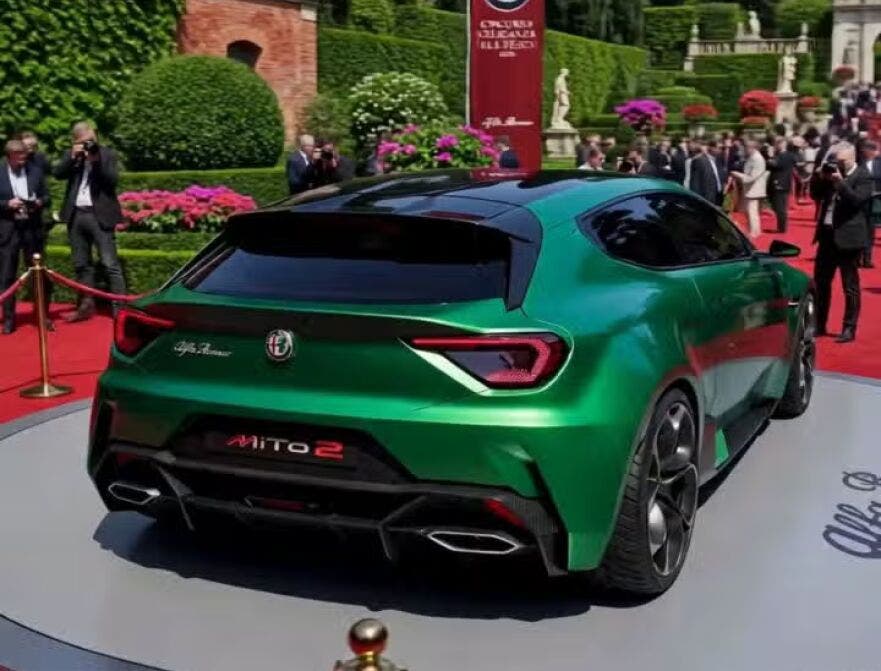
In profile, Callegarin’s virtual creation wears its family DNA proudly. It keeps the signature long front door, a rear side window that tapers sharply toward the tail, and a roofline stretching back into a subtle spoiler. Dressed in metallic green over beefier wheel arches and massive dark five-hole wheels, the render looks ready to pick a fight with modern crossovers.
Up front, a blacked-out “scudetto” grille sits flanked by razor-sharp headlights and generous air intakes, while the rear swaps the original car’s round taillights for sharper, angular units above dual exhaust tips and bold “MiTo 2” badging.
A low-slung, compact three-door hatchback with these proportions would instantly win over driving purists, especially considering Alfa Romeo’s current entry-level offering is the five-door, high-riding Junior. Of course, climbing into the back seat of a three-door hatch requires the flexibility of a yoga instructor.
Unfortunately for three-door loyalists, reality checks in fast. According to Alfa Romeo’s official roadmap, the brand’s next major milestone is a Melfi-built C-SUV riding on the STLA Medium platform, scheduled for unveiling in the fourth quarter of 2027.
Alfa Romeo has also confirmed a future C-segment hatchback on the STLA One architecture, carrying on the legacy of the 147 and Giulietta, while the current Giulia and Stelvio, including their Quadrifoglio variants, will remain in production through 2027.