

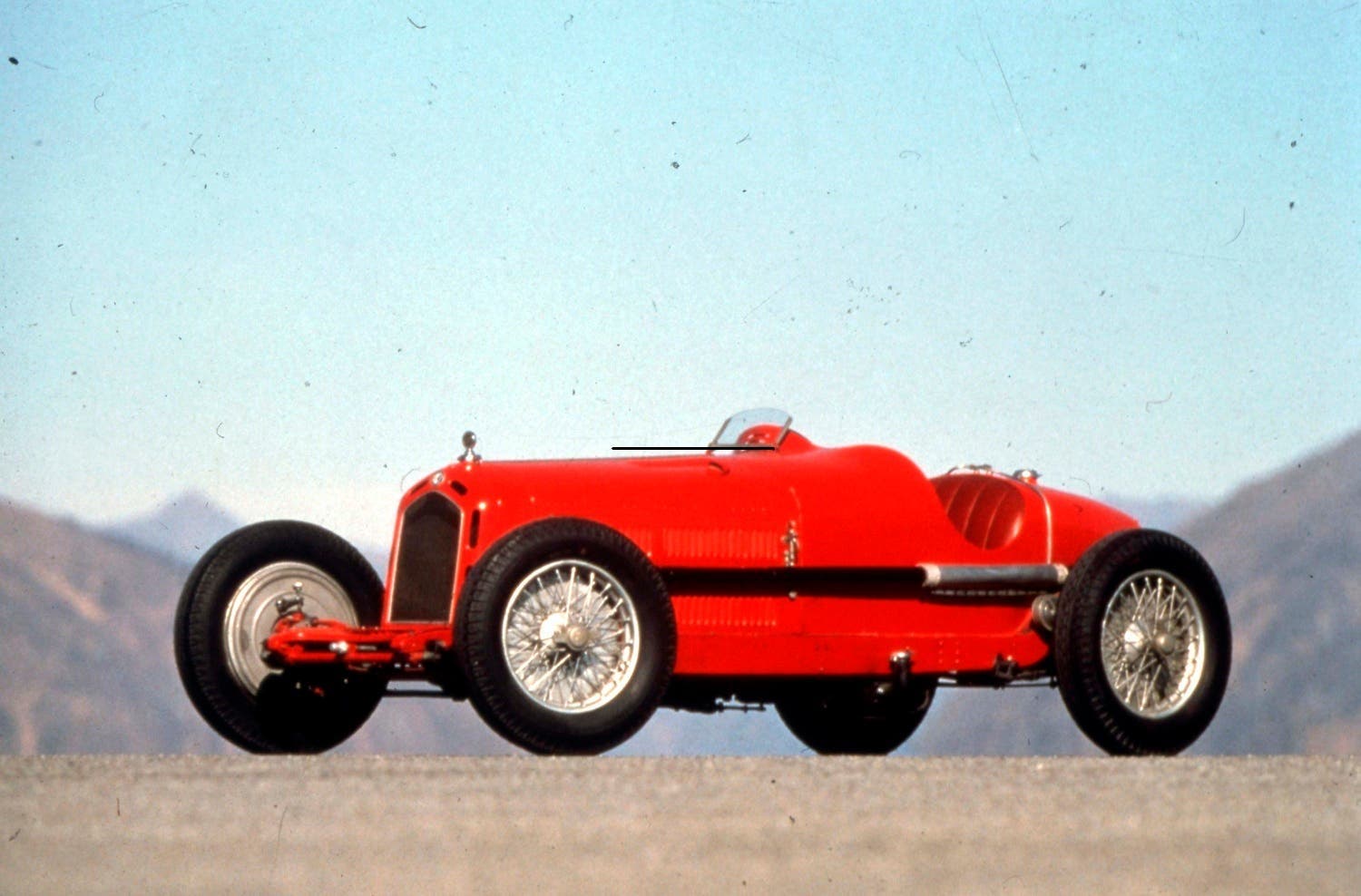
At the 2003 Frankfurt Motor Show, Alfa Romeo brought the 8C name back on a two-seat coupe with a front-mounted engine and rear-wheel drive. The prototype’s full name combined two references to the brand’s racing history. Vittorio Jano’s 8C race cars had won four consecutive editions of the 24 Hours of Le Mans from 1931 through 1934, while the word Competizione recalled the 6C 2500 that Juan Manuel Fangio drove in the 1950 Mille Miglia.
Alfa Romeo 8C links a modern V8 coupe to one of the brand’s greatest racing eras
The Frankfurt concept used a 4.2-liter supercharged V8. When Alfa Romeo unveiled the production version in 2006 and put it on sale in 2007, it switched to a naturally aspirated 4.7-liter V8 producing 444 hp at 7,000 rpm. Alfa mounted the six-speed automated manual transmission at the rear together with the differential, a transaxle layout that helped balance the car’s weight between the two axles. The body used carbon fiber, and Alfa limited production to 500 coupes.
The 8C Spider followed in 2008 with another run of 500 cars, using the same V8 and a fabric roof. With the top down, the car’s proportions became even more obvious, with the cabin pushed far back between the long hood and the muscular rear fenders. Alfa Romeo had already explored that layout on some of its prewar grand tourers.
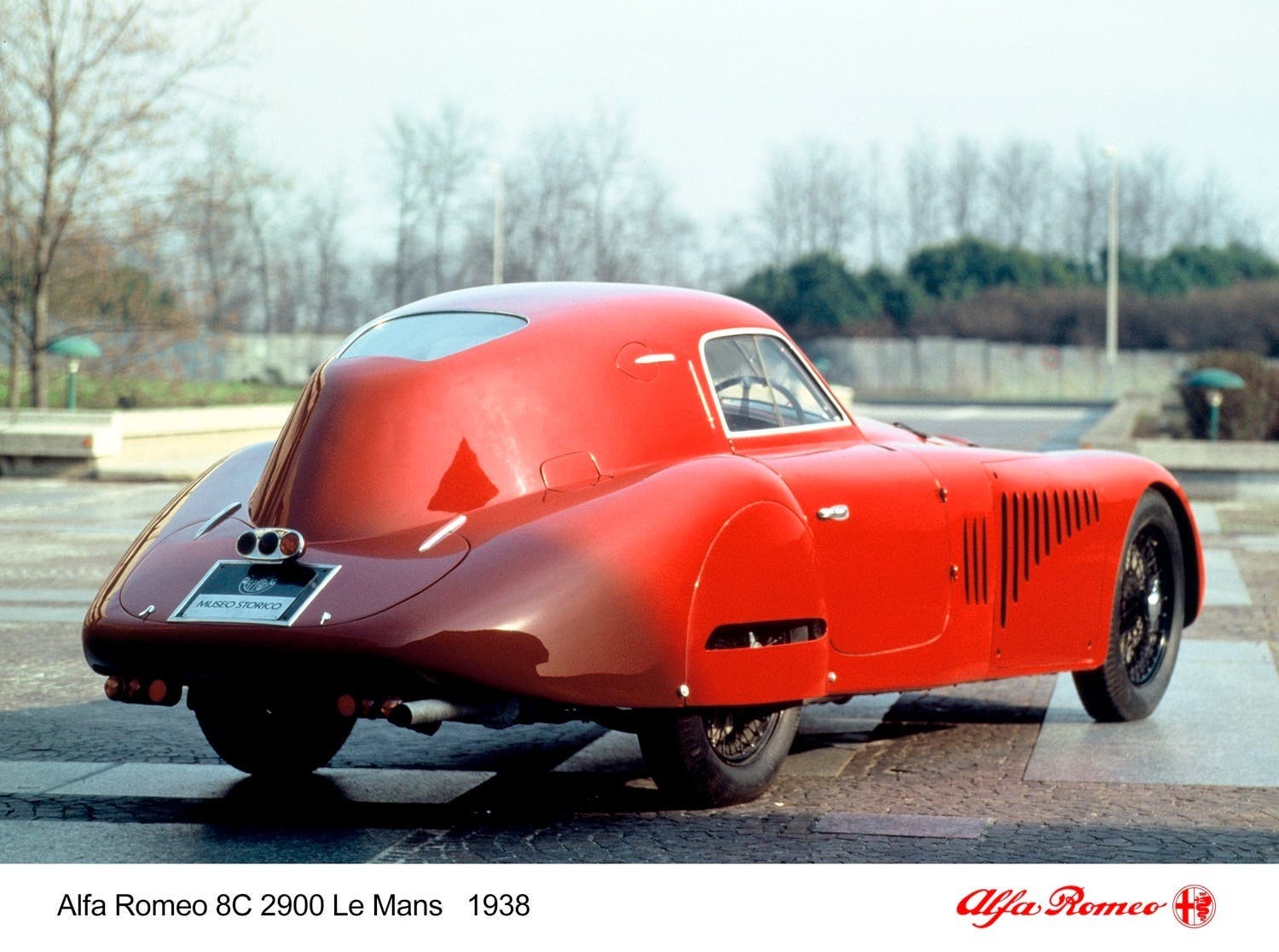
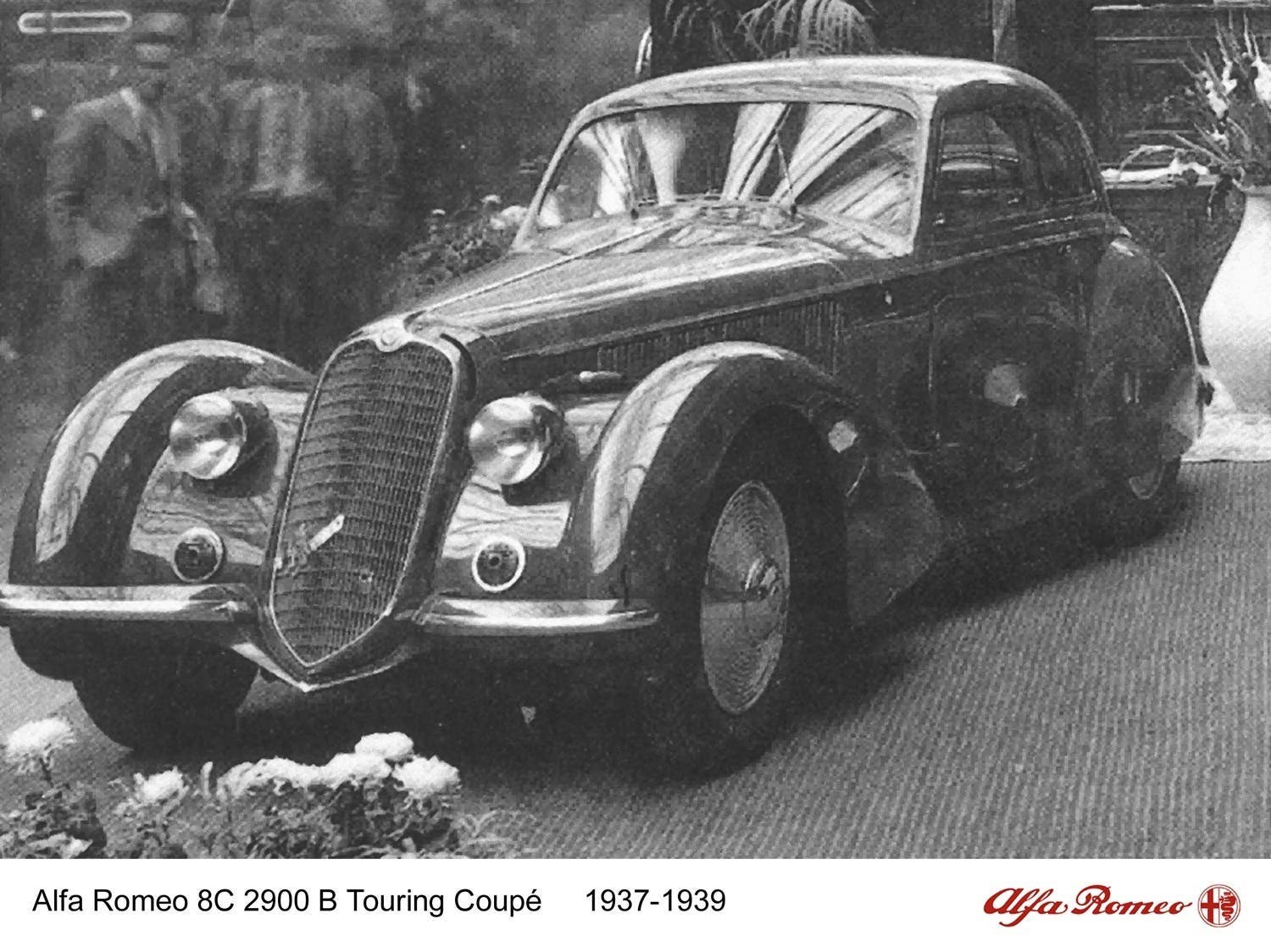
One of the clearest examples is the 8C 2900 B Lungo with Touring coachwork, now preserved at the Alfa Romeo Museum in Arese. On a chassis with a three-meter wheelbase, Touring positioned the windshield far back and let the roof taper toward a long, streamlined tail. Under the hood sat a 2.9-liter straight-eight with twin superchargers and about 178 hp. Like the later 8C Competizione, it also used a rear-mounted transmission separated from the front engine.
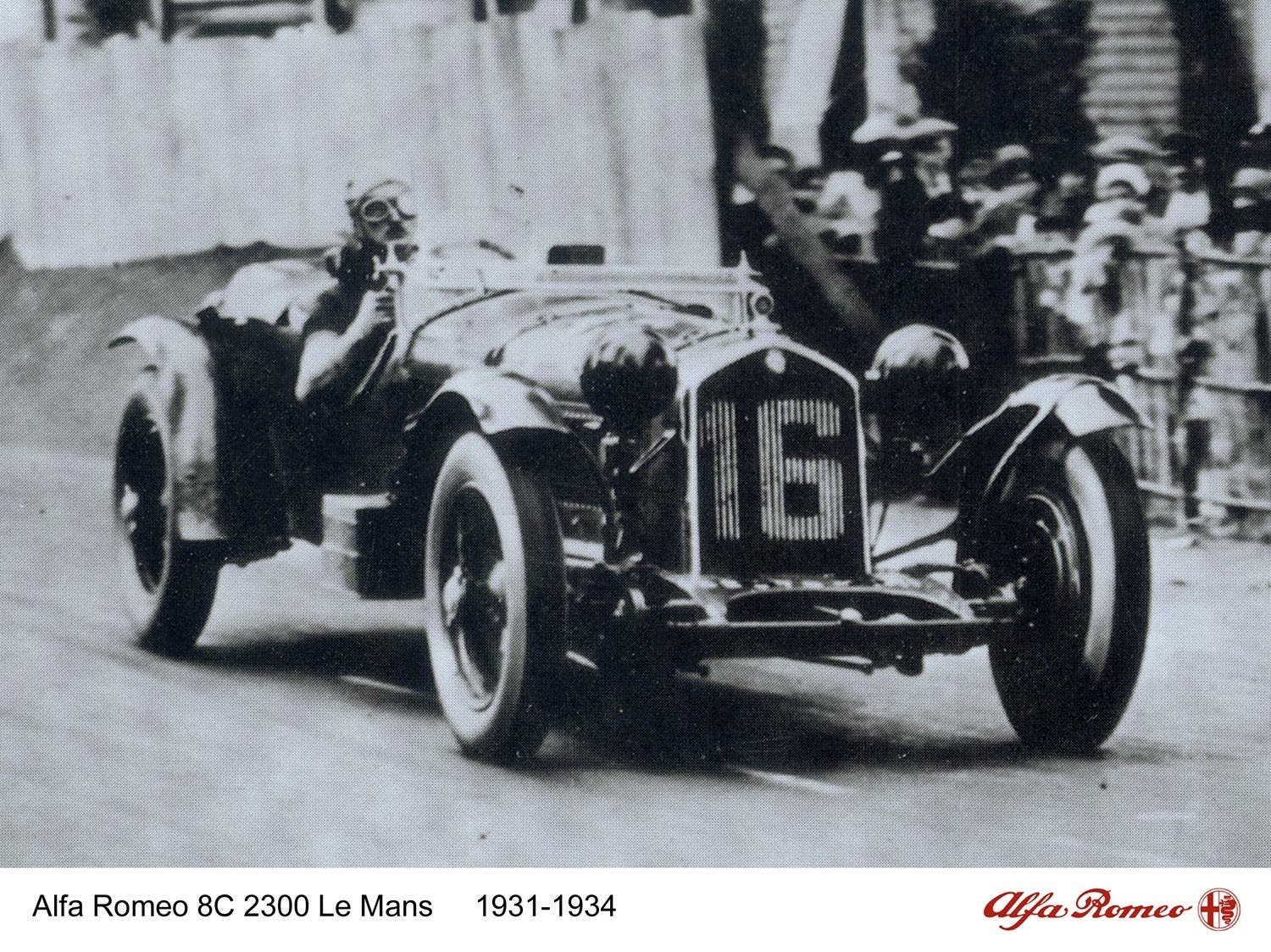
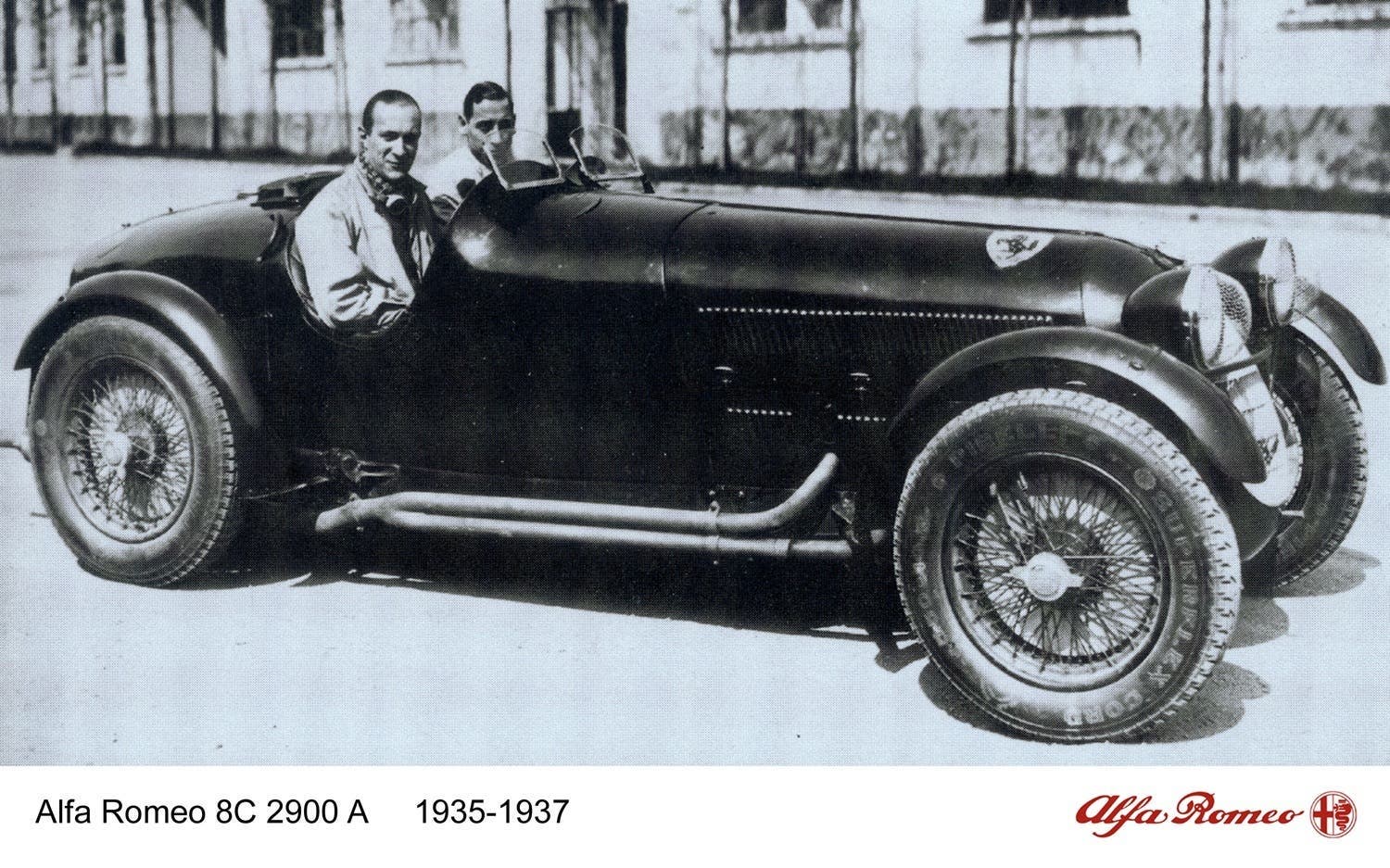
The 8C family began in 1931 with the 8C 2300, which Jano developed for both competition and private customers. Engine capacity increased on later versions, and at the 1934 Mille Miglia, the 2600 Monza driven by Achille Varzi and Amedeo Bignami took victory. Two months later at Le Mans, Luigi Chinetti and Philippe Étancelin secured the 8C’s fourth straight win, one year after Tazio Nuvolari and Raymond Sommer had taken the same race.
That run of victories gave the 8C name the sporting significance Alfa Romeo revived more than six decades later in Frankfurt.