

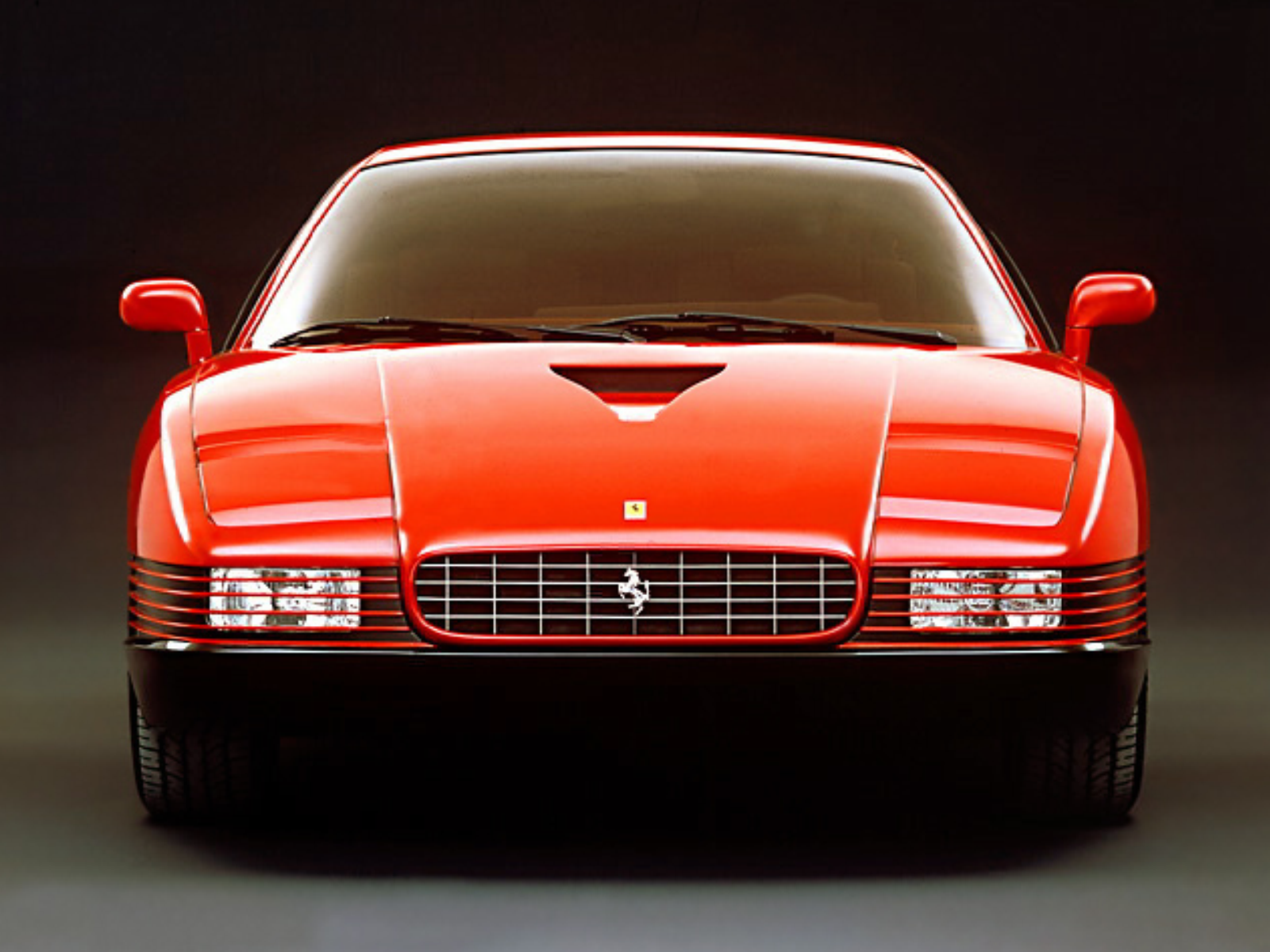
When people picture a Ferrari built in 1987, they usually envision sleek Pininfarina curves tearing up Formula 1 tracks or screaming down the Autostrada. Nobody expects a stretched, Kevlar-clad wedge designed strictly to escort American single-seaters at sensible speeds. Enter the Ferrari Mondial T PPG Pace Car, a one-off created for the CART IndyCar series. It has recently emerged from hiding inside The Caretakers Collection.
Commissioned in 1987 at an eye-watering cost of roughly $1 million, which translates to a cool $3 million in today’s inflation-riddled money, this unusual Prancing Horse made its public debut at Laguna Seca in California. Maranello broke tradition by ditching its long-time design partner Pininfarina. All in favor of Turin-based I.DE.A Institute, a firm better known for styling sensible Fiat hatchbacks.
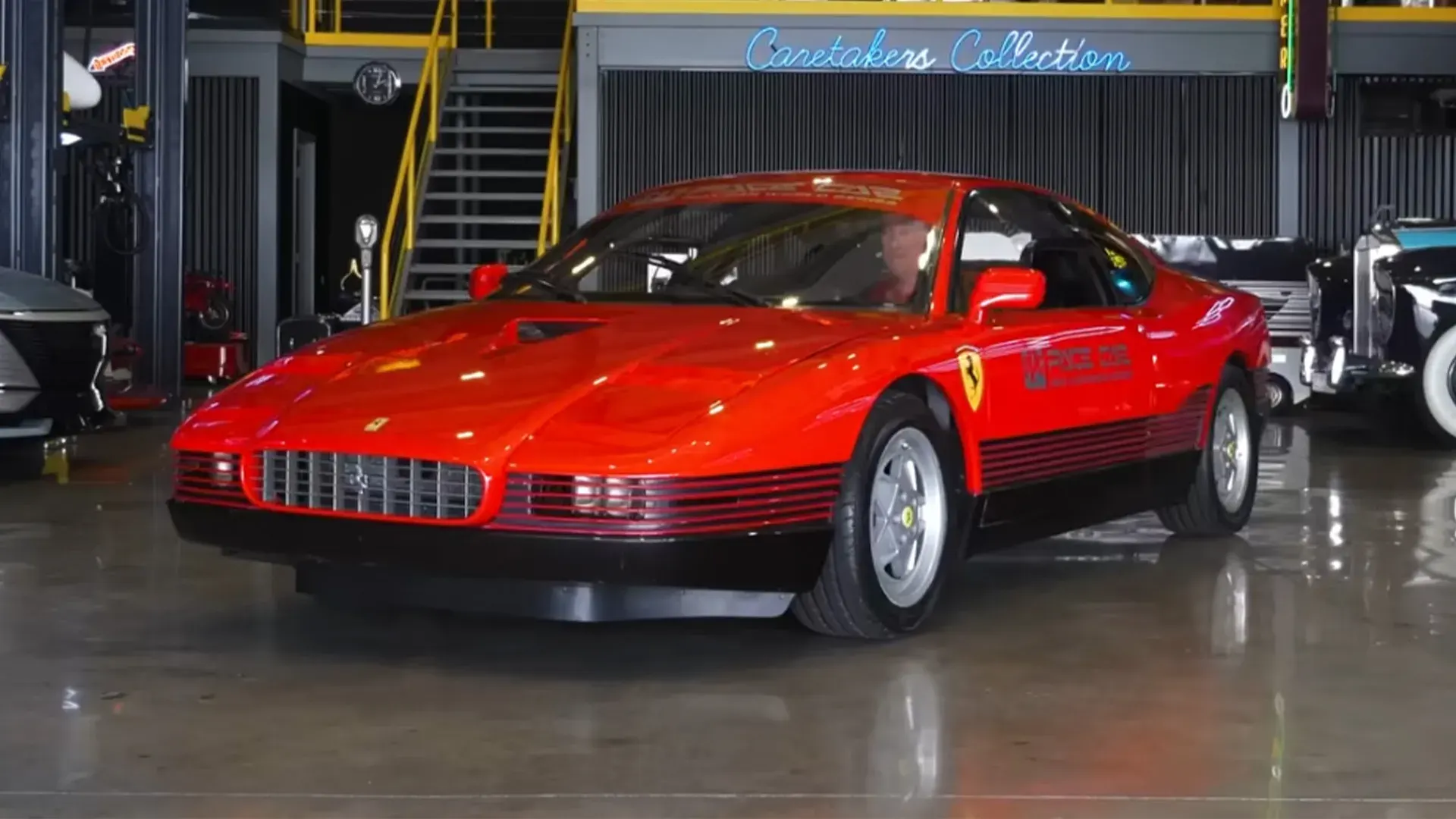
The transformation from standard Mondial T to track marshal was radical. Designers stretched the wheelbase, and redesigned the front and rear ends for slippery aerodynamics. They introduced a strange corrugated horizontal band linking the body sections while integrating safety strobes directly into the shell. Inside, the cockpit was wrapped in Kevlar and suede, featuring a custom steering wheel and a driver-centric dashboard.
Underneath the bodywork sat a 3.4-liter naturally aspirated V8 pushing 300 HP. It’s mated to a five-speed transverse ZF gearbox, a powertrain taken straight from the Tipo F119D. The engine destined for the upcoming 348 TB. To handle safety duty, it featured electronically controlled self-leveling suspension, carbon-fiber elements, forced brake cooling, and extra batteries to power those relentless emergency lights.
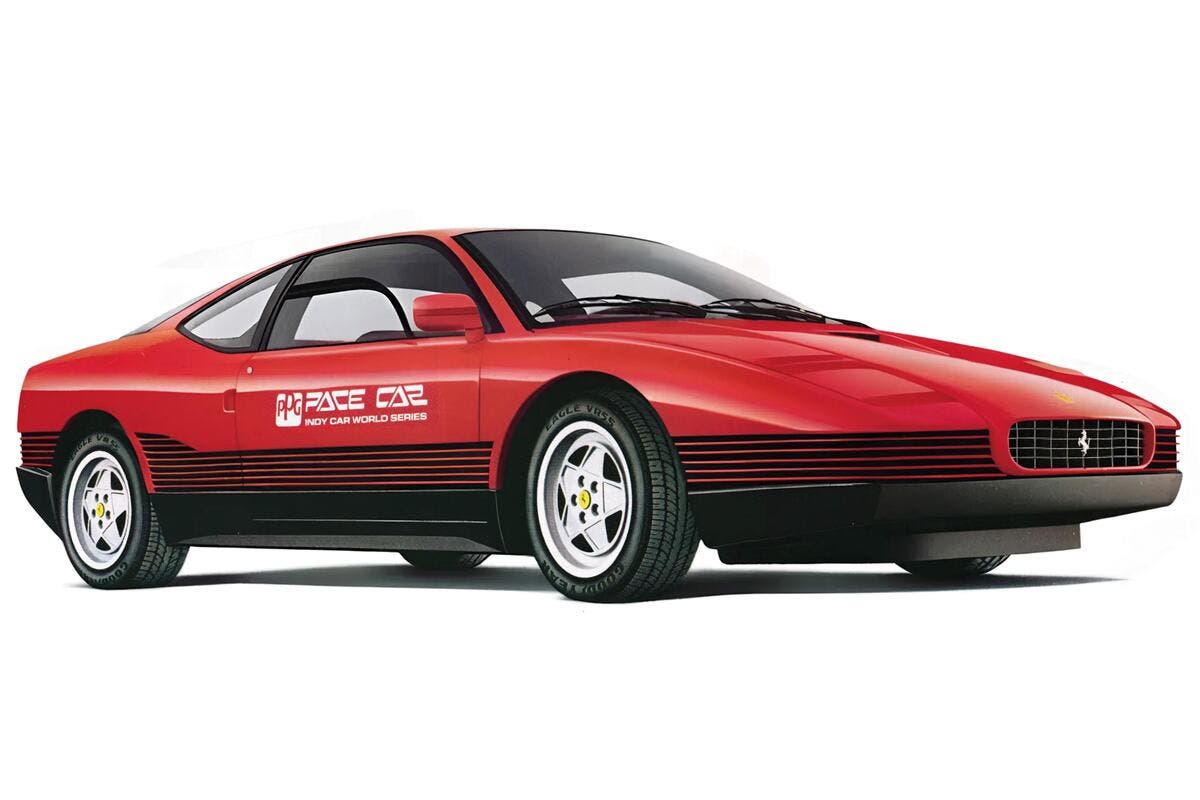
It needed to corner at 65–70 mph and hit top speeds between 130 and 140 mph to keep open-wheelers in line. However, during its official tenure from 1988 to at least 1991, the PPG Pace Car earned a reputation as one of the least reliable vehicles in the entire fleet. After retiring, it shuffled through a 2004 auction. It also spent time at the Ferrari Museum in Maranello in 2013. Now rests comfortably as a testament to late-80s experimental design.