


Stellantis wants to involve suppliers from the earliest stages of vehicle development so potential problems that could delay a launch can be addressed sooner. The group discussed the strategy on November 10 at Detroit’s Masonic Temple, where more than 1,000 supplier representatives met company executives during the sixth Global Supplier Conference & Awards. Stellantis recognized 61 companies at the event, including 21 that received Supplier of the Year honors.
Stellantis honors 61 suppliers in Detroit while pushing for faster vehicle development
Early collaboration becomes especially important when a vehicle has to integrate new technology. Discussing requirements and timing while engineers are still defining the project gives suppliers and Stellantis more room to adjust both the component itself and the way it fits into the vehicle. The company wants to cut development cycles to 24 months from processes that can currently take as long as 40 months. That target forms part of the FaSTLAne 2030 plan unveiled in May.
Antonio Filosa said suppliers play a key role in bringing new products to market faster while still meeting quality targets. Monica Genovese, Stellantis’ global head of purchasing and host of the Detroit event, emphasized the need for consistent results across the relationship between the automaker and its suppliers. A Jeep-focused session also outlined how these companies contribute to the brand’s programs and how their work ultimately affects the products customers receive.
Supplier of the Year winners included Italy’s Tiberina, Michelin in the tire category, and companies such as Infineon and Valeo in electronics and components. Benteler and Petronas also received top honors. Stellantis recognized another 40 companies across various categories, including Brembo and Pirelli, battery manufacturer CATL, Aisin, Magna and TomTom. At the previous edition, held in Paris in 2025, Stellantis honored 54 companies.
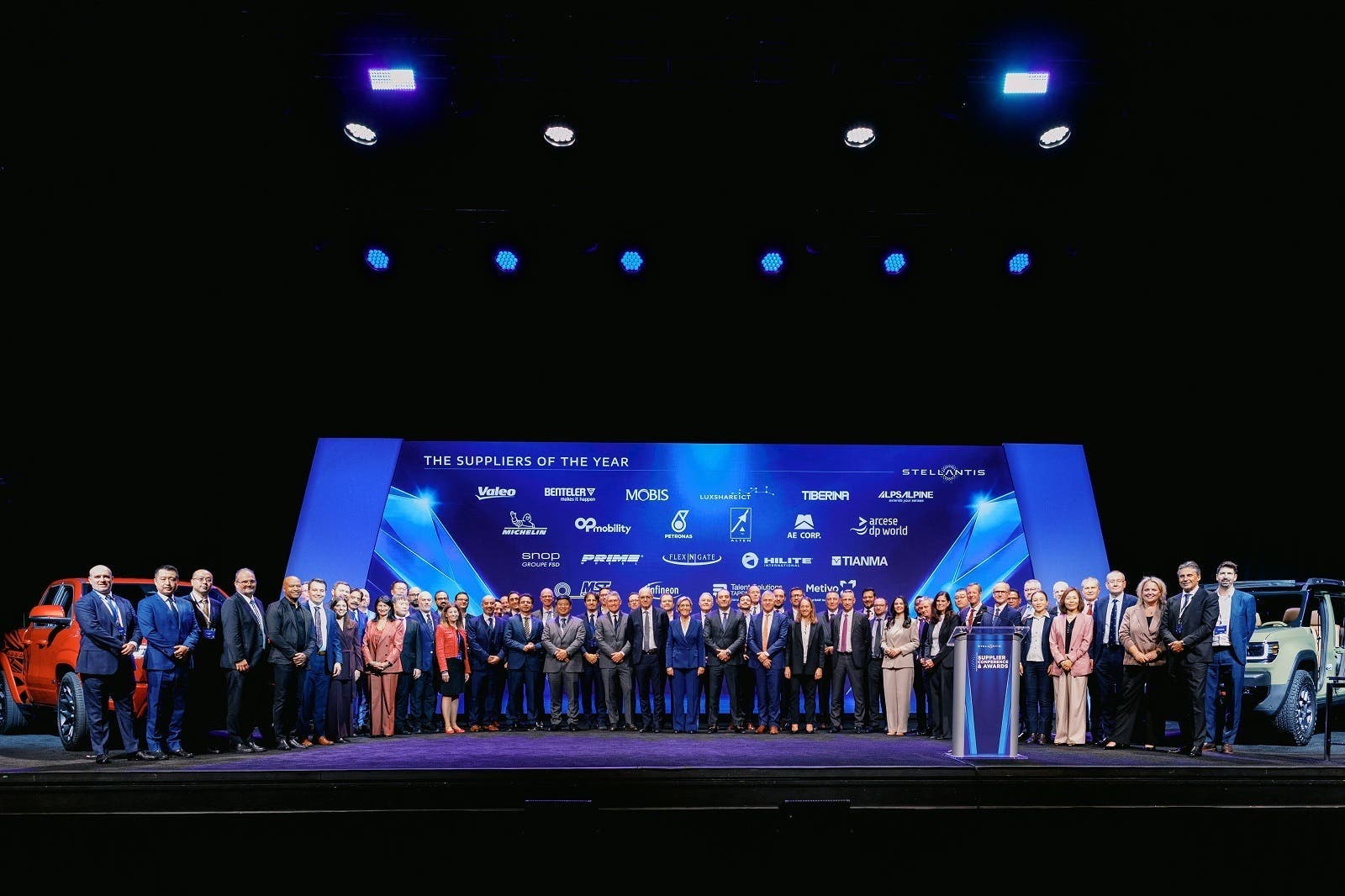
An international team representing several corporate functions selected the winners. The evaluation considered component quality and delivery performance, along with cost competitiveness, innovation capability and operational and financial results. Some awards also recognized program management, corporate social responsibility and efforts to reduce carbon emissions.