

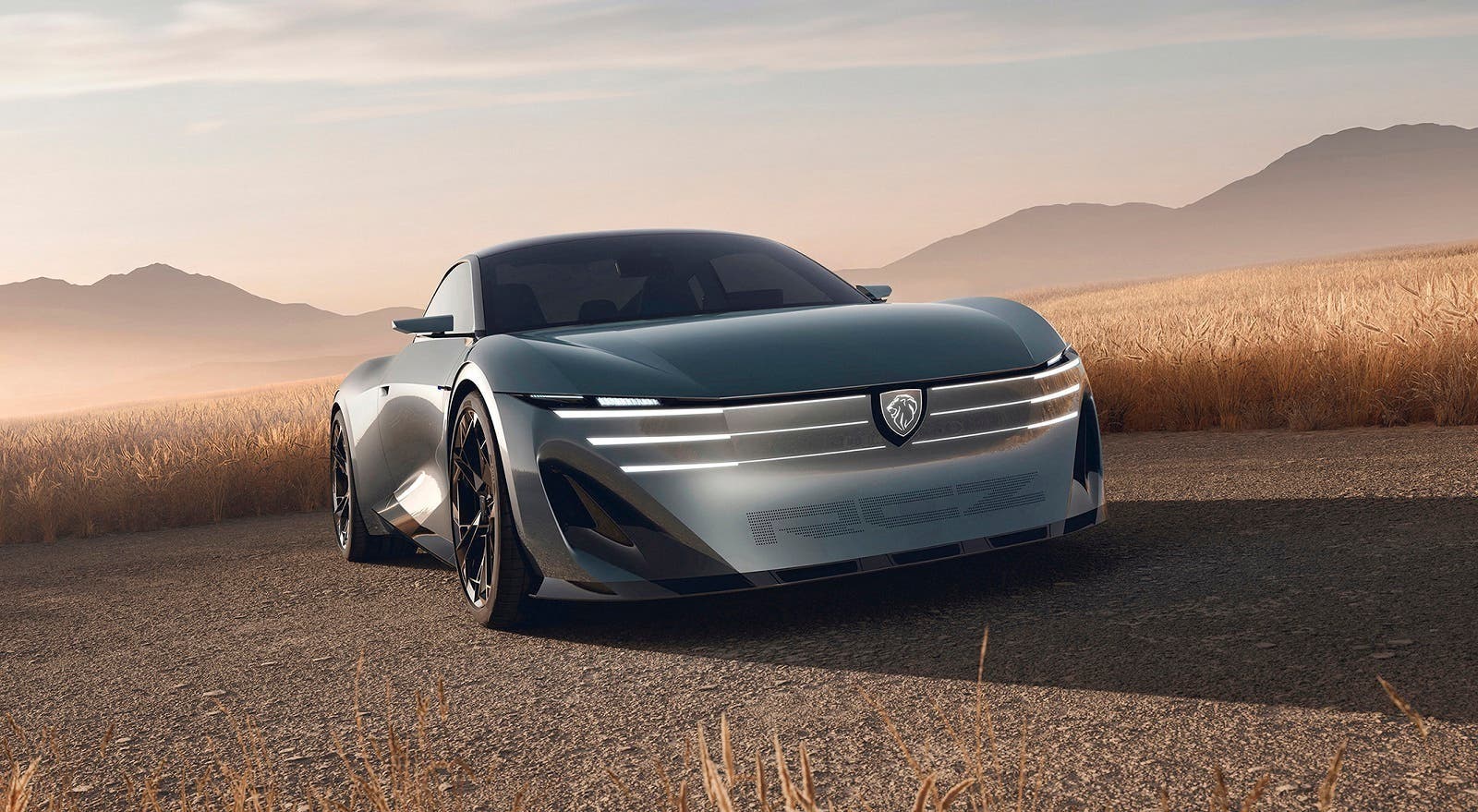
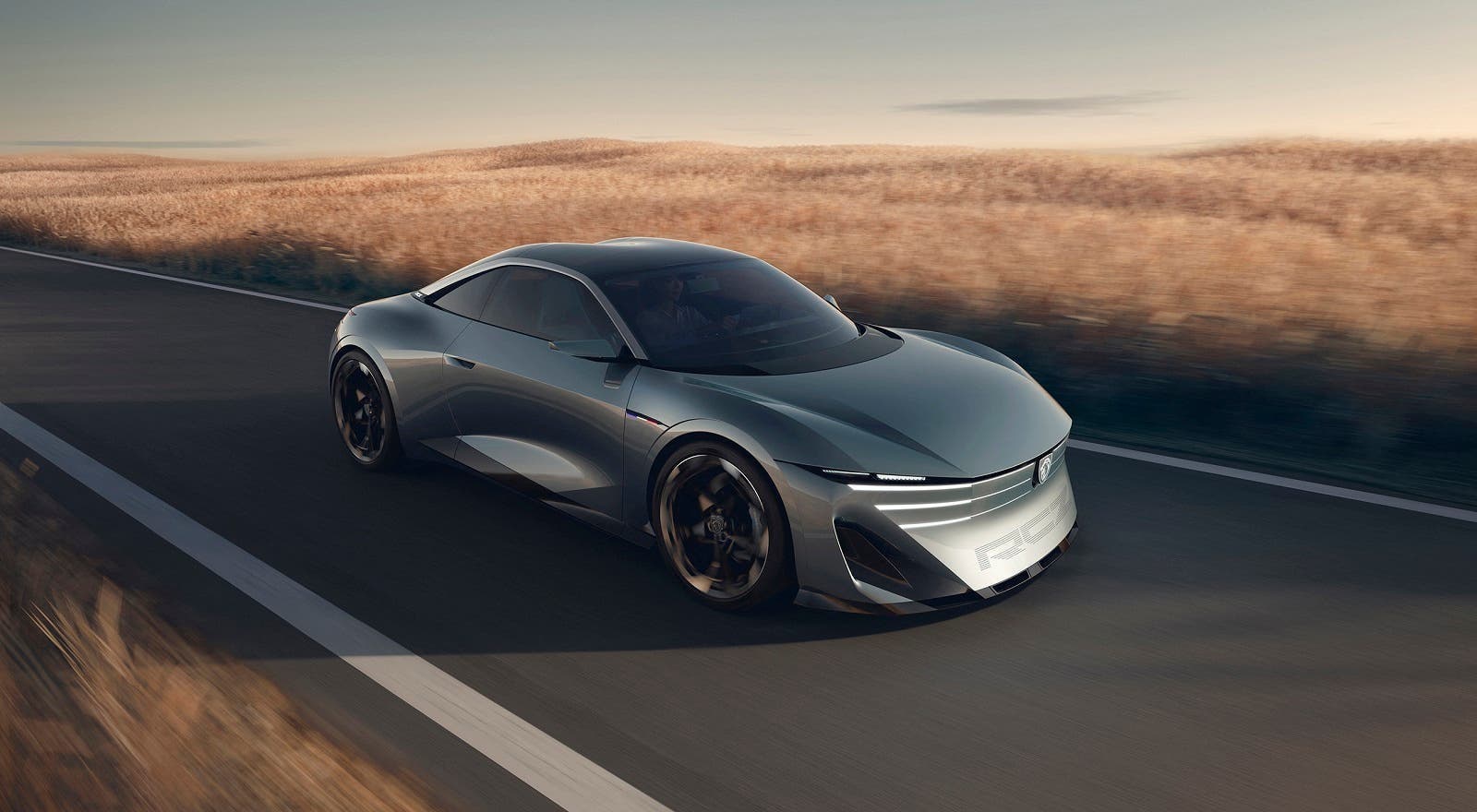
Peugeot brings the RCZ name back to Paris with a 493-hp electric coupe that serves as a laboratory for the design and technology of its future models. The RCZ Vision promises up to 373 miles of range and retains the previous sports car’s distinctive double-bubble roof, while exploring a solid-state battery and a 1,000-volt electrical architecture.
Peugeot RCZ Vision revives the coupe with 493 hp and 373 miles of range
The four-seat cabin gives rear passengers enough room for adults, while folding rear seatbacks increase cargo capacity when necessary. Up front, a floating center console keeps physical aluminum controls for climate settings and driving modes within a frosted-glass surface. The air vents retract into the dashboard when occupants do not need them, leaving a cleaner surface behind.
The new i-Cockpit uses transparent MicroLED displays. Drivers can switch off the vertical central screen almost completely, making it virtually disappear while the display ahead continues showing essential information. The Hypersquare steering control, in the same production form planned for the next-generation E-208, integrates four rings that provide access to the main functions.
An electronic connection between the steering control and the wheels allows the system to vary the steering ratio according to speed. At low speeds, it limits rotation to slightly less than one full turn, making tight maneuvers easier. Peugeot also uses brake-by-wire, which electronically coordinates braking with regenerative energy recovery.
The technical architecture uses STLA One together with solid-state cells that Peugeot developed with Factorial Energy. The battery measures just 4.3 inches thick, helping engineers keep the cabin low while taking advantage of greater energy density. Peugeot targets a 10 to 80% charge in less than 10 minutes and energy consumption of 11.5 kWh per 100 kilometers, although the company still needs to validate that figure.
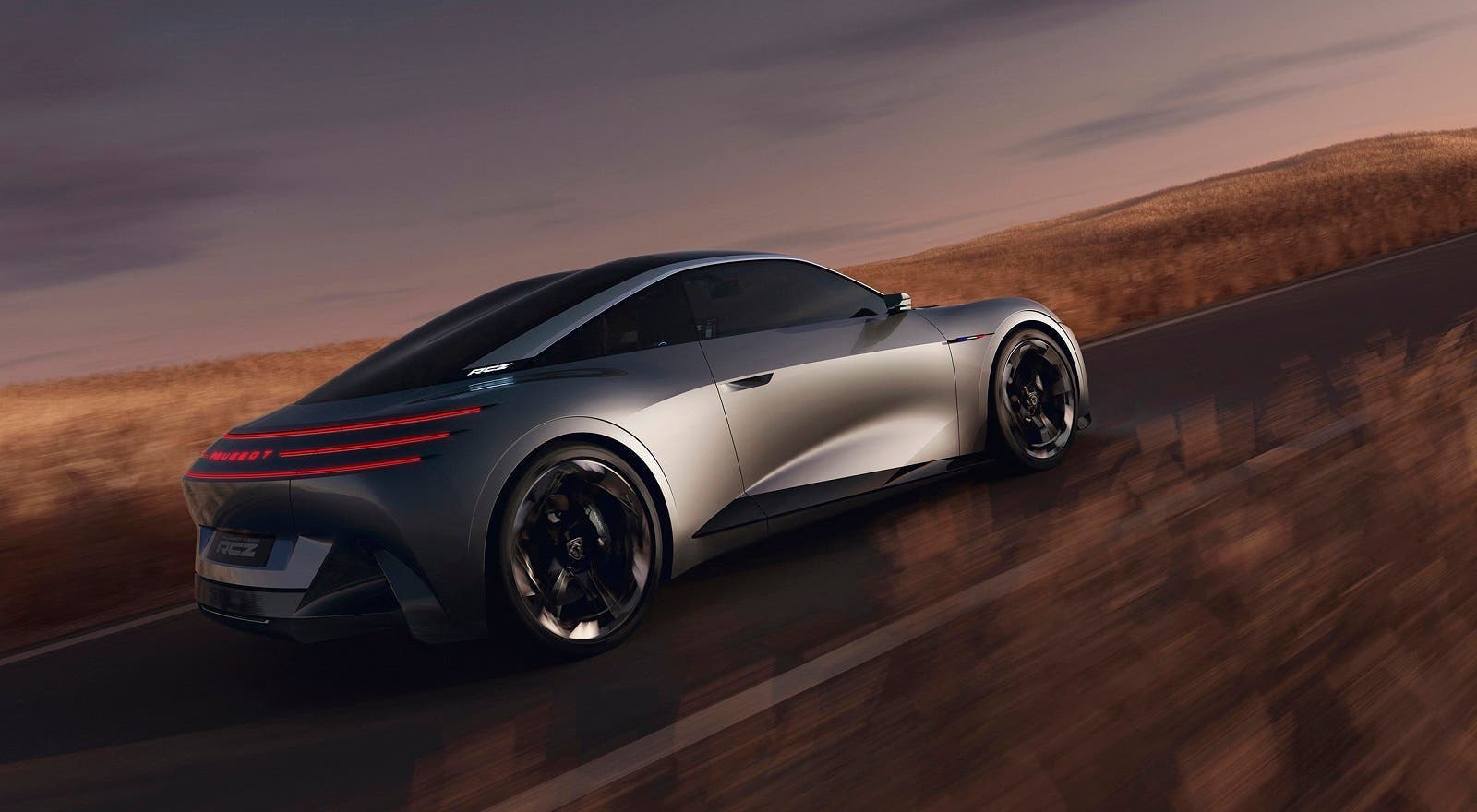
The glass roof emphasizes the two distinctive curves while creating additional headroom for rear passengers. Slimmer roof arches replace the heavier visual treatment of the original RCZ, while paint containing recycled aluminum adds a more modern interpretation. Beneath the visually light cabin, the body widens around 21-inch forged front wheels and 22-inch rear wheels.
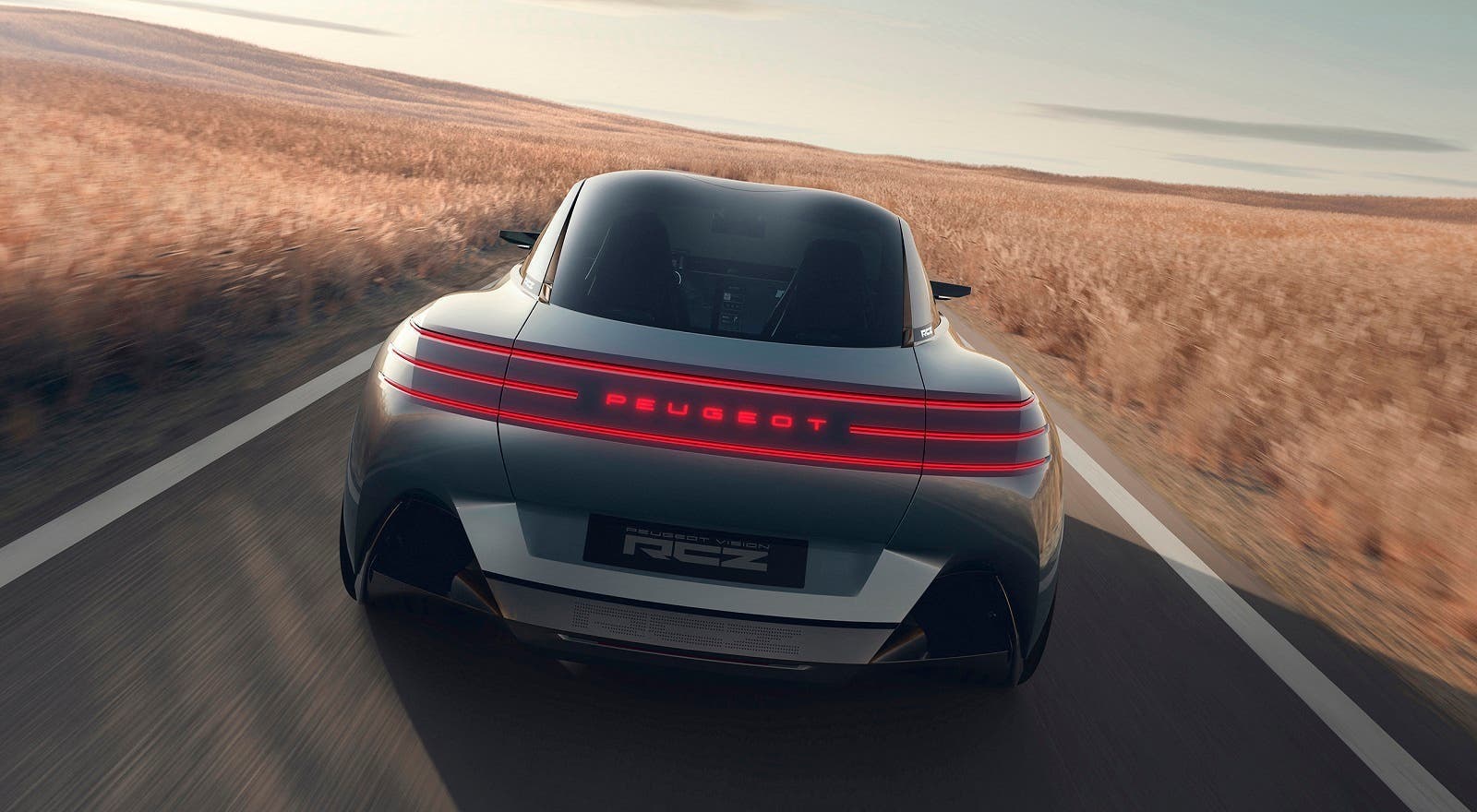
Peugeot’s new “Feline Future” styling also changes the brand’s light signature by arranging the familiar three claws horizontally. RCZ lettering appears within the air-intake detailing and the micro-perforated graphics across the bumper. At the rear, the active spoiler stays hidden when the car stops and rises while driving.
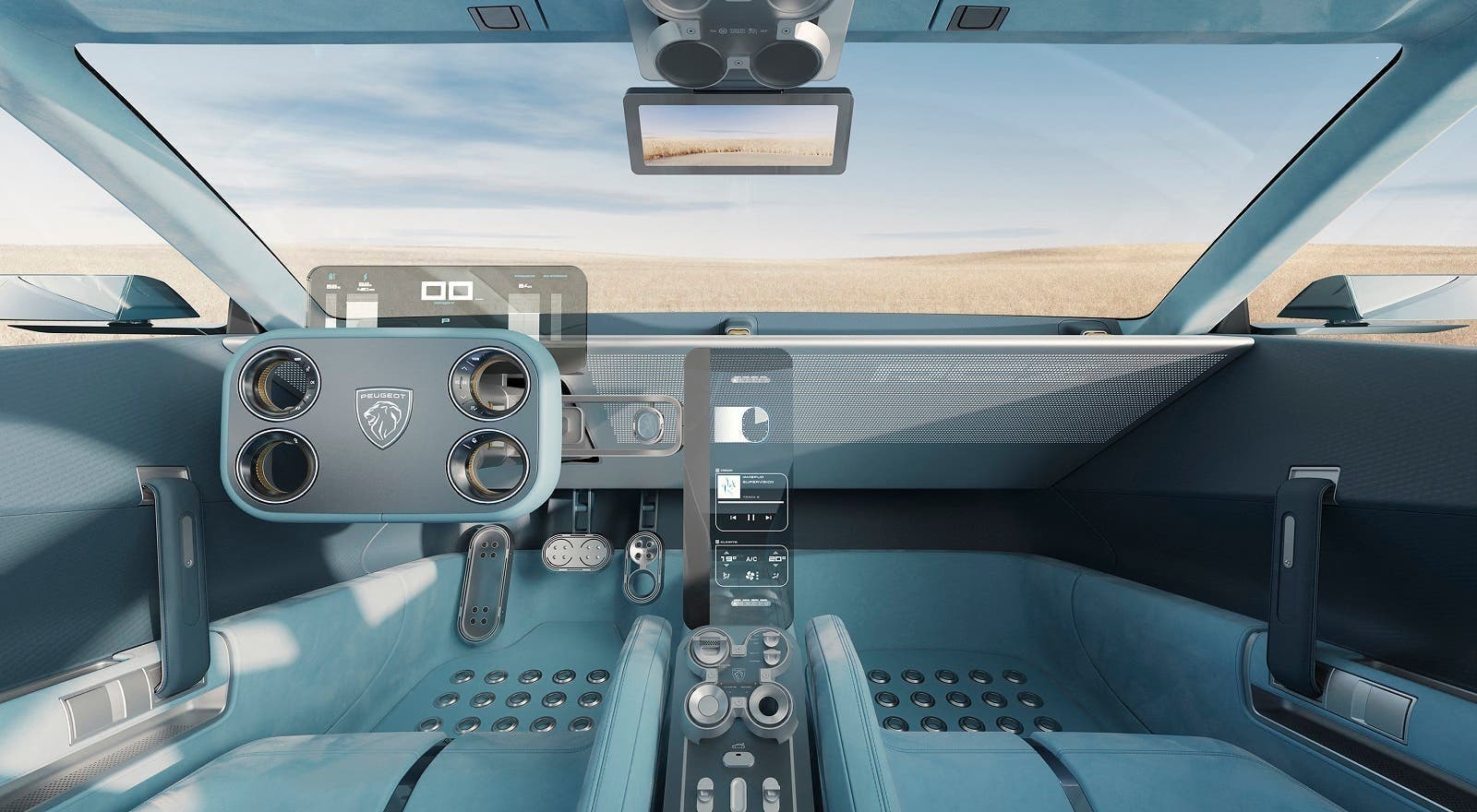
Light-blue Alcantara and PELINOVA recycled leather cover much of the cabin. The latter uses offcuts from the leather-goods industry that would otherwise go unused. The dashboard also incorporates a SERICA Parade clock, while the central screen reproduces its design digitally.
Peugeot has not yet said whether the RCZ Vision will lead to a new production RCZ or when such a model could arrive. For now, the concept shows how the company could combine its next design language with solid-state batteries, steer-by-wire and a more driver-focused digital experience.