


Reducing battery capacity by 15% while maintaining the same driving range is the potential result identified by Stellantis and Alumobility through an aluminum redesign of an electric vehicle. The study uses the STLA Medium platform as its reference and calculates a total weight reduction of 421 kilograms, or about one-fifth of the original mass.
Stellantis and Alumobility target 15% smaller EV batteries with aluminum design
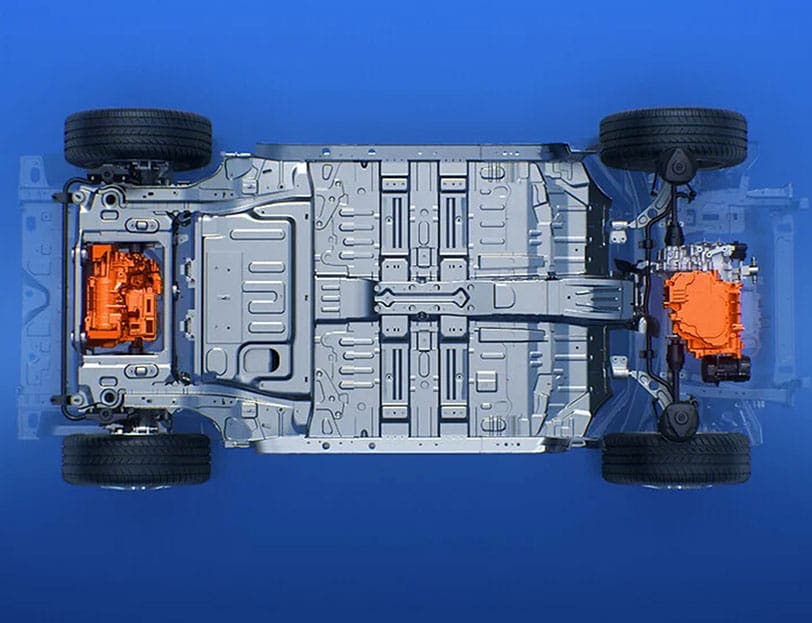
Stellantis and Alumobility announced the research on October 22 and presented it at the EuroCarBody 2026 conference in Germany. The project focuses on a theoretical vehicle architecture. Engineers started with a 2,103-kilogram configuration and brought the figure down to 1,682 kilograms, also accounting for the effects that a lighter structure could have on other vehicle systems.
Lower mass requires less energy during acceleration and allows engineers to resize several components. According to the study’s calculations, this makes it possible to use a smaller battery while maintaining driving range equivalent to the original reference vehicle. The 15% figure depends on the conditions used by the researchers and applies specifically to this project.
The study also examines the way manufacturers could build the body structure by combining functions previously spread across several components. The number of parts in the body-in-white drops by 27%, while the battery enclosure falls from 53 components to 29. The design also requires fewer joints and fasteners during assembly.

Engineers use aluminum in the form of sheet metal, extrusions and castings, selecting manufacturing and joining techniques that meet the production requirements considered in the project. The research also evaluates crash performance, stiffness, fatigue resistance, noise and vibration, ensuring that weight reduction does not come at the expense of other key vehicle characteristics.
A lighter structure then creates opportunities to reduce the size and weight of the electric motor, brakes and suspension. The authors therefore take a whole-vehicle approach, in which the first reduction creates further opportunities elsewhere rather than simply replacing one material with another.
Before bringing such a solution into production, Stellantis will need to assess the cost of processing and assembling aluminum as well as the challenges associated with recycling it. A smaller battery could help reduce costs, but the company would need to compare those savings with the expense of the new manufacturing processes.
The project remains a theoretical study, and any impact on vehicle prices will depend on which solutions Stellantis eventually chooses to adopt on production models.