

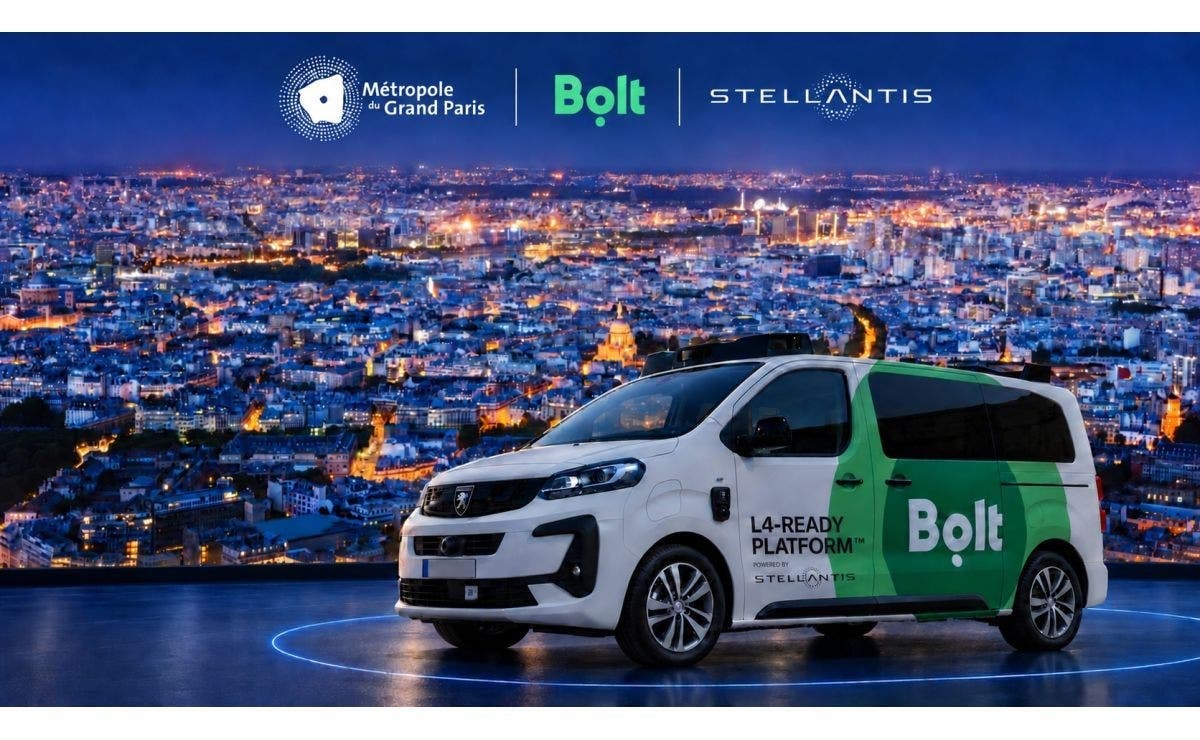
Stellantis and Bolt are preparing a pilot driverless transport service in Greater Paris, with the first activities planned for 2028 and an expansion to around 30 municipalities by 2030. The program involves the Métropole du Grand Paris and aims to improve connections in underserved areas by complementing buses, metro lines and other existing transport options.
Stellantis and Bolt plan autonomous transport service for Greater Paris from 2028
The vehicles could help people reach employment areas, cover the final stretch between a public transport stop and their destination, or provide mobility during hours when regular services become less frequent. The partners are also studying their use during major events, when cities need additional transport capacity to manage large crowds.
The pilot would begin in up to five municipalities in the northwestern part of the metropolitan area. Any later expansion will depend on the results and regulatory approvals, with the ambition of launching a commercial service by 2030. The official announcement also states that the partners submitted the project to the European ADACities initiative, which focuses on expanding autonomous mobility in urban areas.
Called the Greater Paris Autonomous Driving Living Lab, the program will operate in a metropolitan area with 7.2 million residents. Even as the Grand Paris Express expands public transport, some mobility needs remain unresolved. The Métropole will work with local authorities to identify the most useful applications, coordinate discussions with regulators and oversee the evaluation of the pilot.
Stellantis will provide vehicles based on its L4-Ready platforms and handle vehicle design, production and system integration. Bolt, through its Autonomous Driving Solutions division, will organize the service by connecting the vehicles and autonomous technology with the platform passengers already use.
The partners have identified Pony.ai as a potential supplier for the driving system, with a solution that uses NVIDIA Hyperion and the NVIDIA Halos safety system. Its participation therefore remains a possibility within the technology setup described by the project organizers.
Bolt founder Markus Villig has emphasized the need to solve real mobility problems. Ned Curic, Stellantis’ technology chief, has highlighted transport accessibility and ease of use, while Métropole president Patrick Ollier has also focused on the benefits the project could bring to residents.
An independent assessment will examine safety, service quality and user response, while also considering the relationship with public transport and the economic, social and environmental effects. The evaluation will use aggregated operational data in line with personal data protection requirements and will help determine whether the project should move to later stages.