

Chinese EV manufacturer Leapmotor is done playing the quiet guest in Southeast Asia. The company has officially established its own subsidiary, Leapmotor (Thailand) Co., Ltd., backed by a registered capital of 100 million baht (around €2.6 million).
While former importer Phra Nakorn Automobile will hang onto two showrooms in Bangkok, specifically in Lat Phrao and Ratchayothin, Leapmotor is taking the driver’s seat. General Manager Liam Liu told Bangkok Business News that Thailand is a key strategic market, boldy declaring their goal is to mirror Toyota’s legacy by staying for decades across production and after-sales service. Coming from a brand that has sold only a few hundred cars in the region, that is certainly a heavy promise, or a colossal dose of optimism.
The blueprint for dominance seems already laid out. Leapmotor is evaluating local CKD (completely knocked down) assembly, with a team from China landing in Bangkok this November for site inspections. Four paths are under review: contract manufacturing, a joint venture, buying an existing plant, or building a fresh facility from scratch.
The initial goal is a staggering annual production capacity of 60,000 to 80,000 vehicles. Speeding things along is a corporate board capable of approving budget requests in just two weeks, a lightning pace that makes traditional automakers look like they operate via carrier pigeon.
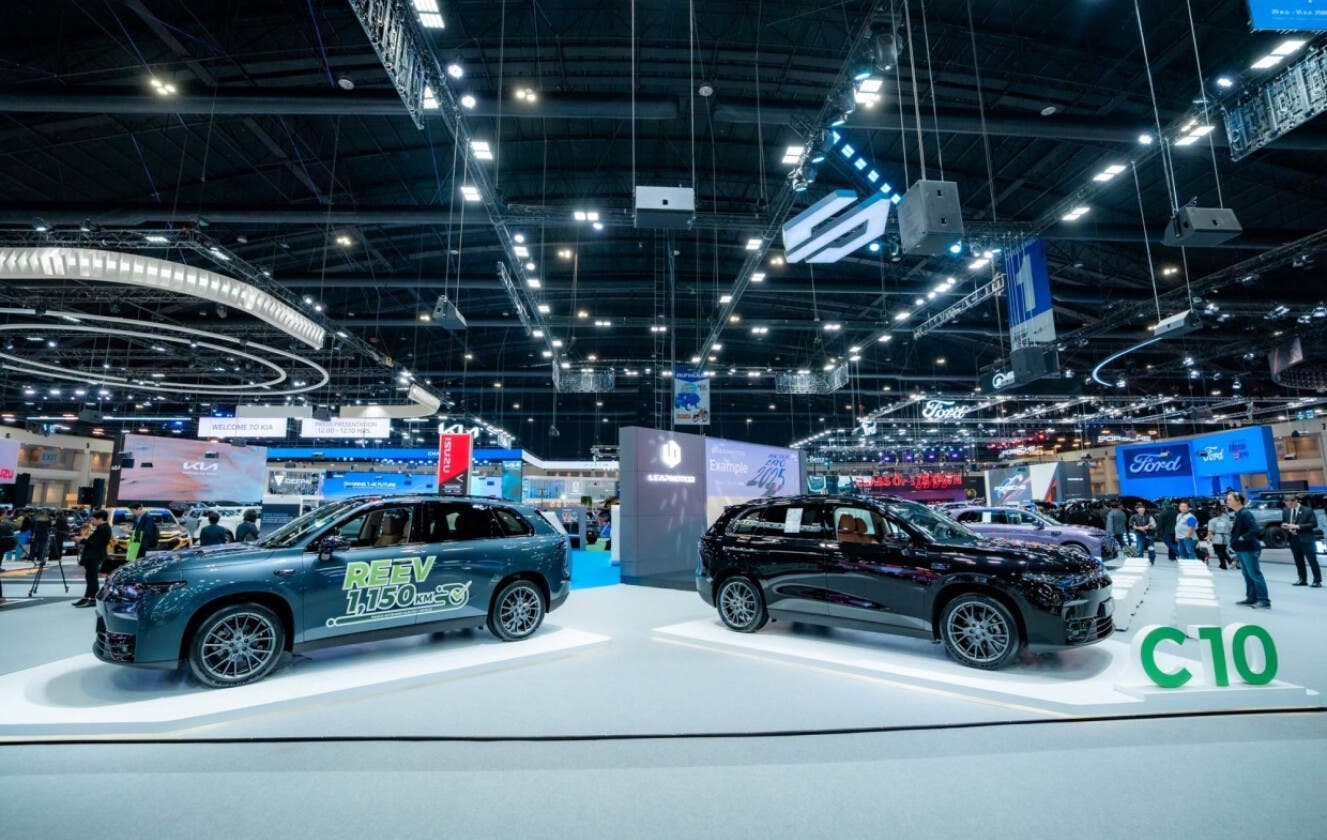
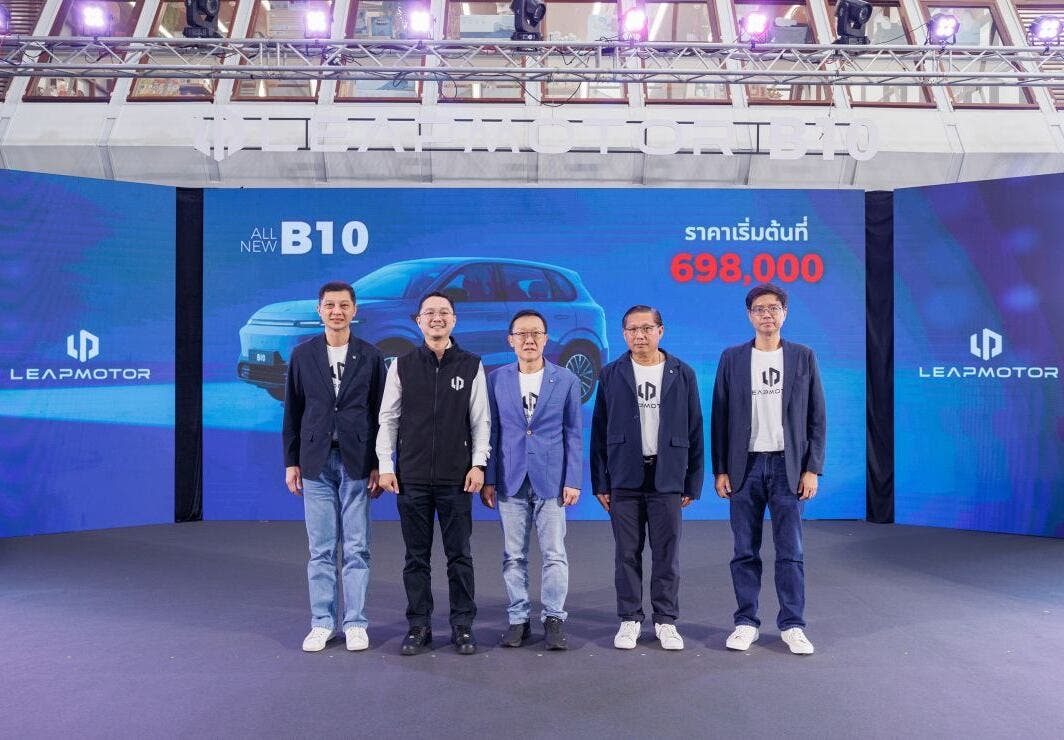
However, current sales tell a somewhat quieter story. The midsize C10 SUV launched in November 2024, followed by the compact B10 in October 2025, yielding a combined total of roughly 450 units. Undeterred by this modest start, Leapmotor projects sales to jump between 3,000 and 5,000 units by December, driven largely by the B03X compact SUV arriving October 31. By 2027, with at least two more models in the pipeline, the target steps up to 10,000 units.
To match these targets, the dealership network should jump from today’s 12 locations to 30 by late 2026, 65 in 2027, and 100 by 2028. Doubling its footprint annually in a market dominated by entrenched Japanese titans sounds impossible, but in the modern EV gold rush, fortune clearly favors the ambitious.