

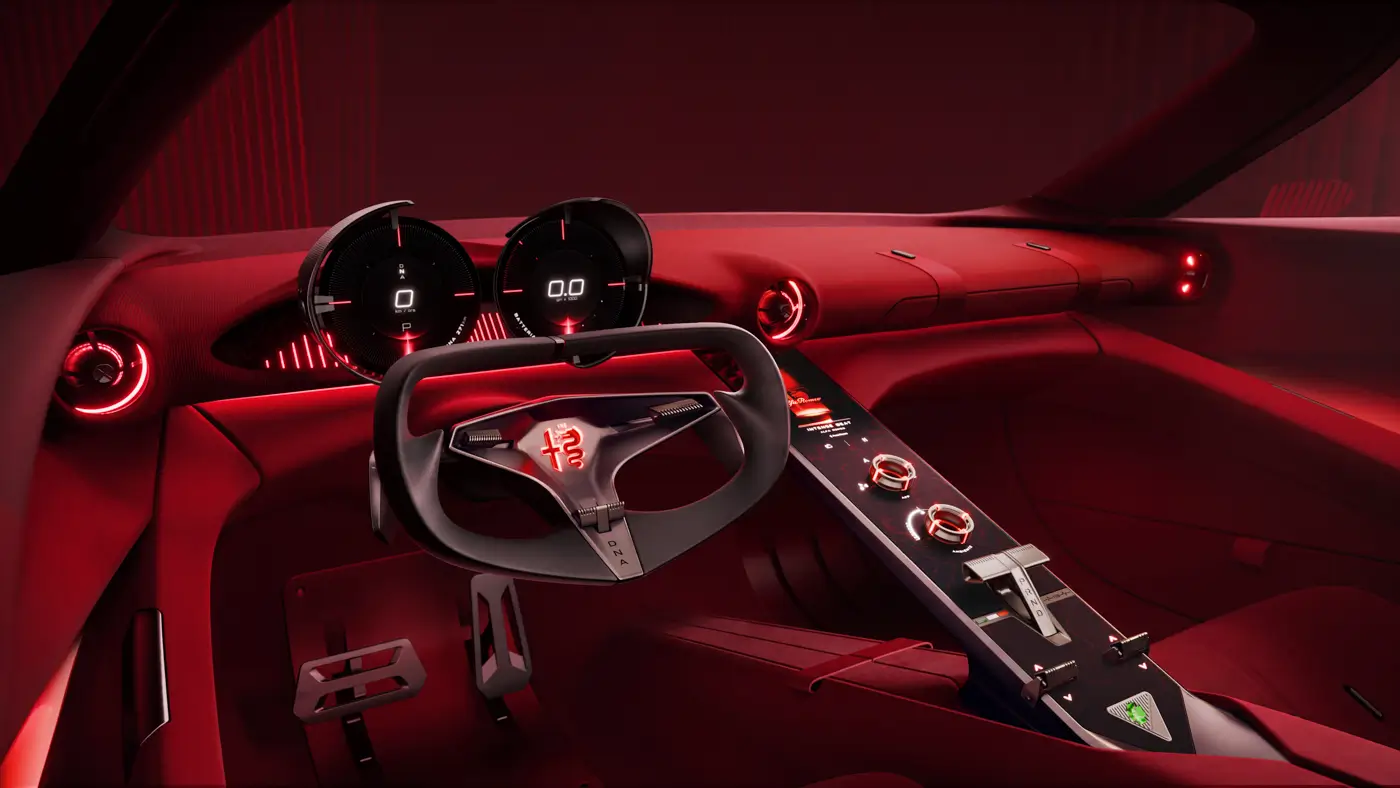
Alfa Romeo wants to bring a new type of cabin to its future production cars, with displays integrated into interior surfaces and supported by physical controls inspired by the Cuorerosso concept. Daniele Chiari, the brand’s head of product, confirmed to Autoblog at the Paris Motor Show that the concept’s console technology will reach a future production model, with the next hatchback mentioned as a possible candidate.
Alfa Romeo plans to rethink car interiors with hidden screens and real buttons
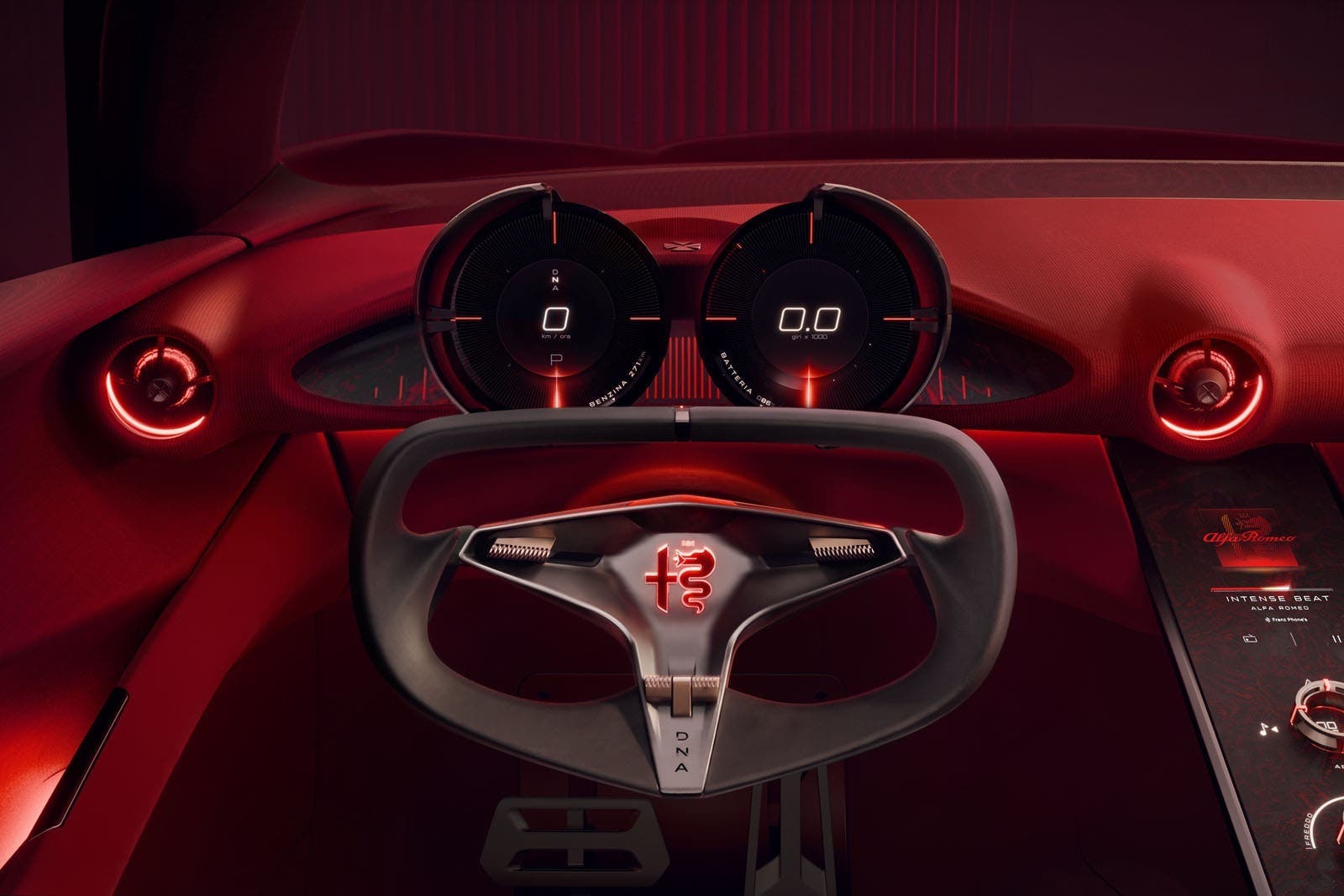
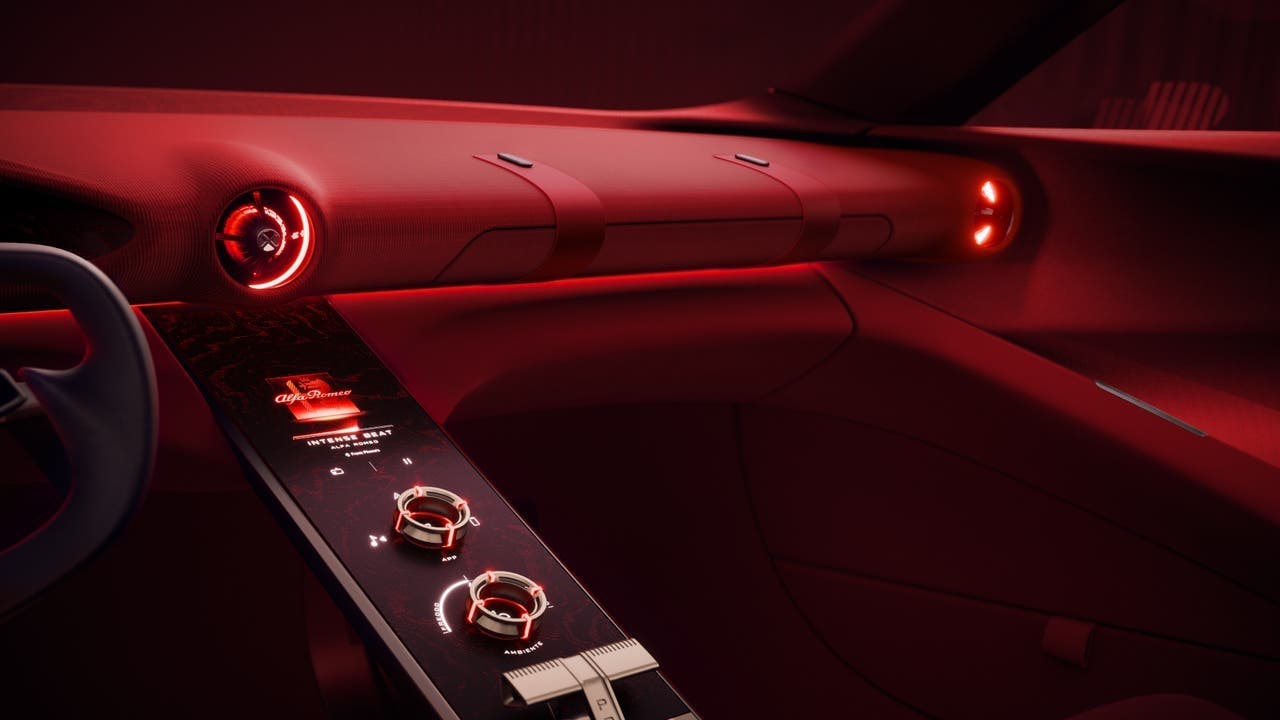
The Magma Display shows information through the console material, allowing the interface to appear when the car starts. When the system turns off, the surface becomes uniform again and the screen blends into the surrounding trim. This approach changes the way technology fits into the cabin, avoiding the need for a large standalone panel to dominate the dashboard.
Digital functions still work alongside a rotary controller, a drive mode selector and physical switches. Chiari also places importance on the tactile feedback these components provide, from the precision of the knobs to the response of the switches. The driver should be able to recognize and operate the controls through an interaction that feels specific to the Alfa Romeo brand.
During the interview, Chiari criticized the growing similarity between the interiors of different cars, many of which now revolve around a central touchscreen, a small instrument cluster and a flat center console with cupholders. Alfa Romeo wants to rethink this layout instead of relying on display size to create a distinctive identity. Chiari described the goal as “detoxing” car interiors, keeping the technology while changing the way manufacturers present it.
The strategy also reflects growing competition from Chinese automakers, which Chiari says have an industrial strength that would be difficult to challenge by following the same solutions. Developing different interfaces therefore becomes a way for Alfa Romeo to offer customers something distinctive, including in the everyday driving experience.
The Cuorerosso explores this idea through the Cannocchiale Vivente, a reinterpretation of Alfa Romeo’s traditional twin-dial instrument layout. The displays remain separate during normal driving and physically move closer together in sportier settings until they form a single instrument. The system selects the information it shows according to the driver’s activity, with the aim of focusing attention on what matters most at that moment.
Bringing the console technology to production cars remains separate from any possible production version of the Cuorerosso itself. Chiari left open the possibility of a limited run if enough interest emerges, but the concept currently serves mainly as a technology and design laboratory. Alfa Romeo has yet to decide whether its moving instrument cluster will also reach showroom models.