

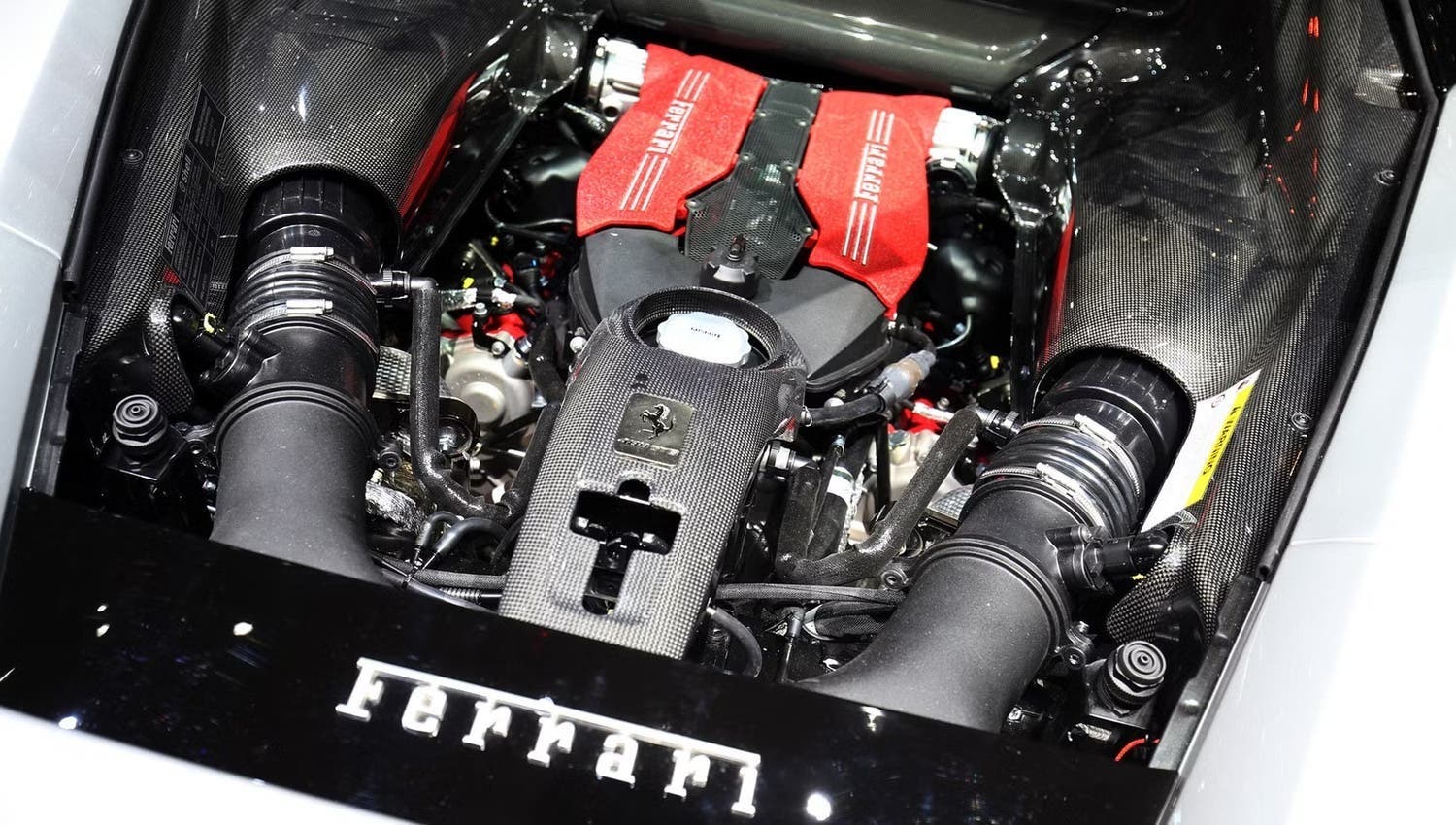
Ferrari is studying a thermoelectric device designed to sit in front of the compressor wheel and cool the intake air before compression. U.S. patent application 20260309072, published on October 8, describes the use of Peltier cells and external heat sinks. The proposed benefits include smaller intercoolers or a greater mass of air reaching the engine.
Ferrari patents a clever thermoelectric cooling system for turbo engines
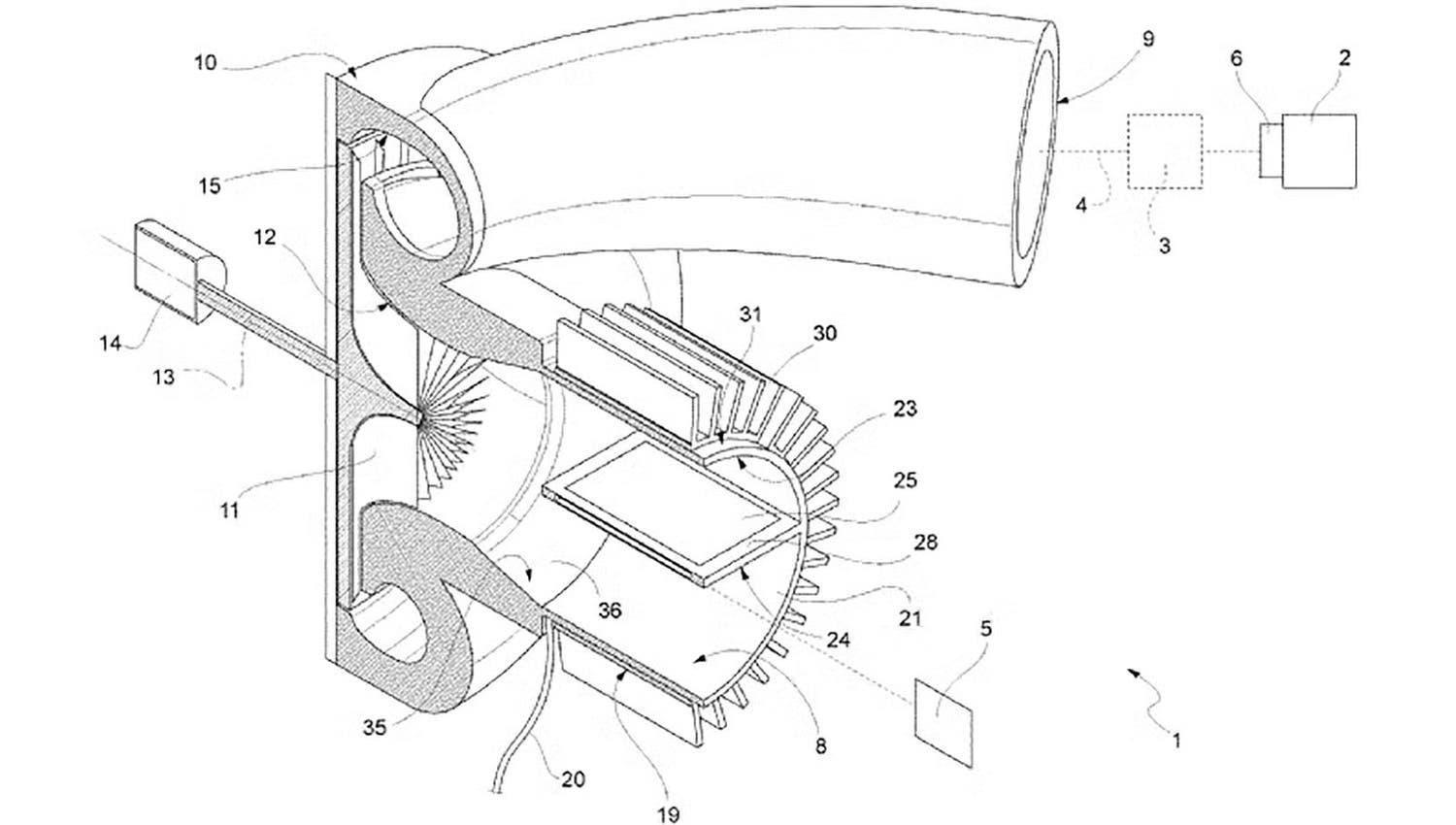
The document considers compressors driven by exhaust gases, as in a conventional turbocharger, as well as electrically driven units. In both cases, the system acts on the incoming airflow through an element positioned between the intake opening and the compressor wheel, carrying out part of the cooling process before the air reaches the intercooler after compression.
When electrical current passes through a Peltier cell, heat moves from one side of the component to the other. Ferrari places the cold side toward the intake duct and also considers layouts in which the airflow comes into direct contact with the cells. The collected heat then moves into metal structures that carry it toward the outside.
Fins increase the available surface area and help release that heat into the surrounding air. In the illustrated configuration, inserts connect the hot side of the cells to the heat sinks, avoiding the need for a dedicated liquid-cooling circuit. The patent also covers different shapes and arrangements for the components placed inside the airflow path.
Compression raises the temperature of the intake charge and reduces its density compared with air kept cooler at the same pressure. Lowering the temperature therefore allows the engine to receive a greater mass of air, increasing the amount of oxygen available for combustion. Better heat control can also reduce the risk of knock in gasoline engines.

A more compact intercooler could free up space for other components in the engine bay. The patent also considers keeping the same package size while increasing the amount of air handled by the compressor, potentially improving performance. The document outlines these possibilities without specifying any increase in power or reduction in fuel consumption.
The system’s effectiveness will depend on its electrical energy demand and its ability to reject heat. The external heat sinks must dissipate both the heat removed from the intake air and the heat generated by the Peltier cells during operation. Those heat sinks also require space, which engineers would need to balance against any reduction in the size of conventional heat exchangers.
CarBuzz, which highlighted the patent, suggests Ferrari could use the system on electrified models by taking advantage of the electrical energy already available on board. Ferrari has not yet identified the final power source or a specific model, so the patent cannot currently be linked to a confirmed production program.