


Stellantis shares fell around 3% during the first part of trading on August 24, dropping toward €4.50 and ranking among the weakest stocks on the FTSE MIB. The selloff followed the breakdown of trade negotiations between the United States and Canada, where investors had expected progress toward lower tariffs on vehicles built at Canadian plants.
Stellantis shares fall 3% as US-Canada trade talks collapse

The talks aimed to reduce the tariff on Canadian-made vehicles from 25% to 15%, but the two sides failed to agree on the requirements needed to qualify for the lower rate. Washington wanted greater weight assigned to components produced in the United States, while Ottawa pushed for recognition of the broader industrial supply chain shared by Canada, the United States and Mexico.
The new 50% US tariffs apply to roughly $20 billion worth of Canadian goods and follow a separate framework from automotive duties, which remain at 25%. Canada has announced countermeasures starting on September 8 across several sectors, although automobiles do not appear on the initial list of affected products.
Stellantis’ North American manufacturing operations depend on a network in which components and vehicles can cross borders several times before final assembly. The tariff on Canadian-built vehicles therefore raises the cost of models headed to the United States and could push Stellantis to reconsider sourcing, production volumes and plant allocations, especially ahead of the future review of the USMCA trade agreement.
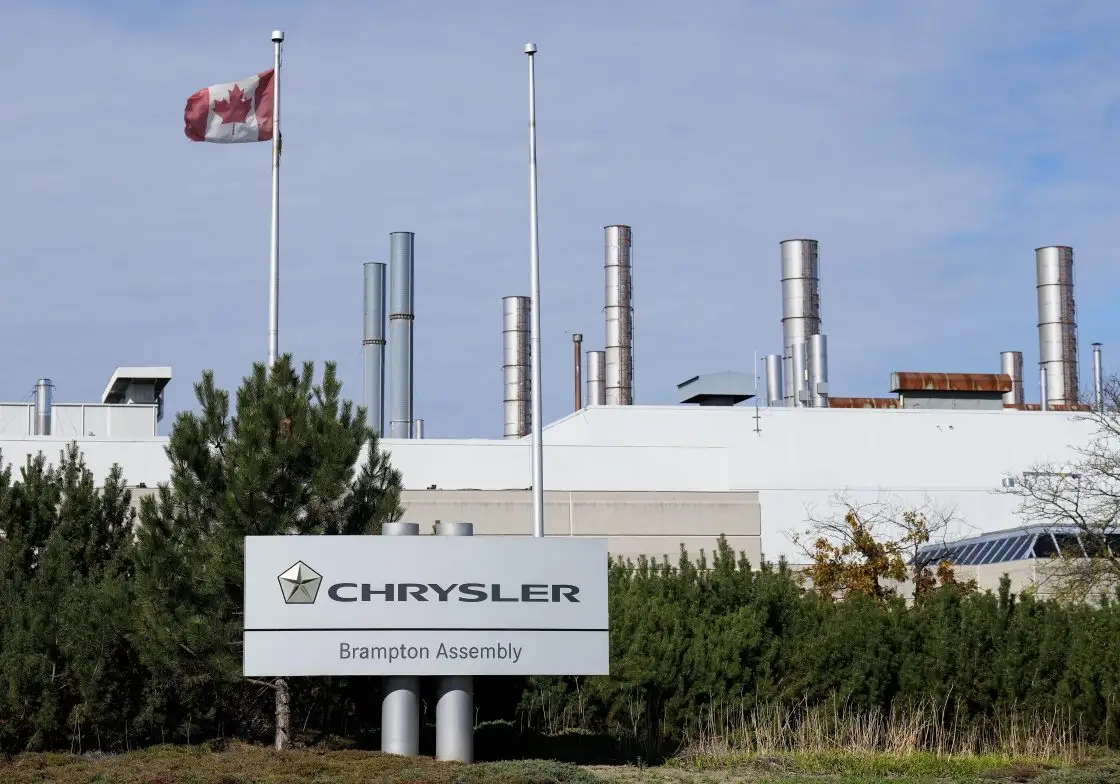
The Windsor plant continues to build the Chrysler Pacifica and Dodge Charger, while Brampton faces a much less certain industrial future. The Ontario facility remains idle, and around 2,200 workers are still waiting for a new product program after Stellantis moved the future Jeep Compass to Belvidere, Illinois. That decision removed the vehicle that had originally supported plans to restart the Canadian factory.
Unifor says Stellantis is also considering closing and selling the Brampton plant, adding that the group has expressed an interest in discussing a possible transfer with another company. Stellantis has not announced a final decision and continues to say it wants to find a sustainable manufacturing solution for the site. The union’s comments therefore describe an option under evaluation rather than an agreed transaction.
Earlier discussions about assembling Leapmotor electric vehicles have not yet resulted in a confirmed project for Brampton. The lack of a trade agreement further weakens the case for using the plant to build vehicles primarily for the US market, since any new program would need to absorb the tariff cost or generate enough volume within Canada.
The ultimate financial impact will depend on how long the tariffs remain in place, whether negotiations restart and how Stellantis chooses to distribute future production across Canada, the United States and Mexico.