

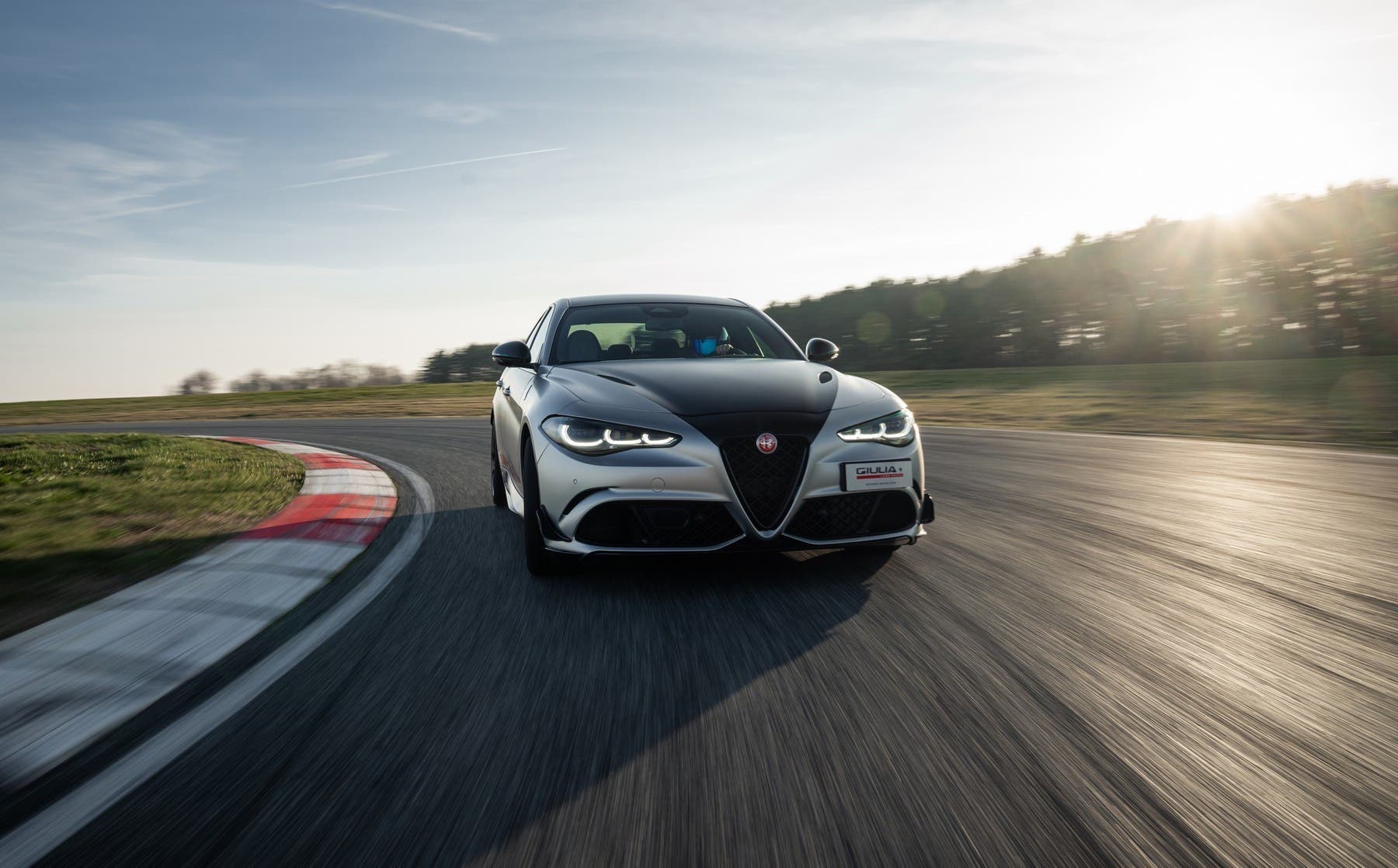
The Alfa Romeo Giulia Quadrifoglio Luna Rossa retains the dynamic qualities that made the Italian sports sedan famous, although its aerodynamic transformation and exclusive materials did not convince Autocar in every respect. Illya Verpraet drove prototype number 0 in the Midlands and praised its immediate steering, precise front end and engaging character, while also noting several poorly finished details on the development car.
Alfa Romeo Giulia Quadrifoglio Luna Rossa proves the Giulia can still thrill
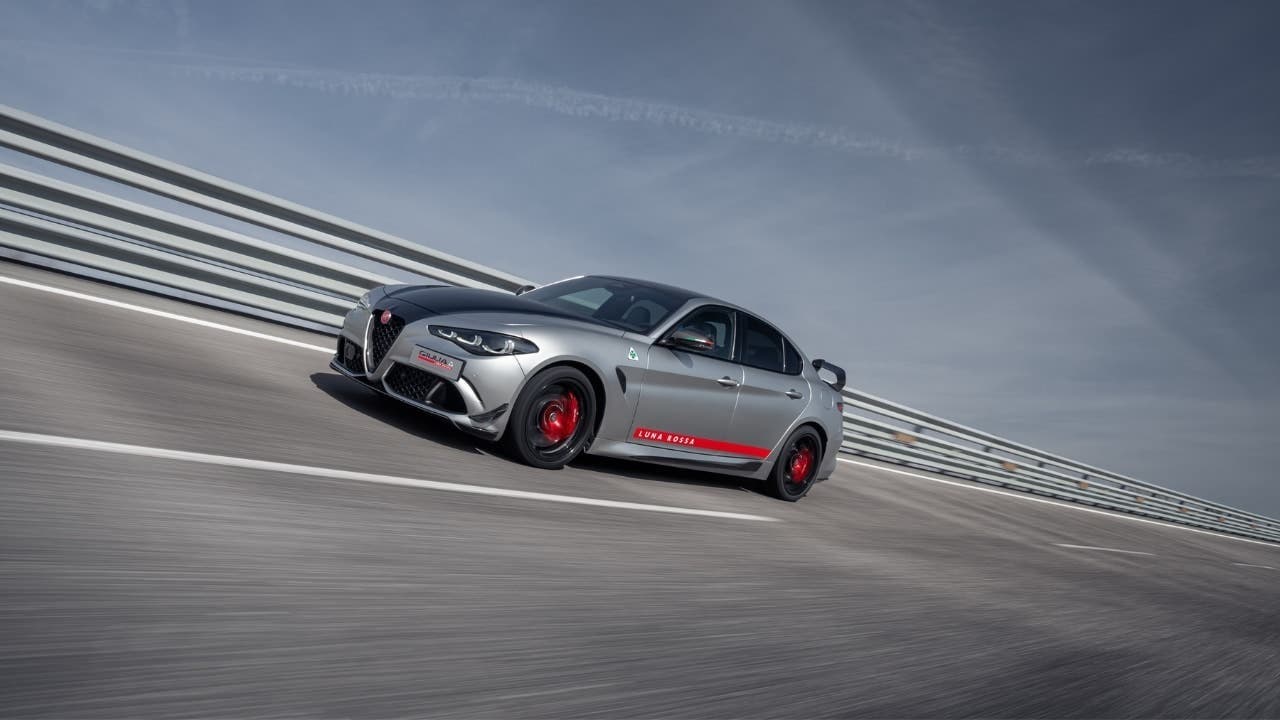
The 2.9-liter twin-turbo V6 produces 520 hp and sends power to the rear wheels through an eight-speed automatic transmission and a mechanical limited-slip differential. Alfa Romeo left this setup unchanged for the special edition, and the test suggests there was little reason to alter it. The Giulia still changes direction with a natural response that many newer performance sedans struggle to match.
Verpraet compared the experience with the new Audi RS5, describing the German car as the more sophisticated product while portraying the Giulia as a machine that still delivers a more analog driving experience. Race mode switches off the electronic assistance and gives the rear axle greater freedom. According to the journalist, the rear tires lose grip progressively, allowing the driver to control the slide without sudden reactions.
Most of the changes over a regular Quadrifoglio focus on aerodynamics. Front appendages, underbody elements, extensions along the side skirts and a large carbon-fiber rear wing increase claimed downforce to 140 kg at 300 km/h, or about 309 pounds at 186 mph. That figure represents nearly five times the downforce of the standard model. A conventional road test could not demonstrate the benefit directly, as Verpraet himself acknowledged.
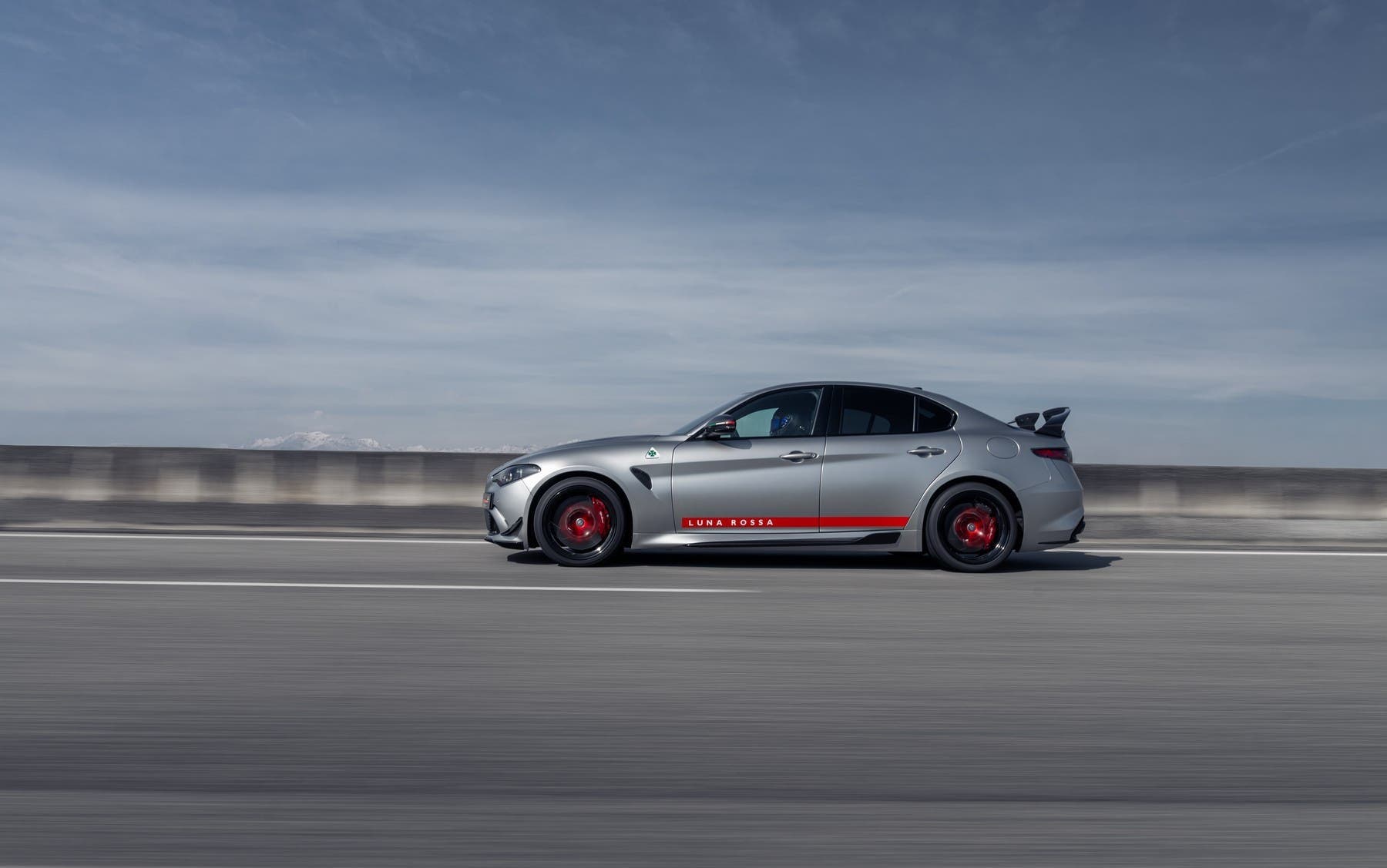
References to the Luna Rossa sailing team continue inside the cabin. Sparco seats feature upholstery inspired by flotation equipment, while the dashboard incorporates material made from actual sails. This area also revealed some of the prototype’s shortcomings, including panels that did not fit correctly, a poorly installed seat control and red badges that had already started to fade. Autocar attributed these issues to the development status of the car and does not expect them to appear on customer examples. Alfa Romeo will build just 10 cars, all of which have already sold, in addition to development vehicle number 0.
Verpraet also criticized the V6’s coarse exhaust note, which the Akrapovič exhaust system makes even more pronounced. He suggested that bringing back the six-speed manual transmission could make a future limited-edition Giulia even more special.