

A long bonnet, a sweeping roofline and a broad, purposeful stance: Tommaso Ciampi’s imagined Alfa Romeo flagship makes an immediate visual statement. It also brings an abandoned ambition back into focus, at a time when the brand’s product strategy is heading in a different direction.
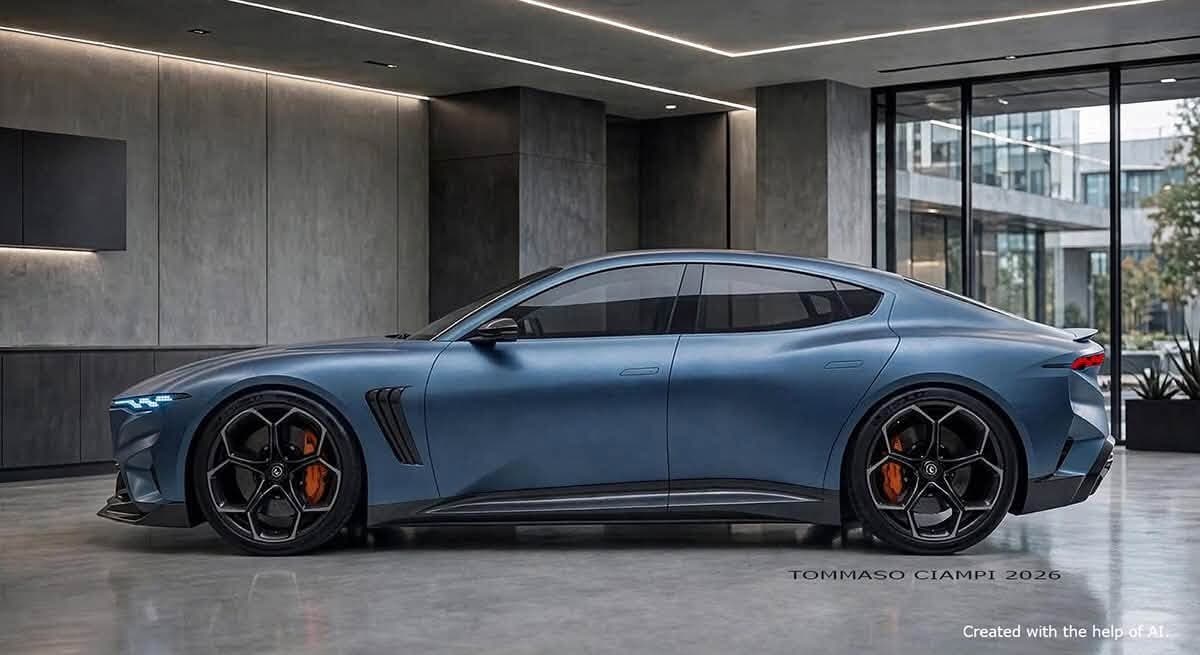
Created with the help of AI, the independent rendering depicts a large four-door fastback with the presence to sit above the Giulia. It is an unofficial design exercise, with no connection to an announced production model, but it offers an intriguing interpretation of the territory Alfa Romeo once intended to explore with the project commonly known as E-Jet.
A flagship conceived with international growth in mind
The thinking behind a larger Alfa went beyond adding another model to the range. Under former CEO Jean-Philippe Imparato, moving upmarket was closely linked to building the brand’s presence outside Europe.
At a media roundtable in Japan in January 2024, subsequently covered by Alfa Romeo’s own brand magazine, Imparato outlined an ambition to enter a higher segment in 2027. He identified the United States, China and Japan as markets where an E-segment model could support that expansion. The proposal was still described in broad terms, with detailed information withheld. Alfa Romeo Japan
Even then, however, the direction was not entirely settled. In a later interview with Autocar, Imparato explained that a large electric SUV still needed a convincing business case, with a C-segment hatchback being considered as an alternative. The choice between a larger flagship and a more accessible compact model was therefore already part of the discussion before Alfa Romeo changed leadership. Autocar
Ciampi’s answer is all about proportions
Seen against that background, the rendering is an interesting interpretation of what a larger Alfa could have become.
Its strongest feature is the side profile. The long bonnet and descending roofline lend it the proportions of a four-door coupé, while a suggestion of additional ground clearance places it somewhere between a fastback saloon and a grand tourer with a raised ride height.
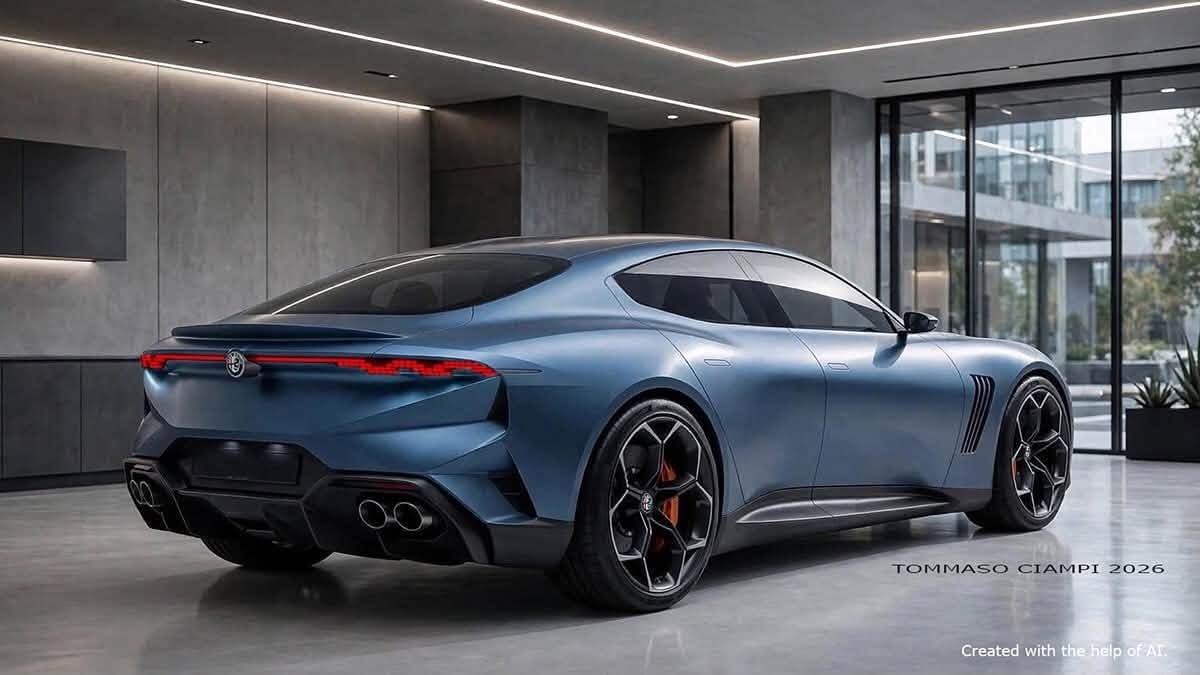
The familiar shield-shaped grille provides an unmistakable focal point at the front. Slim lighting elements, large air intakes and aerodynamic detailing give the nose an aggressive character, while the flanks take a cleaner approach. Large wheels, orange brake callipers and pronounced wheelarches provide the visual drama. These are the defining features of Ciampi’s proposal as presented in the original report. ClubAlfa
To our eyes, that contrast is what makes the design work: the front delivers the aggression, while the profile gives the car its elegance.
Where Alfa Romeo’s priorities now lie
The production outlook is more grounded. In an official statement dated 27 May 2026, Alfa Romeo outlined plans for a new compact SUV with a choice of powertrain types, alongside a C-segment hatchback intended to follow in the tradition of the 147 and Giulietta.
The same statement confirmed that the current Giulia and Stelvio would remain in production until 2027, including their Quadrifoglio versions. For their longer-term future, Alfa Romeo said it was studying new interpretations of its D-segment range, with hybrid and electric powertrains among the planned solutions. Further details would follow. Stellantis / Alfa Romeo
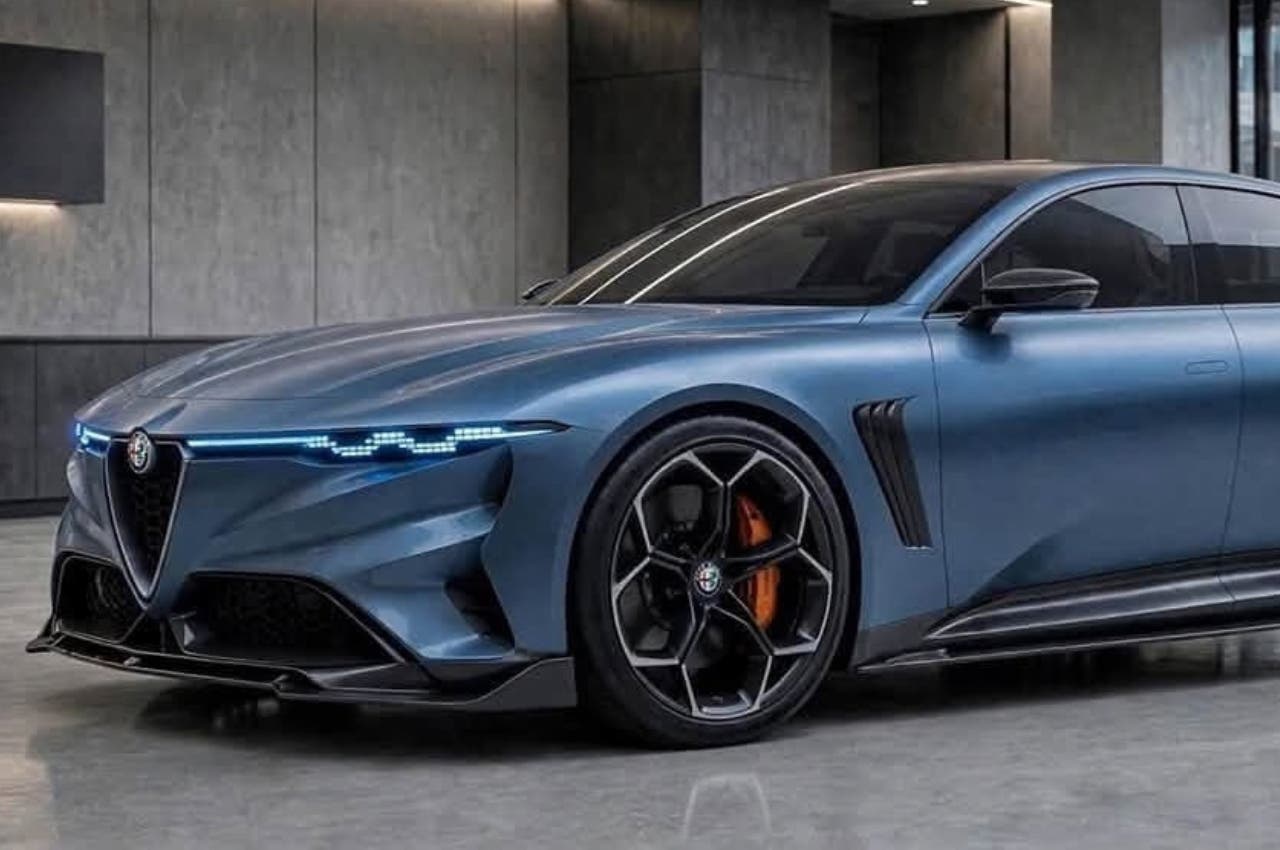
That leaves Ciampi’s flagship as an exploration of another possible Alfa Romeo future. Its appeal comes from giving the brand’s sporting identity a larger, more expressive canvas. The commercial case may have moved on, but the rendering shows why the idea remains such fertile ground for independent designers.