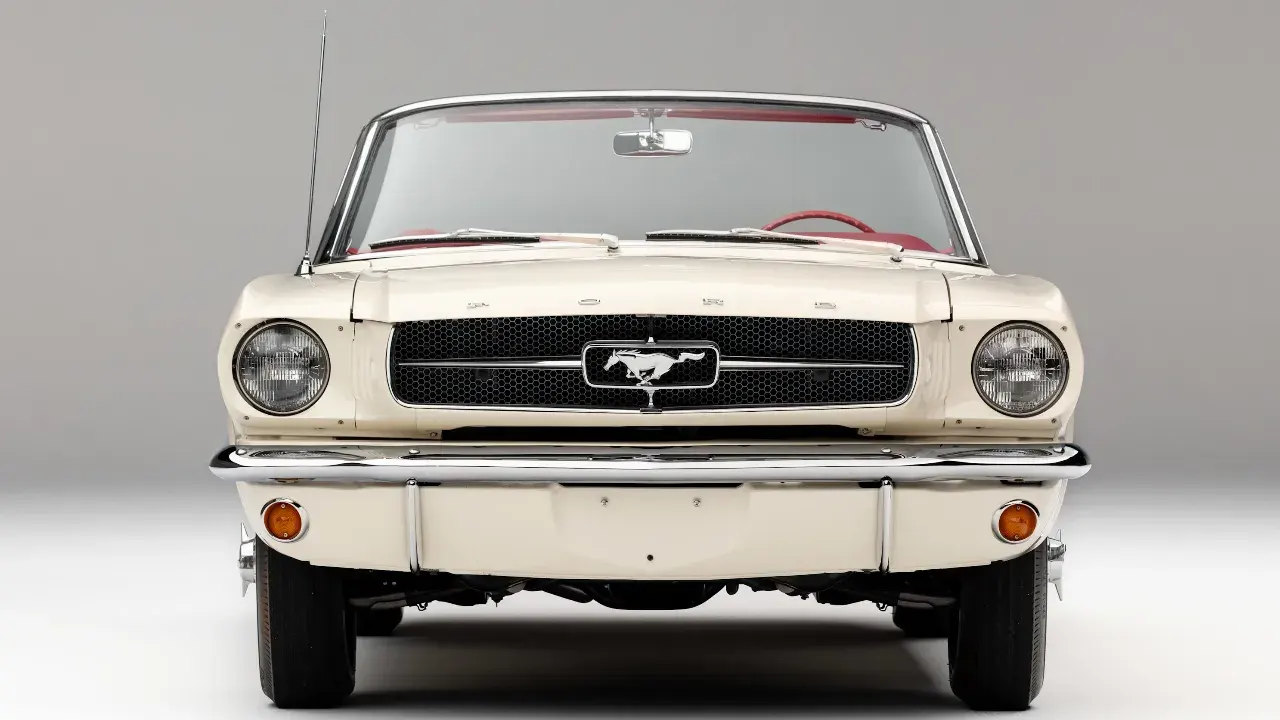
America’s eternal love affair with the Ford Mustang usually conjures up images of roaring V8s, burning rubber, and Steve McQueen tearing through San Francisco. But history has a funny way of subverting corporate mythmaking. The National Historic Vehicle Register (NHVR) just inducted its second-ever Mustang into its elite 37-car permanent archive at the Library of Congress. Surprisingly, it isn’t some tire-shredding performance beast, but a sluggish 1965 model pushing a meager 120 HP from a Thriftpower 200-cubic-inch inline-six.
This particular pony car, chassis number 5F08T383386, earned its historic spot by doing the most un-Mustang thing imaginable: covering 5,000 miles without consuming a single drop of gasoline or even turning its engine on. Long before Detroit started panicking over modern EVs, Walt Disney engineered the ultimate zero-emission vehicle for Ford’s “Magic Skyway” attraction at the 1964/1965 New York World’s Fair.
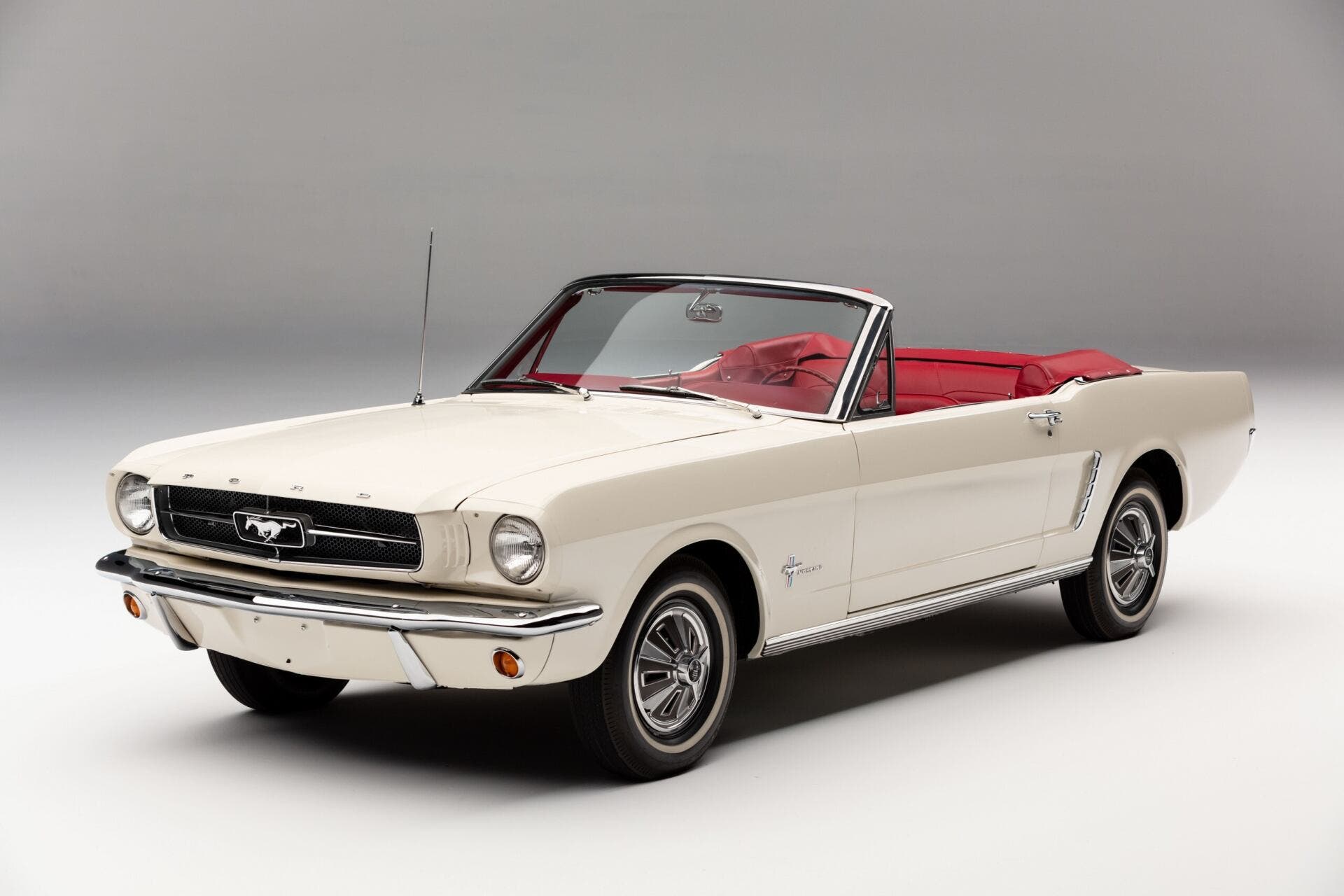
Ford pulled this Wimbledon White coupe straight off the standard assembly line and hired Caron & Company to modify it into a glorified theme park ride. Technicians welded the chassis joints, slapped on plywood plates, installed suspension tie rods, and added massive steel guide pins to the underbody to hook into a motorized, continuous-motion cable system. For six months, this mechanical zombie silently dragged 40,000 oblivious passengers past animatronic dinosaurs and space stations.
When the corporate circus left town, Ford faced the logistical nightmare of dealing with a battered fleet of prop cars. While most World’s Fair vehicles were crushed or vanished into the void of corporate write-offs, this lucky survivor was sent back to Caron & Company for a quick cosmetic cover-up. They removed the heavy steel guide brackets, patched the floorboards, refreshed the paint, and swapped the heavily worn cabin for a brand-new red interior featuring a bench seat and an AM/8-track stereo. In their corporate haste, they accidentally installed 1966 model hubcaps instead of the 1965 originals.
Dumped into a Dearborn used car lot in December 1965, it was bought by an unsuspecting driver completely oblivious to its past. To them, it was just a normal commuter car with 258 Newton-meters of torque that took a painful 13 to 15 seconds to crawl from 0 to 60 mph, topping out at 95 mph via a three-speed Cruise-O-Matic automatic transmission.
For perspective, today’s standard Mustang GT rolls off the line with 480 HP, and the street-legal GTD monster pumps out 815 HP from a supercharged 5.2-liter V8. Even back in the mid-1960s, a proper Shelby GT350 weaponized its 289-cubic-inch V8 with a Holley four-barrel carburetor and Cobra intake to hit 306 HP.
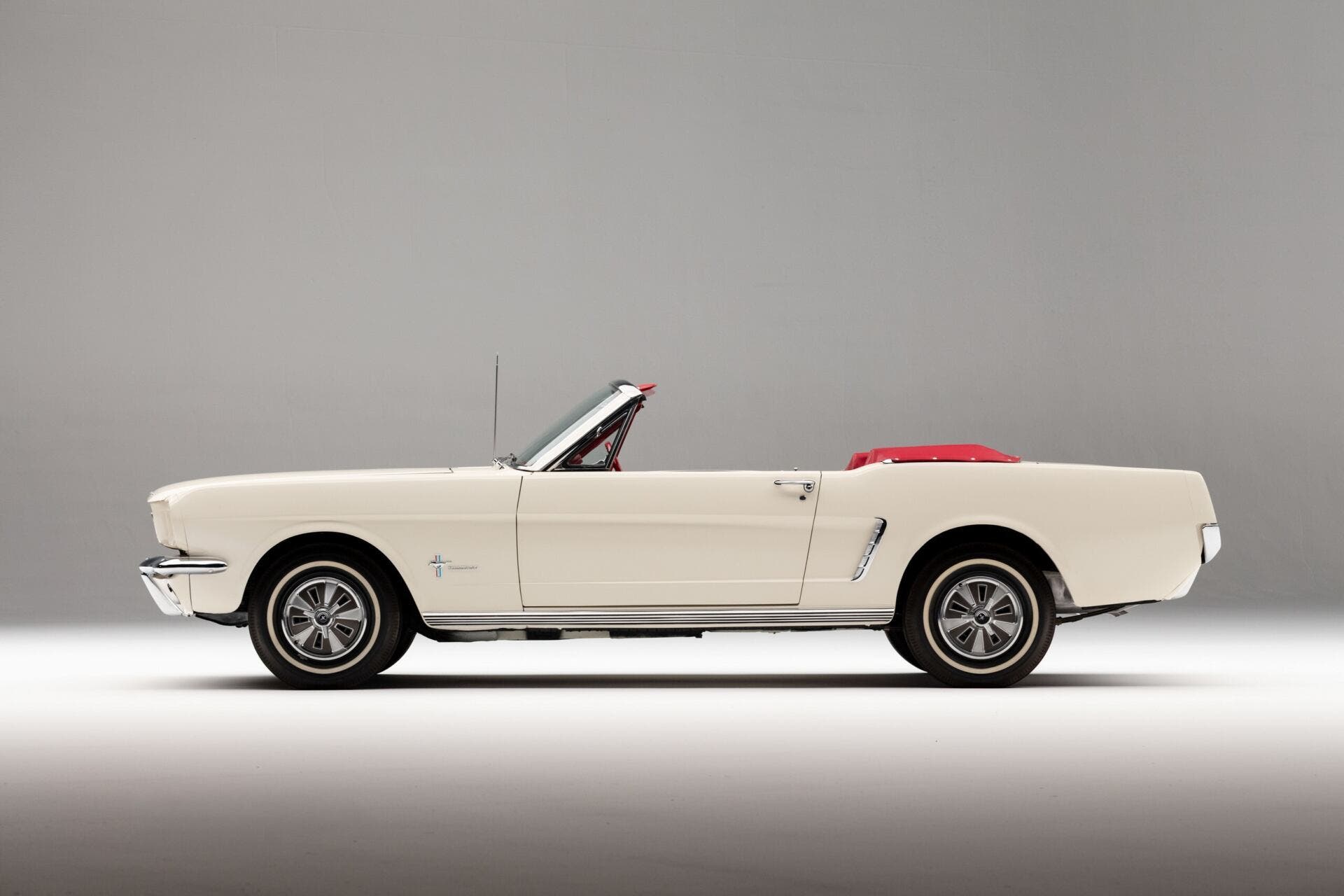
Yet, this inline-six coupe is the one heading to the national archives. Texas collector Sam Pack saved it from obscurity, funding a meticulous 2015 restoration that preserved the original powertrain and those telltale underbody welds. Today, showing just 35,000 original miles, it sits inside Washington D.C.’s Union Station for Ford’s “Driving America Forward” exhibit until July 14, 2026.
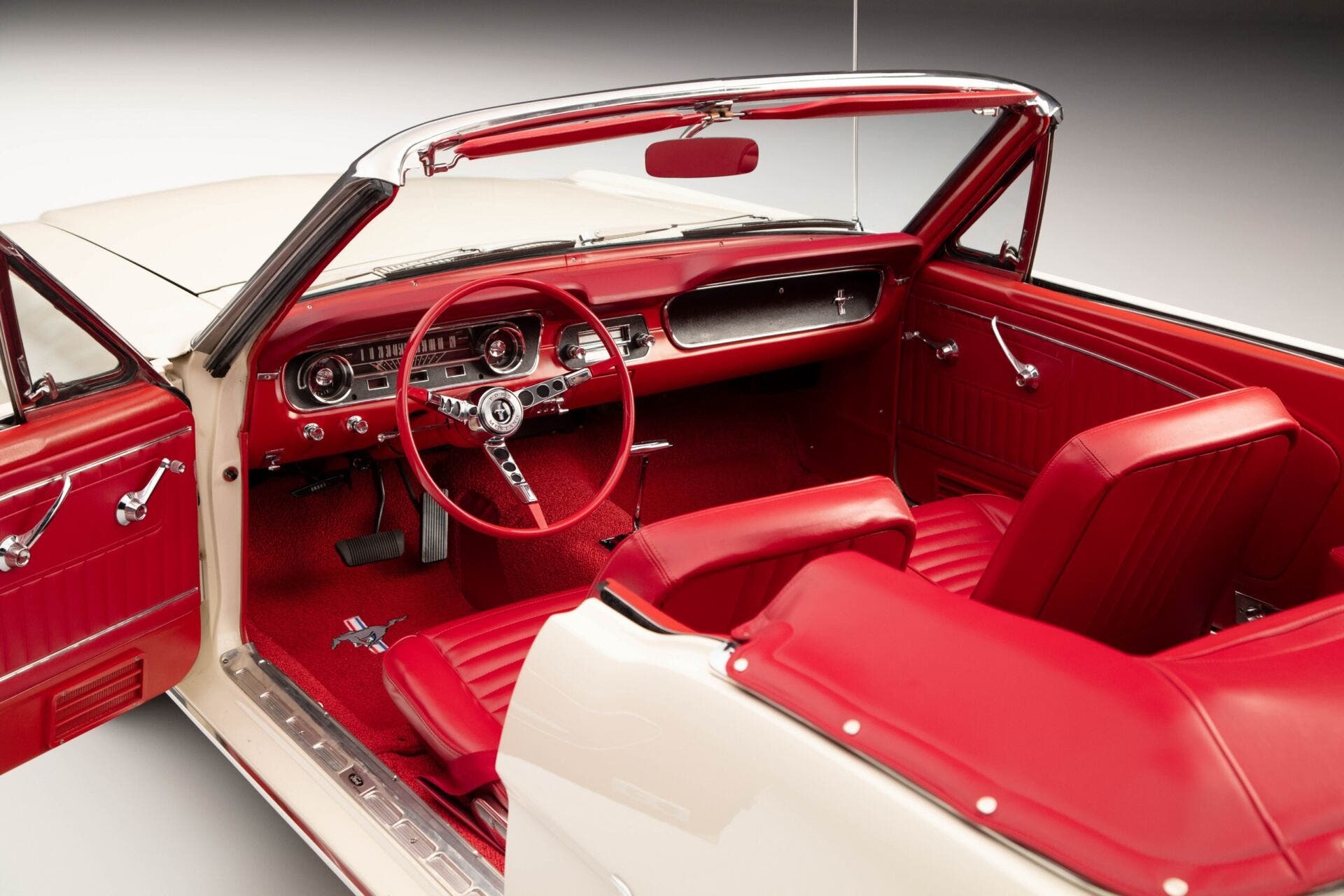
While the Hagerty Drivers Foundation finishes laser-scanning the vehicle alongside the U.S. Historic American Engineering Record (HAER), this weird piece of Disney marketing finally takes its permanent place next to the iconic 1968 “Bullitt” Fastback.