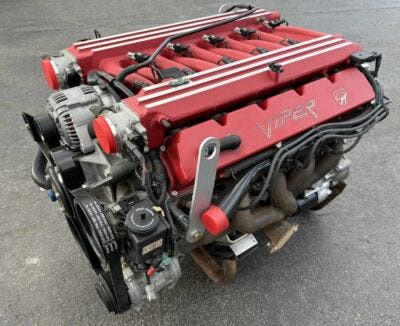
The V10 in the original Dodge Viper also came together with help from Lamborghini, which Chrysler brought into the project to help develop an aluminum version of the engine for its new sports car. The 8.0-liter displacement came from an American V10 program originally aimed at heavy-duty pickups, but the Viper needed more than a simple transfer of that engine into a sports car. Engineers had to reduce weight and revise several aspects of the powerplant to suit its new role. After acquiring Lamborghini in 1987, Chrysler could draw on the Italian company’s engineering expertise.
The surprising Lamborghini connection behind the Dodge Viper’s V10
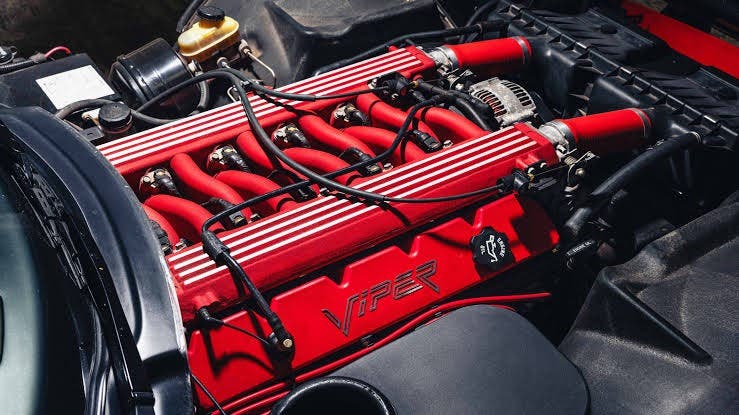
Chrysler already had a V10 program for the Dodge Ram, giving Viper engineers a useful starting point for the kind of torque and power they wanted. A work truck and a sports car, however, placed very different demands on the engine, especially when it came to weight, responsiveness and overall packaging. Simply installing the truck version under the Viper’s long hood would have created major compromises.
Lamborghini helped develop and build the early aluminum V10 units, while engineers also made further changes to adapt the engine for high-performance road use. The Italian company’s contribution therefore went beyond replacing cast iron with aluminum. According to period accounts, the move to an aluminum construction contributed to a weight saving of around 160 pounds, or about 73 kg, while other modifications helped turn the basic V10 concept into an engine suitable for the Viper.
The Viper itself grew from an idea championed by Bob Lutz, who wanted Chrysler to create a modern sports car inspired by the Shelby Cobra in the late 1980s. The project focused on an open body, rear-wheel drive and a large-displacement engine, with very little separating the driver from the car’s raw mechanical character.
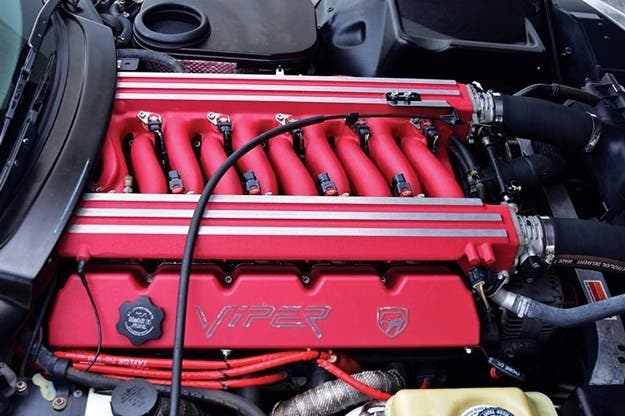
The public saw the result for the first time at the 1989 Detroit Auto Show, where the concept received a strong response. That reaction encouraged Chrysler to move quickly toward production and turn the show car into something customers could actually buy. The Viper RT/10 arrived in 1992 with its 8.0-liter V10 producing 400 hp.
The production car kept much of the simplicity that defined the original concept, relying heavily on its huge engine and rear-wheel-drive layout for personality. Lamborghini’s role did not mean the Viper used an engine borrowed from one of the Italian brand’s supercars. Instead, its engineers helped Chrysler transform an American V10 program into a lighter and more sophisticated powerplant that could meet the very different demands of a high-performance sports car.