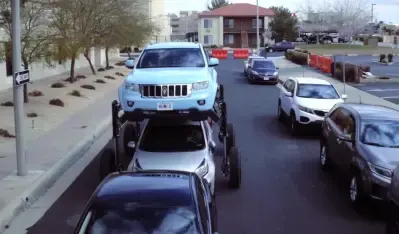
No, the real cure for gridlock takes approximately 300 feet of hydraulic piping, a small Honda gas generator, and an alarming willingness to turn a perfectly respectable Jeep Grand Cherokee into a mechanical nightmare that defies sanity.
Back in 2017, telecommunications giant Verizon teamed up with viral marketing agency Thinkmodo and special effects wizards at A2Zfx to promote its “Hum” connected-car service. Instead of running standard TV commercials with soft lighting and upbeat acoustic guitars, they decided to answer a question nobody rationally asked: what if an SUV could simply walk over other commuters? Thus, the Hum Rider was born.
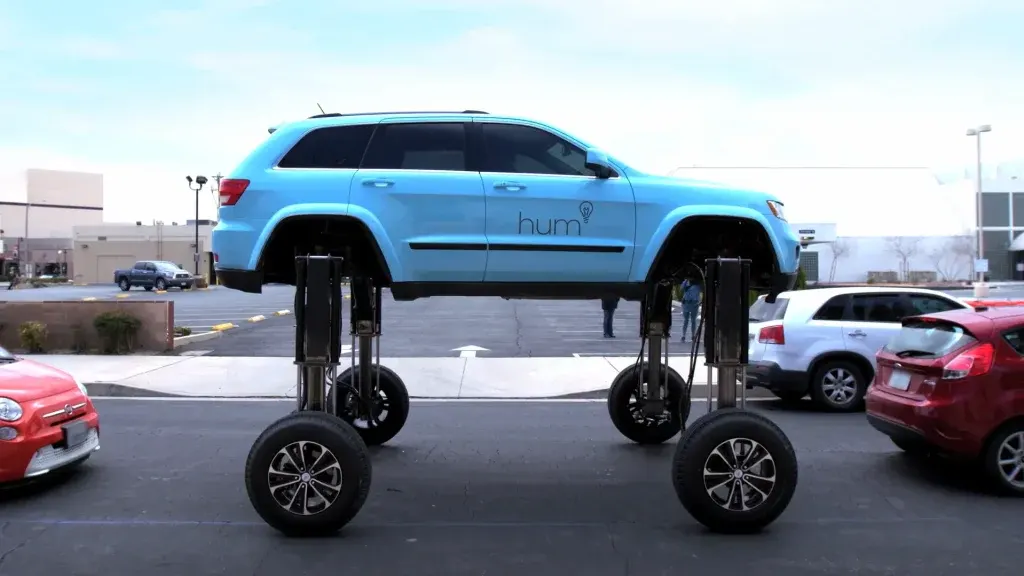
On the surface, it looked like a standard Jeep Grand Cherokee. Underneath the sheet metal, however, lurked a custom hydraulic lift system capable of extending the wheel track outward and elevating the entire body to nearly nine feet in the air. That is more than enough clearance to casually straddle the roofs of ordinary sedans trapped in rush-hour misery. At the press of a dashboard button, the hydraulic arms expand, the stance widens, and the Jeep nonchalantly rolls over stalled traffic like a monster truck in a tailored suit.
Naturally, such absurd capability comes with hefty mechanical compromises. All that hydraulic hardware pushed the vehicle’s total weight to roughly 8,500 pounds, more than double the weight of a factory Jeep Grand Cherokee.
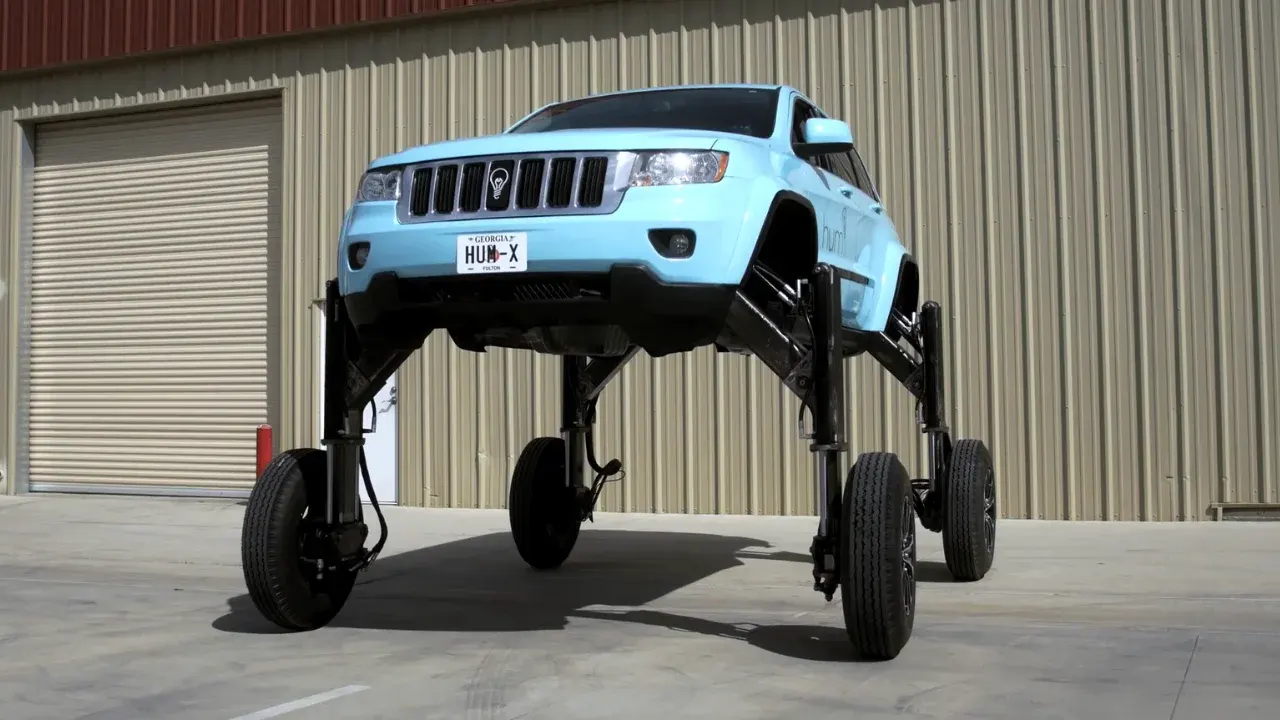
To handle the massive structural load and brutal lateral forces, the team had to fit heavy-duty commercial truck tires. Furthermore, driving a four-ton SUV nine feet off the ground introduces a minor operational flaw: you cannot see a single thing directly below you. To prevent accidentally flattening a Toyota Prius, engineers installed four underbody cameras wired to interior monitors, turning the cabin into a makeshift air-traffic control center.
Unsurprisingly, the Hum Rider did not arrive to mass production. It was a one-off promotional stunt created to pitch an automated roadside assistance app, not a realistic policy fix for Los Angeles traffic. If corporate America throws enough money at a completely ridiculous problem, it can build a completely ridiculous solution that actually works.