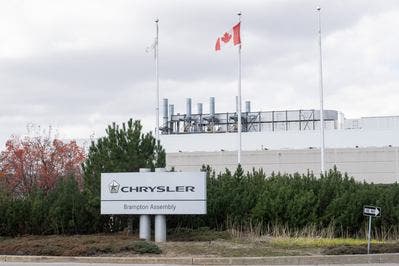
Stellantis is frantically attempting to tidy up its financial living room after months of operational chaos, but Wall Street remains entirely unamused. Despite leadership polishing the quarterly figures and preaching optimism, investors refuse to buy the comeback narrative.
The raw numbers on the stock exchange read like a horror story for shareholders: back on January 2, a single share of Stellantis traded at €9.72, but by September 22, it was struggling around €4.22. That is a jaw-dropping 56 percent of market value evaporated in under nine months.

The hilarious paradox is that the actual balance sheet isn’t an absolute dumpster fire. In the second quarter, Stellantis pulled in €43.5 billion in revenue, up 13 percent year-over-year. Net profit limped back into positive territory at €293 million, while adjusted operating profit scraped together €773 million, representing a paper-thin 1.8 percent margin. Industrial cash flow even clawed its way to a respectable €1 billion.
The heavy lifting came almost exclusively from North America, where revenues surged 32 percent, a much-needed life preserver for a group desperately treading water in the States. Meanwhile, back in Europe, the situation resembles a frozen tundra. Revenues remained utterly flat, and adjusted operating margins lingered in negative territory at -0.6 percent, proving that selling cars in the Old Continent remains a painfully unprofitable exercise.
Predictably, Wall Street analysts were quick to throw cold water on any premature victory laps. Morgan Stanley slashed its rating from Equal Weight to Underweight, aggressively hacking its target price from €5.70 down to €4.50. Their breakdown wasn’t subtle, citing a dated vehicle lineup that lags in key segments, bloated dealership inventories, and a cash generation machine that looks more like a leaky bucket. Hot on their heels, Berenberg demoted the stock from Buy to Hold, trimming its price target from €7.80 to €5.10 with a gentle reminder that too many unresolved knots remain tied.
CEO Antonio Filosa is sticking to his guns, reiterating 2026 guidance and banking heavily on the ambitious FaSTLAne 2030 plan. The group still targets mid-single-digit revenue growth and low-single-digit operating margins for the full year.
The stock market is no longer satisfied with corporate slide decks or a single mediocre quarter. After such a soul-crushing stock collapse, Wall Street wants real sustained momentum, profitable EVs, and proof that this fragile recovery won’t disintegrate before 2027. Until then, Stellantis will remain on financial probation.