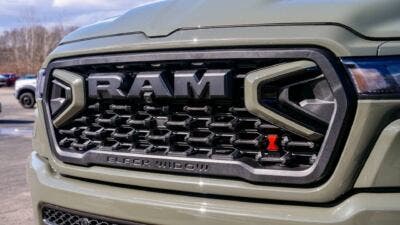
Stellantis is reportedly considering concentrating most of its future investment on four priority brands, Jeep, Ram, Peugeot and Fiat, while reducing the weight of the other names within the group’s portfolio. According to the latest rumors, the direction set by Antonio Filosa would not involve disposals or sales, but a reshaping of internal roles, with a clearer distinction between brands set to receive resources on a global scale and those that would operate with greater autonomy in their main markets.
Stellantis could reshape its 14-brand portfolio around four core names

The underlying logic reflects the commercial weight of each brand. Jeep maintains significant volumes in both the United States and Europe, Ram holds a strong position in the pickup segment in North America and South America, Peugeot represents the strongest volume brand between Europe and French-speaking markets, and Fiat retains a dominant position in Italy, Brazil and several areas of South America. Stellantis would build its strategy around these four names, with dedicated platforms and industrial investment, aiming to maximize returns in the regions where the group generates the largest share of revenue.
For the other brands, the picture looks more nuanced. DS Automobiles could remain focused mainly on France, while Lancia prepares to launch the new Gamma but continues to operate almost exclusively in the Italian market. The group has not confirmed the third model planned in the Turin brand’s product plan, the new Delta, and the revised priorities could have affected the timing or feasibility of the project.

Chrysler should continue with the Pacifica as its core model in the United States, alongside a new compact SUV, while Dodge would focus mainly on the Charger, which could also see the possible return of the V8 engine. Maserati, which is working on the new Grecale, is going through a particularly difficult phase, while Alfa Romeo will have to wait until 2028 for the new Stelvio and Giulia, delayed by three years compared with the original plan.
Stellantis does not appear inclined to remove brands from its portfolio. Instead, the group seems ready to differentiate investment levels more strictly, reserving most available resources for the brands with higher volumes and margins, while giving the others a more limited operating perimeter tied to the markets where they still have an established presence. The picture should become clearer on May 21, when Filosa presents the group’s new industrial plan from Detroit.