The next-generation Dodge Durango already has an industrial plan, but its design remains a mystery. Stellantis plans to start production in 2029 in Detroit, where the company has announced an investment of about $130 million to prepare the Jefferson plant. In the meantime, an independent design study imagines how the American SUV could evolve, including a completely redesigned interior.
2029 Dodge Durango render previews a dramatic redesign inside and out
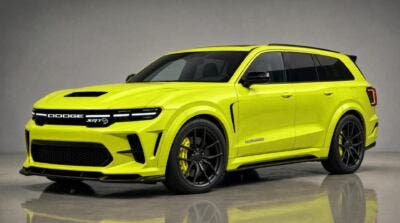
Nihar Mazumdar created the project and published it on Behance. His Durango moves away from some of the current model’s bulkier proportions in favor of a sleeker body, with a roofline that slopes more noticeably toward the rear. Lower side windows also make the SUV look closer to a sporty crossover.
Mazumdar also developed the cabin, combining the instrument cluster and infotainment display behind a single glass panel. The layout gives the interior a very different appearance from today’s Durango. Black and red upholstery covers much of the cabin, while ambient lighting follows the dashboard lines and complements a completely redesigned steering wheel.
Outside, the ventilated hood and aggressive lower front fascia maintain a clear connection with high-performance Durango variants. The lighting signature extends toward a small grille, where a Dodge script sits in the center, although the design does not directly copy the current Hellcat.
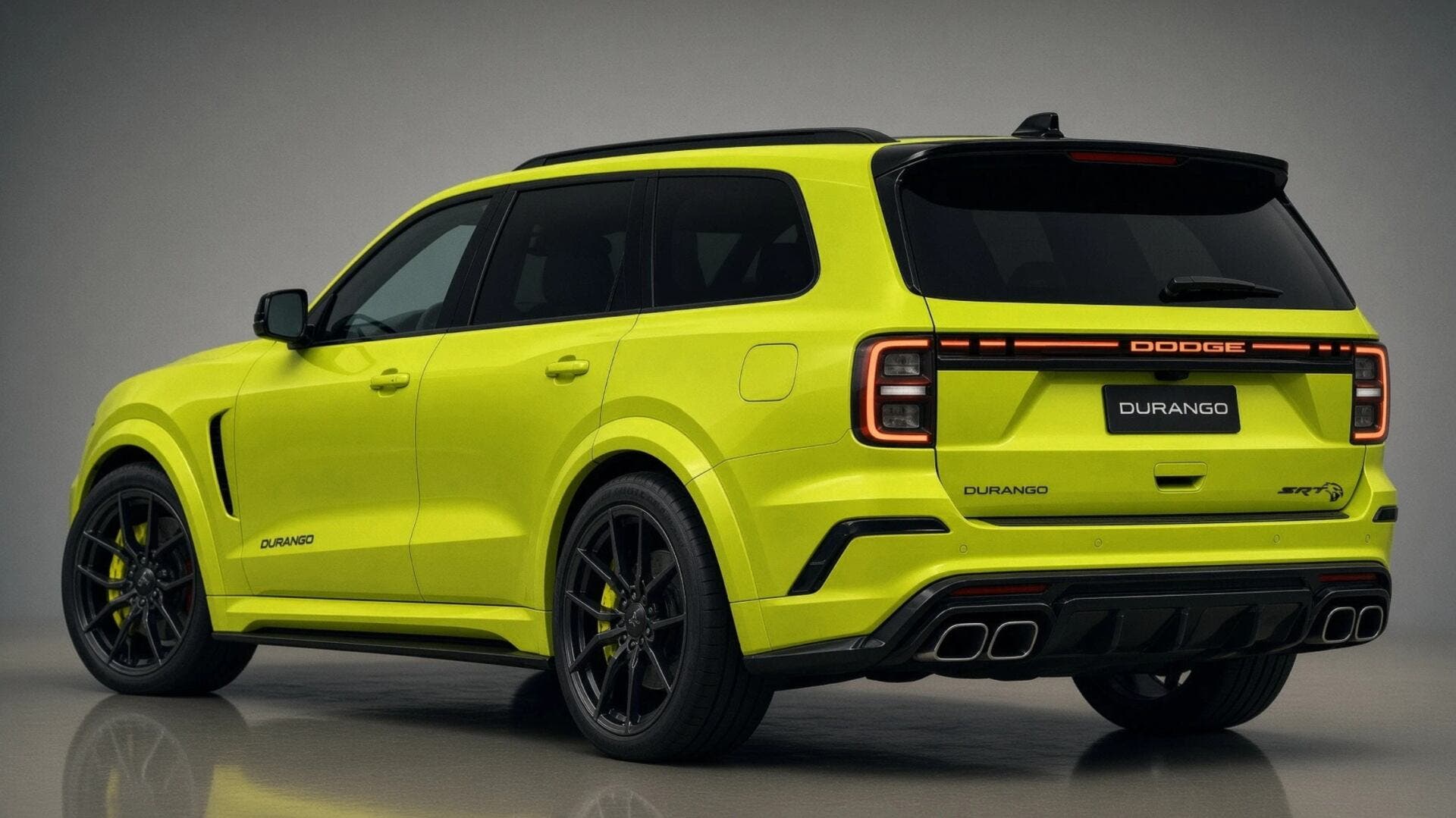
At the rear, C-shaped taillights connect through a full-width light bar, while an illuminated Dodge name appears on the tailgate. Four exhaust outlets flank the diffuser below, reinforcing the performance-focused look suggested by the SRT badges.
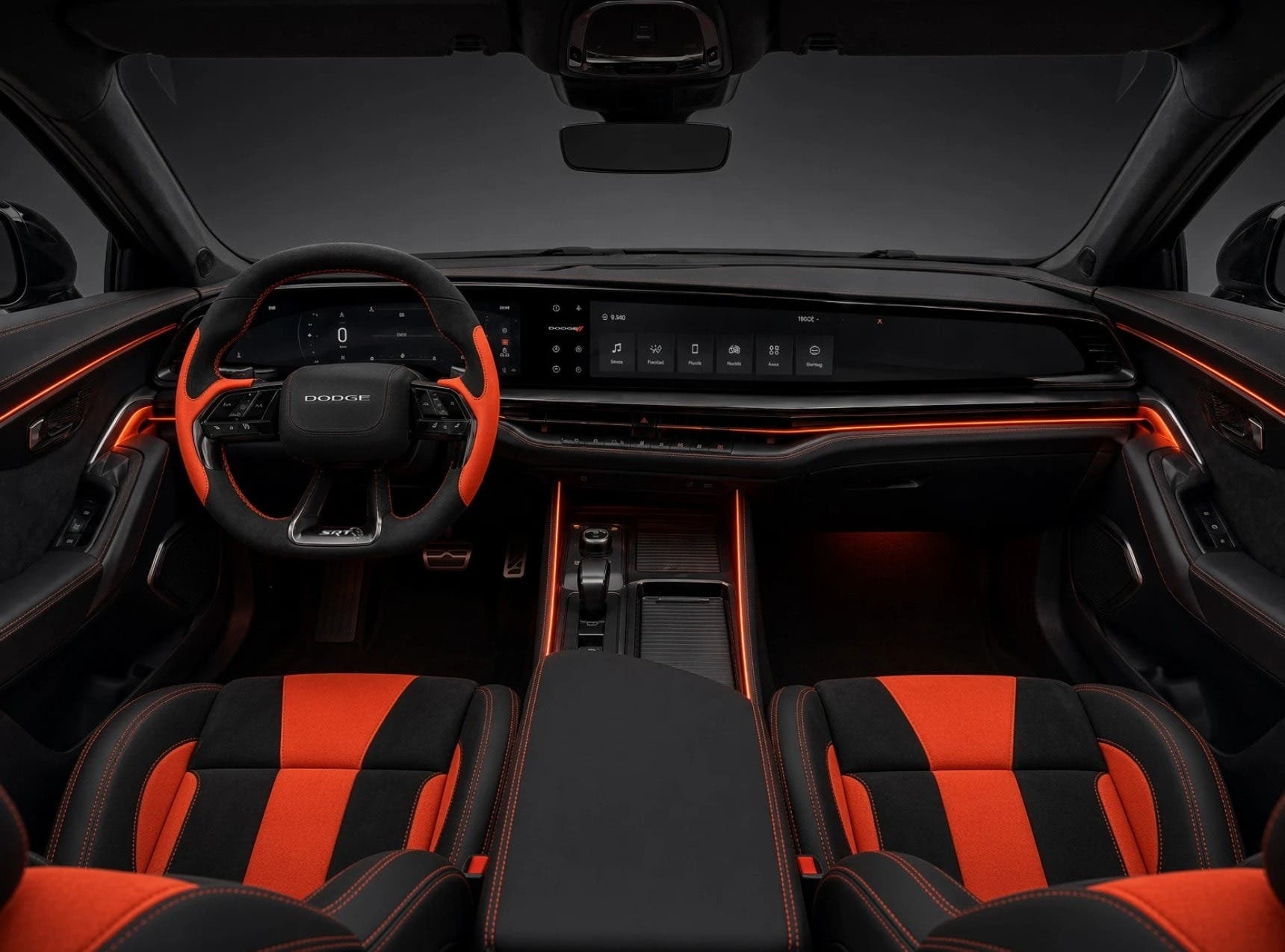
Those details reflect the designer’s interpretation and do not reveal anything about the production Durango’s future powertrain. In particular, the SRT badges do not confirm a return of the 6.2-liter supercharged V8 currently used by the Hellcat.
The Durango on sale today entered production in 2010 and shares its technical roots with the Jeep Grand Cherokee WK2. Dodge has updated the SUV several times and added increasingly powerful versions over the years without replacing the original architecture.
The Detroit program, however, concerns an entirely new generation. Stellantis has yet to announce which platform it will use or what powertrains the lineup will offer.