Icons like the original Fiat Panda and Citroën 2CV once put millions of working-class drivers on the road with little more than four wheels, a modest engine, and zero pretense. Today, as average vehicle prices skyrocket into orbit and used car lots start looking like rolling museums of ancient artifacts, truly affordable transportation has virtually vanished. Enter Stellantis, a corporate behemoth that has suddenly remembered its historic roots and decided to attempt a resurrection.
Beginning in 2028, the automotive giant is launching its ambitious “E-Car” initiative, a dedicated line of dirt-cheap, tiny electric vehicles engineered to save European city dwellers from public transit despair.
The epicenter of this bargain-bin EV revolution will be the historic Pomigliano manufacturing plant in Southern Italy. Having spent decades churning out basic, indestructible Fiats before transitioning to modern fare like the Alfa Romeo Tonale and the aging base Panda, Pomigliano is getting back to doing what it does best: building sensible cars for ordinary folks.
Driven by proposed European Commission regulations establishing the new “M1E” vehicle classification, Stellantis is officially adopting Japan’s beloved kei car philosophy. Instead of tiny 660cc turbocharged gas engines, however, these micro-EVs will squeeze compact battery packs into sub-165.4-inch (4,200 mm) frames. This regulatory shift provides carmakers with long-term policy certainty, making budget micro-cars a lucrative, low-risk investment rather than a financial suicide mission.
While official product reveals remain under wraps, the insider rumor mill is already dropping unmistakable hints. To lower the financial barrier to entry, Stellantis CEO Antonio Filosa is notoriously consolidating corporate firepower around four core survivor brands, Fiat, Jeep, Ram, and Peugeot, while forcing the rest of the portfolio to rebadge or borrow technology.
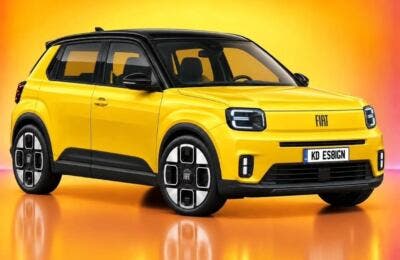
Under this ruthless streamlining, Fiat is slated to spawn a back-to-basics electric city car positioned right beneath the newly minted Grande Panda, explicitly drawing design inspiration from the boxy 1980s original. Meanwhile, Citroën is preparing a bare-bones EV sitting below the C3 to channel the minimalist spirit of the legendary 2CV.