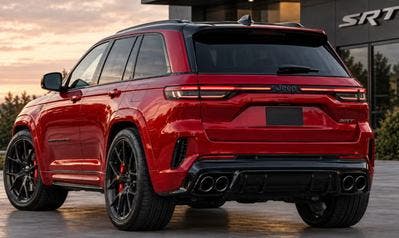
Ever since the fourth-generation WK2 Jeep Grand Cherokee SRT rode into the sunset back in 2021, high-performance SUV enthusiasts have been left with a supercharged hole in their hearts.
Fortunately, Stellantis might finally be ready to restart the insanity. While executives haven’t officially confirmed a new Grand Cherokee SRT or Trackhawk return, Jeep’s Vice President of Sales, Mauricio Lopez, recently dropped the ultimate corporate tease by declaring that “absolutely everything is on the table”. With muscle-car patron saint Tim Kuniskis steering the SRT ship, expecting a fire-breathing, tire-shredding powertrain under the hood isn’t just wishful thinking; it’s practically a moral imperative.
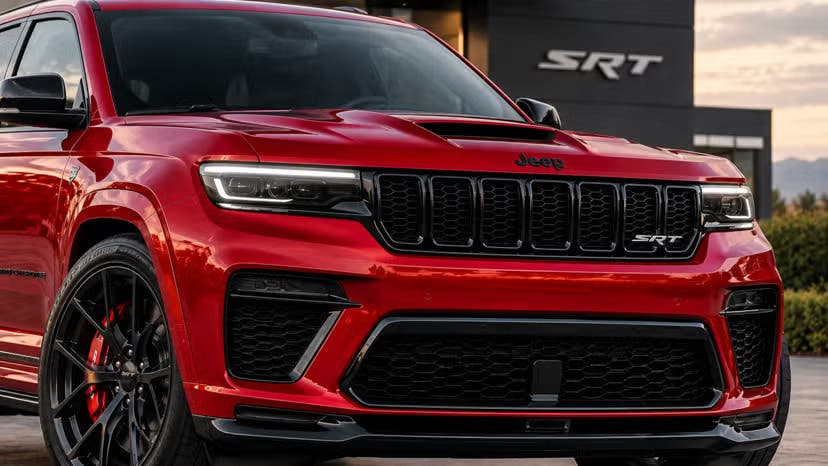
If Stellantis plays its cards right, a revived Grand Cherokee could snatch the title of the world’s most powerful internal combustion SUV from the 717-horsepower Aston Martin DBX. With factory tuning, it might even challenge the 801-horsepower Lamborghini Urus SE plug-in hybrid.
The catalyst for this mechanical overkill comes courtesy of Ram, which seems to develop its first-ever SUV, a Rumble Bee-badged brute rocking a 6.2-liter supercharged HEMI V8 spitting out 777 HP, with potential 900-hp Direct Connection upgrades.
Naturally, Jeep could simply copy its corporate sibling’s homework. Equipping the Grand Cherokee with all-wheel drive, retuned suspension, massive brakes, and a heavy-duty transmission would yield a family hauler capable of out-accelerating heavy pickups while giving supercars severe anxiety at traffic lights.
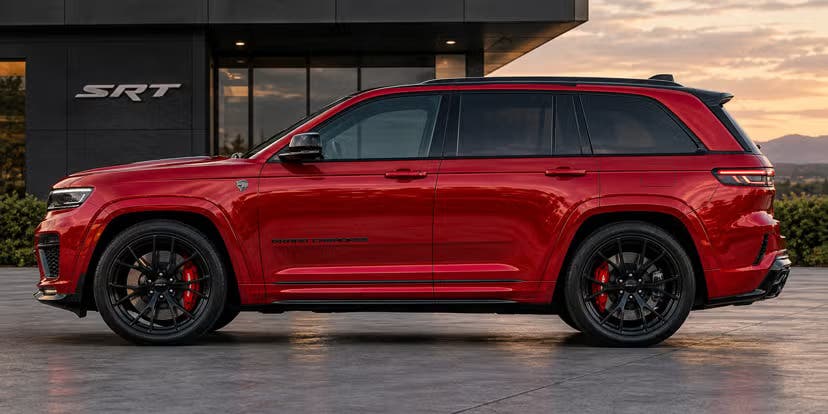
Stellantis has often struggled with brand separation, and slapping a hardcore, supercharged V8 onto Jeep’s increasingly luxury-oriented off-road image might overlap dangerously with Ram’s muscle-truck domain. However, the broader landscape has shifted dramatically.
Following the departure of former CEO Carlos Tavares, current CEO Antonio Filosa and a deregulatory Trump administration rolling back fuel economy standards have opened a golden window of opportunity. Plunging a supercharged V8 into the aging WL-generation platform, which debuted in 2021, is the perfect way to extend its lifespan while burning fossil fuels in glorious, unrefined fashion before regulations eventually spoil the party.