The next evolution of Stellantis’ hybrid system could more than double the usable energy stored in the battery, allowing the electric motor to contribute more often during everyday driving. The first clues come from Peugeot 208 and 308 prototypes spotted in Southern Europe, where the group appears to be testing an upgraded version of the 48-volt system already used across several models.
New Stellantis mild hybrid could get a bigger battery and more electric driving
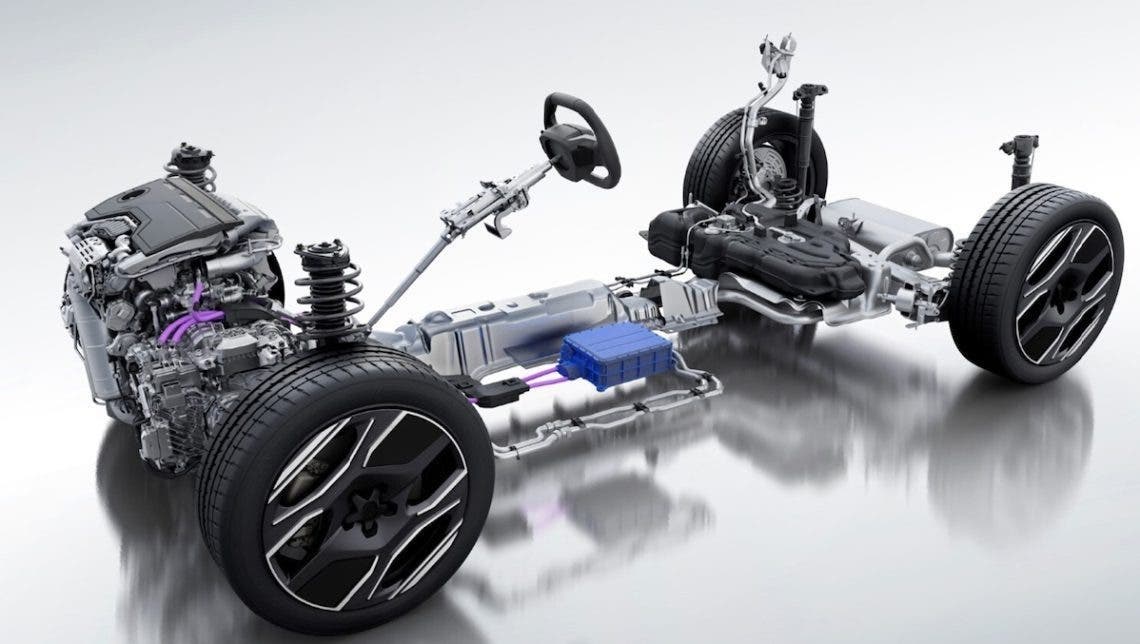
The biggest change would involve usable battery capacity, which could rise from the current 0.43 kWh to around 0.9 kWh. Those figures should remain separate from gross capacity. The system currently on sale uses a battery with roughly 0.89 kWh of total capacity, but the electronics keep part of that energy in reserve rather than making all of it available for driving.
A larger usable reserve would let the system rely on electric assistance for longer periods before it needs to recharge the battery. The benefit could become especially noticeable in urban traffic, where frequent deceleration creates opportunities to recover energy before the next acceleration. A larger battery would also give the system more room to store electricity recovered while slowing down.
The current setup can already move the car without starting the gasoline engine under certain conditions, although only for short distances. The electric motor sits inside the six-speed dual-clutch automatic transmission and produces 21 kW, or about 28 hp, and 38 lb-ft of torque. It assists the combustion engine under acceleration and can reduce its workload whenever driving conditions allow.

The increase in battery capacity should not be confused with plug-in hybrid capability. Reports instead point to an evolution of the existing 48-volt mild-hybrid system, designed to make greater use of electric power without fundamentally changing how the vehicle operates. Stellantis has not released official figures showing how much fuel consumption could improve or how long the engine could remain off during electric-only operation.
The Peugeot prototypes retain an appearance very close to the production cars, suggesting that the main changes sit underneath the bodywork. Once Stellantis completes development, the upgraded system could spread to other brands that already use this technology, including Fiat and Alfa Romeo.
Its rollout across European lineups will depend on each model’s product plan. The current test vehicles do not reveal which cars will receive the larger battery first, nor whether Stellantis plans to change output figures or pricing.