If you have ever owned a cutting-edge electric vehicle, you are probably familiar with its dirtiest little secret: beneath the ultra-modern touchscreens and hyper-advanced software lies a cranky, century-old lead-acid battery. Yes, the exact same box that powered your grandfather’s pickup is still tasked with running your windshield wipers, headlights, climate control, and infotainment. When that fifty-dollar piece of fossil technology dies, your seventy-thousand-dollar rolling supercomputer turns into a very heavy paperweight. Chinese automaker Leapmotor thinks it is high time we finally step out of the automotive Stone Age.
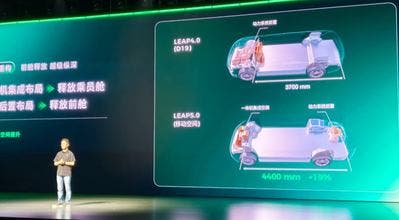
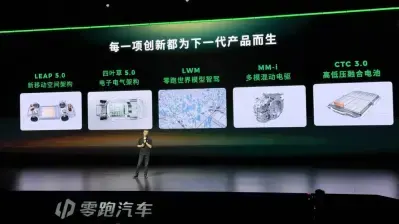
Unveiled during the Leapmotor Tech Day 2026, the company announced a bold engineering shift scheduled to hit production by 2027. Leapmotor plans to completely eliminate the traditional 12-volt auxiliary battery across its next-generation vehicles. Replacing it results a unified system dubbed the CTC 3.0 High-Low Fusion Battery.
While the principle sounds simple, the underlying engineering is a massive undertaking: integrating both high-voltage traction duties and low-voltage accessory needs into a single overarching architecture.
Under this new layout, low-voltage systems feed directly off the main traction pack, sharing the exact same battery cells, thermal management loop, and power distribution hardware. Leapmotor claims this setup increases available low-voltage power capacity by an astounding seven-fold compared to previous generations. That is more than enough muscle to power everything from critical safety systems to your excessive seat-warmer habits without needing a secondary lead box tucked away in the frunk.
The practical benefits are substantial. Removing the auxiliary battery sheds unnecessary weight, cleans up complex wiring harness layouts, and eliminates a component notoriously prone to dying every few years.
There is also a major environmental bonus: scaling this tech could prevent millions of toxic lead-acid units from reaching landfills annually. If Leapmotor delivers on its 2027 timeline, it will mark one of the few genuinely useful engineering simplifications the car industry has seen in decades—assuming, of course, the main battery software does not decide to go on strike.