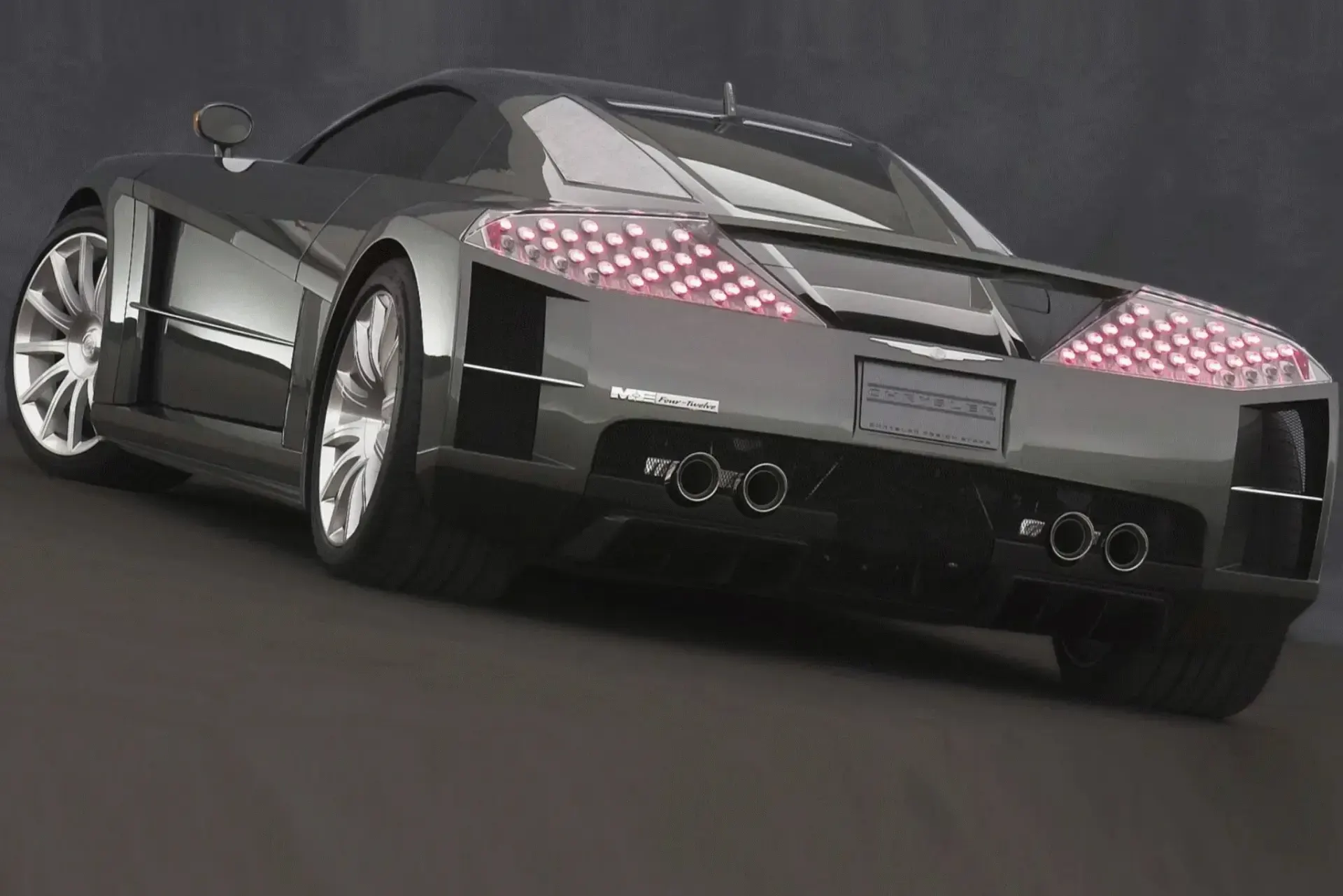
When you think of Chrysler, you certainly do not picture a mid-engine carbon-fiber hypercar designed to humiliate Maranello and Molsheim. Yet, at the 2004 Detroit Auto Show, while the automotive world was digesting Ferrari’s Enzo and Lamborghini’s Murciélago, and with the Bugatti Veyron still a year away, Daimler-Chrysler dropped a nuclear bombshell: the ME Four-Twelve.
Coming right off the heels of the absurd Dodge Tomahawk V10 motorcycle, Chrysler proved that its engineering department was operating on a diet of pure adrenaline and zero corporate restraint.
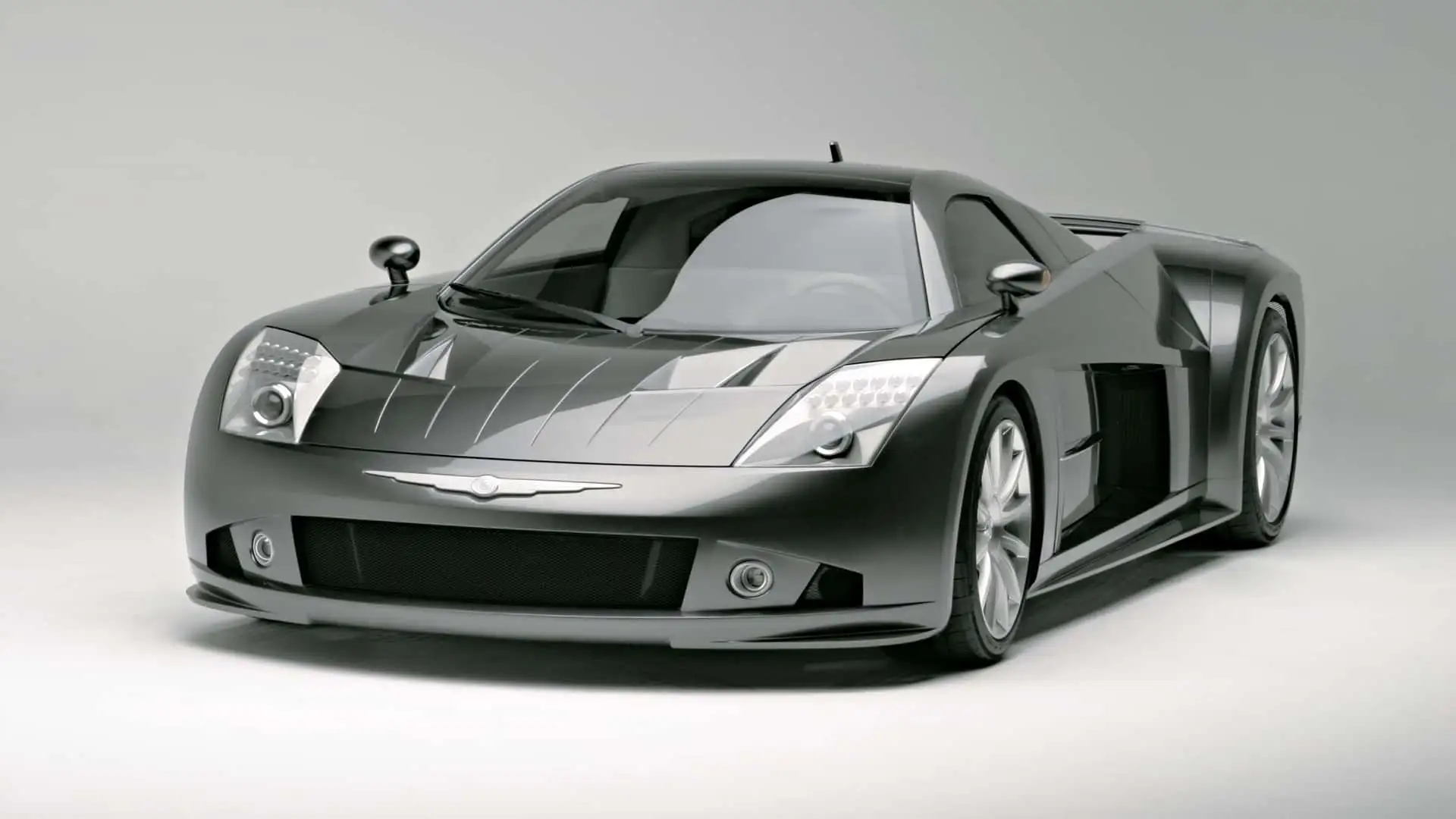
The ME Four-Twelve didn’t represent just a fiberglass shell glued to a minivan floorpan. It possessed the credentials of a fighter jet. Wrapped in sculpted carbon fiber over an aluminum and carbon-fiber honeycomb monocoque, the chassis had double wishbones, aluminum control arms, pushrod-operated horizontally opposed coil-overs with electronic damping, and a blade-style anti-roll bar. Massive 19×10-inch front and 20×12.5-inch rear cast-aluminum wheels hid ultra-lightweight carbon-ceramic brake discs.
Inside, behind a glass roof panel, drivers could enjoy a flat-bottom steering wheel, leather-trimmed carbon-fiber bucket seats, automatic climate control, and a premium audio system. Even hypercar pilots appreciate ice-cold A/C while bending physics.
The true insanity resided behind the cabin, courtesy of AMG: a 6.0-liter quad-turbo V12 churning out an astronomical 850 HP at 5,750 rpm and 850 lb-ft of torque across a beefy 2,500–4,500 rpm powerband. Power goes to the rear wheels via a bespoke Ricardo seven-speed dual-clutch transmission, the exact same transmission vendor Bugatti would later use for the 1,001-hp Veyron.
Chrysler’s simulations quoted a blistering 0–60 mph sprint in 2.9 seconds, 0–100 mph in 6.2 seconds, a quarter-mile pass in 10.6 seconds at 142 mph, and a terrifying top speed of 248 mph.
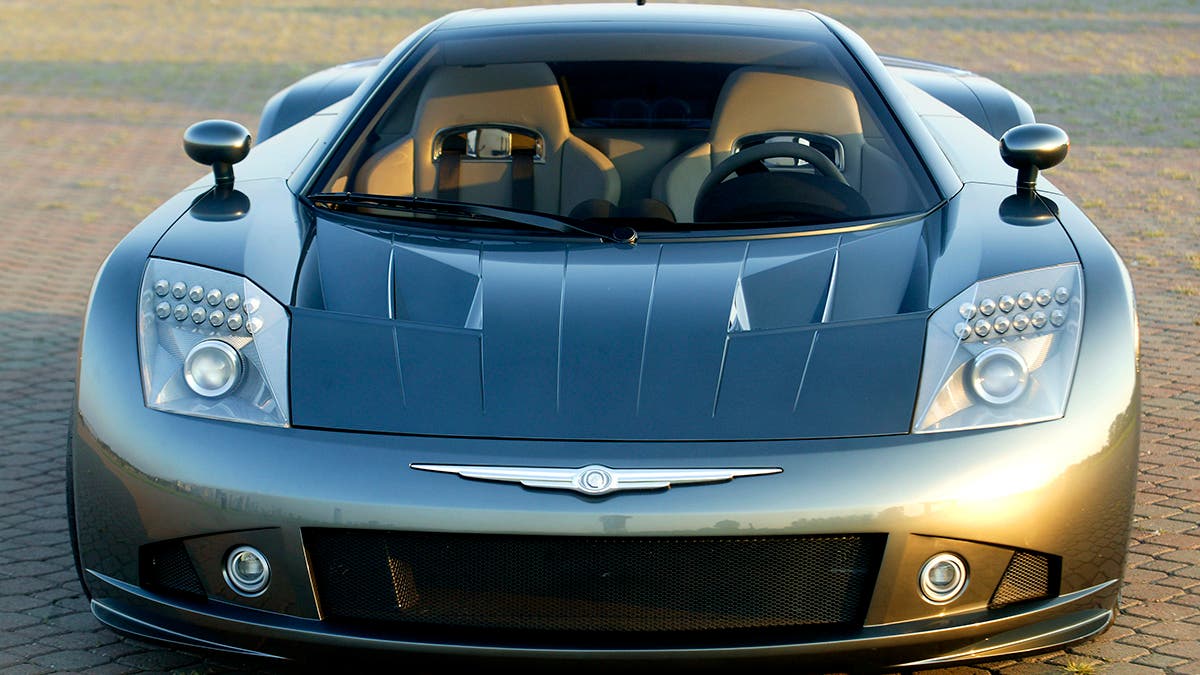
Sadly, much like Cadillac’s glorious V16-powered Sixteen concept from 2003, German management pulled the plug before the ME Four-Twelve could reach assembly lines, allegedly terrified it would outshimmer Mercedes’ own SLR McLaren. Thus, Chrysler’s ultimate supercar retreated into the hall of legend, forever remaining Detroit’s greatest “what-if”.