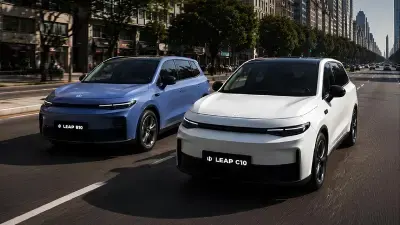
Leapmotor, the fast-growing Chinese automaker that was supposed to teach the Western world how to live strictly on battery juice, is quietly reaching for a bottle of gasoline. CEO Zhu Jiangming officially confirmed that the company will begin selling conventional plug-in hybrid (PHEV) vehicles across international markets, including Europe, starting in 2027.
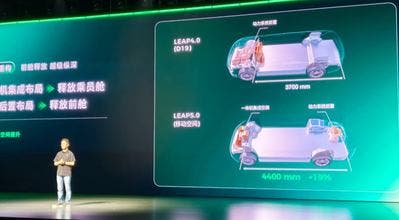
Up until now, Leapmotor’s technological playbook existed between pure battery electric vehicles and Extended-Range Electric Vehicles (EREVs). Clever machines where a gasoline engine exists solely as a glorified portable generator to juice up the electric motor. But EREVs, it turns out, aren’t enough when you want to sell cars in places where finding a functioning public charger feels like winning the lottery.
Unlike EREVs, these incoming traditional PHEVs will allow the internal combustion engine to actually drive the wheels directly, handing buyers what they secretly still crave: good old-fashioned mechanical power when the battery inevitably dies.
This technological pivot is a high-stakes play to fuel an aggressive global expansion. Leapmotor is aiming for a massive 350,000 to 400,000 sales outside China in 2027, building on an already ambitious target of roughly 200,000 units for 2026. The commercial momentum is undeniably real: during the first half of 2026 alone, Leapmotor’s exports exploded by a eye-watering 372.6% to reach 96,294 cars, representing 27% of its total sales.
CEO Zhu Jiangming isn’t disguising his grand ambitions either, stating that 60% of the brand’s long-term sales should come from overseas markets, backed by a footprint that already spans over 40 countries and 2,000 sales and service points worldwide.
Europe remains the ultimate prize in this conquest. Backed by its strategic alliance with Stellantis, Leapmotor is building a massive industrial infrastructure, with local manufacturing of the B10 model in Zaragoza, Spain, scheduled to start in October 2026.
But while evangelists promised a seamless zero-emission future, real-world constraints have forced a pragmatic retreat. While exact details on which PHEV model will land in European showrooms first remain secret, one truth is crystal clear: even China’s most aggressive EV pioneers have realized that to conquer the world, keeping a gas engine under the hood is still the ultimate survival strategy.