Ferrari seems convinced that if an engine problem cannot be solved with sheer engineering horsepower, it can certainly be solved by throwing more compressors at it. A new patent discovered by CarBuzz reveals that Maranello’s engineers are cooking up a rather eccentric forced induction layout designed to eliminate turbo lag.
Instead of choosing between immediate throttle response and monstrous high-rpm performance, Ferrari decided to take both, bolting a massive traditional exhaust-driven turbocharger alongside a pair of electrically driven compressors.
To understand why Maranello is going to such absurd lengths, you have to look at the fundamental physics of forced induction. A massive turbocharger is a wonderful tool for shoving mountain loads of compressed air into an engine at peak revs, but at low speeds, it reacts with no urgency. Smaller turbos spool instantly, but they quickly run out of breath when you push the engine toward the redline.
Ferrari’s solution is essentially a tag-team wrestling match for air induction. At low engine speeds, the twin electric compressors do all the heavy lifting. Because they do not rely on exhaust gases to spin up, they deliver immediate boost the exact millisecond your right foot hits the accelerator.
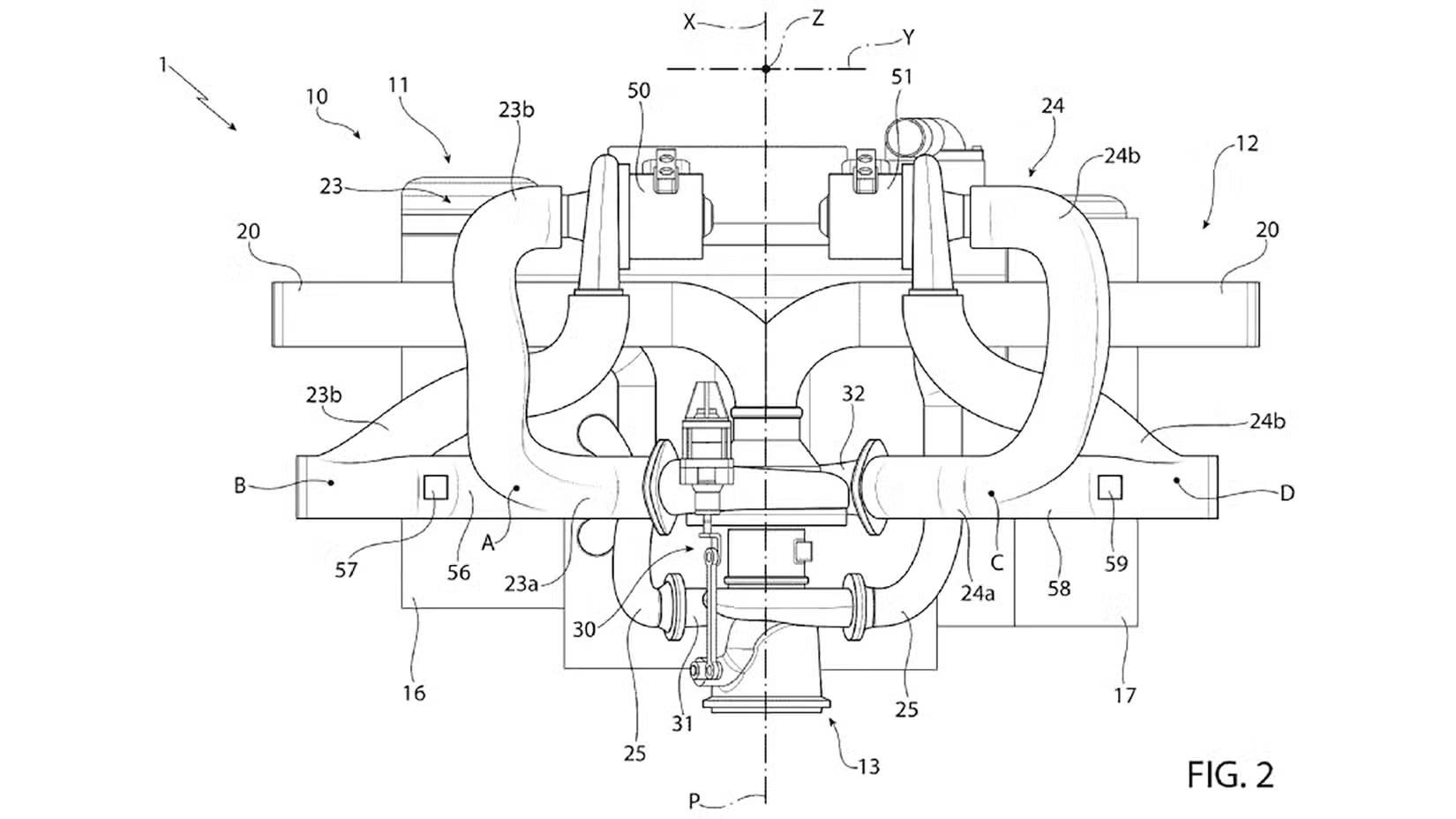
As the engine climbs into its sweet spot and generates enough exhaust flow, the system reroutes the airflow to let the massive main turbo take over. With revs drop or a sudden burst of power, the electric compressors remain on standby, ready to jump back into the ring.
This is not the first time carmakers have toyed with electrical boost, and BMW notoriously stacked three traditional turbos in the past. Ferrari’s combination of a single giant exhaust turbo working with two electric units is genuinely unique.
Unsurprisingly, the patent filing leaves a few convenient blanks. It does not mention which upcoming supercar will house this complex setup, nor does it detail the heavy-duty electrical system needed to keep these two electric blowers humming. Given the massive power draw required, you can safely bet on at least a 48-volt electrical architecture, unless Ferrari plans on asking owners to tow a diesel generator behind their hybrid exotic.