

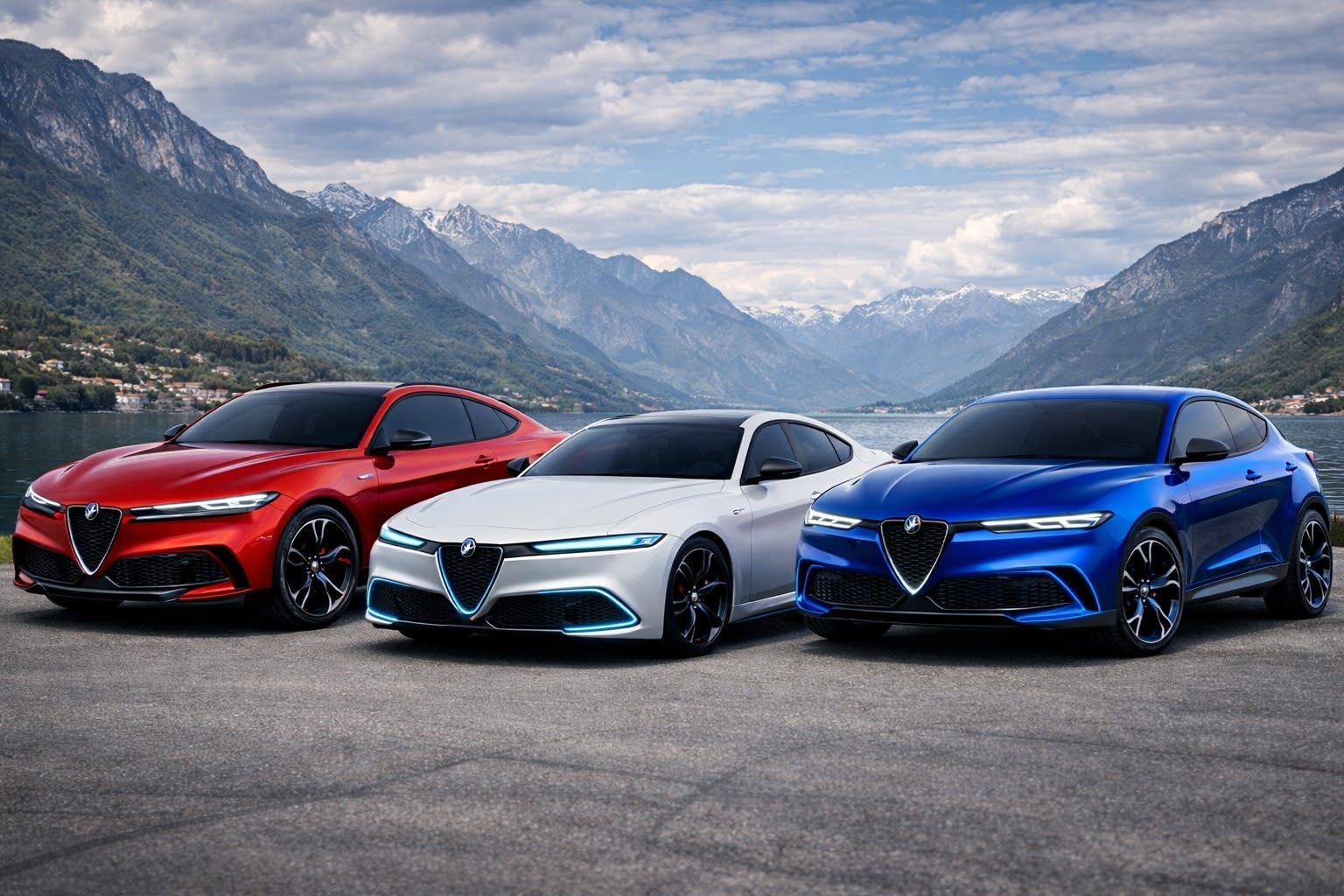
Alfa Romeo will renew its lineup by focusing first on the segments that generate the highest sales volumes in Europe. By the end of the decade, the brand plans to introduce a new compact car and an Italian-built C-SUV, while the future of the Giulia and Stelvio will require more time and industrial decisions that Stellantis has yet to finalize.
New Alfa Romeo compact and C-SUV take priority over Giulia and Stelvio successors
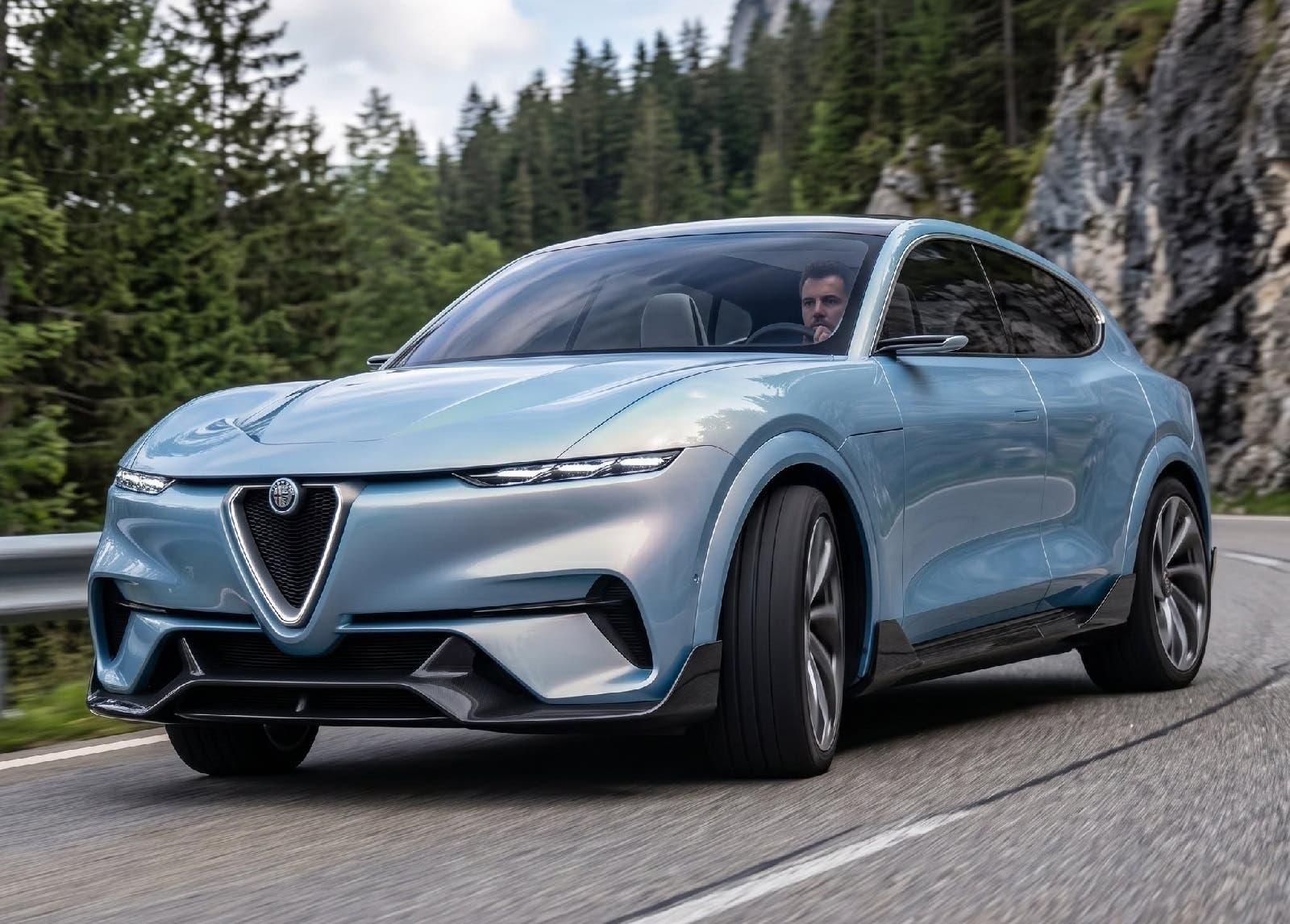
The most advanced project concerns the model that will take over from the Tonale. Stellantis will build it in Italy on the STLA Medium platform, which supports both hybrid and electric powertrains. Although other group models will share the same architecture, Alfa Romeo will develop a specific suspension setup, design, and driving character.
Early information points to a larger and sharper SUV than the Tonale, with slim headlights, a sculpted hood, and a new interpretation of the Alfa Romeo shield. The company has not yet announced its final name or engine lineup, while a possible Quadrifoglio version remains speculative.
A C-segment hatchback will join the crossover and return Alfa Romeo to a category it left after discontinuing the Giulietta. The historic name could return, although the brand has not confirmed it. The model may adopt slightly raised proportions without becoming a conventional SUV.
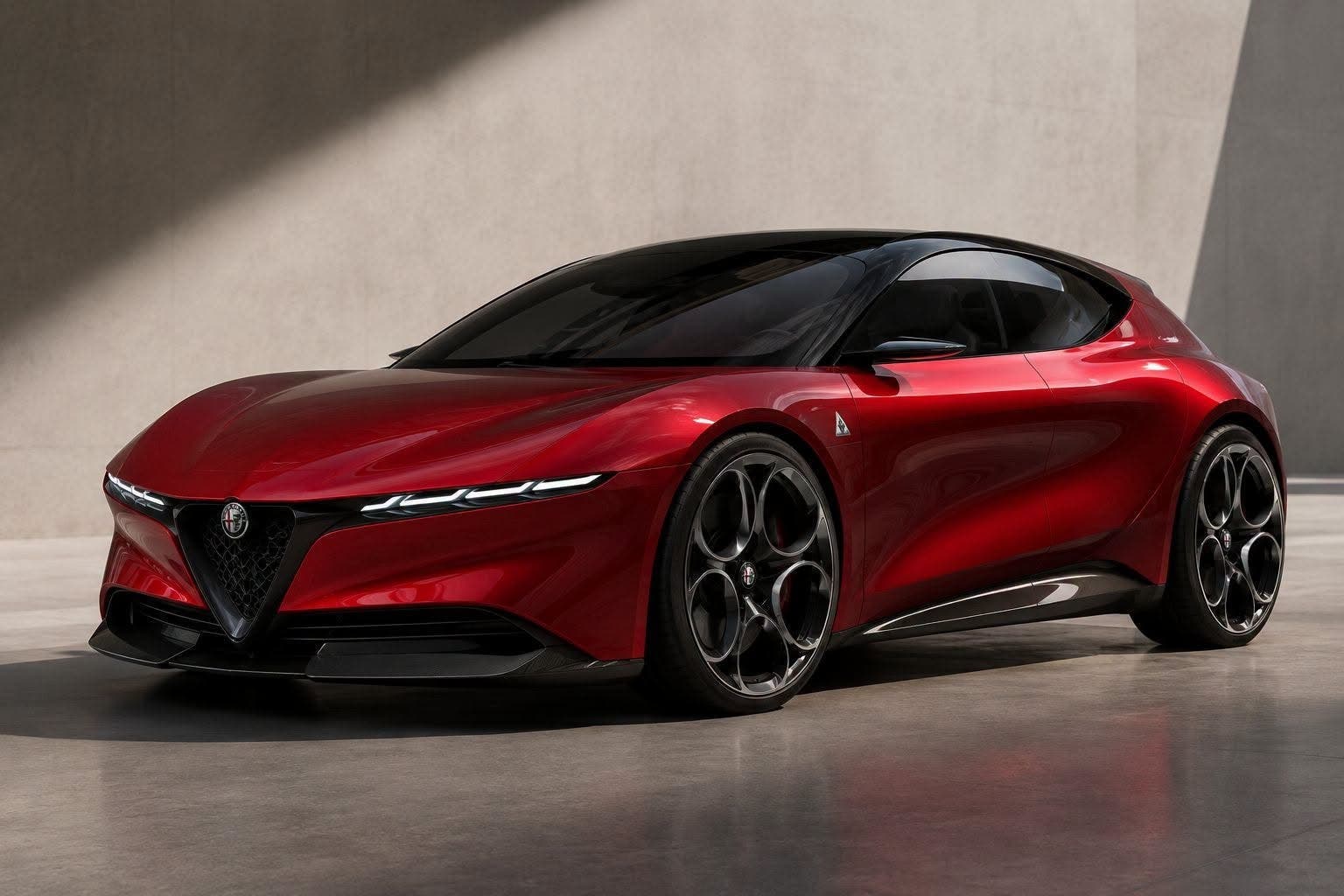
This compact car will play a central commercial role because it should reach a broader audience than the Giulia and Stelvio. Alfa Romeo will need to combine competitive pricing, modern technology, and sporting character while retaining recognizable features such as the three-part grille and a more dynamic stance than mainstream rivals.
The Junior will continue to cover the lower end of the range and receive updates during its life cycle. Alfa Romeo will also launch further limited-production projects through Bottega Fuoriserie, continuing the strategy introduced with the 33 Stradale.
The D-segment remains far less defined. Stellantis does not intend to abandon it, but it has not yet approved direct Giulia and Stelvio replacements with finalized platforms, body styles, or launch dates. The current names could survive, although major changes remain possible.
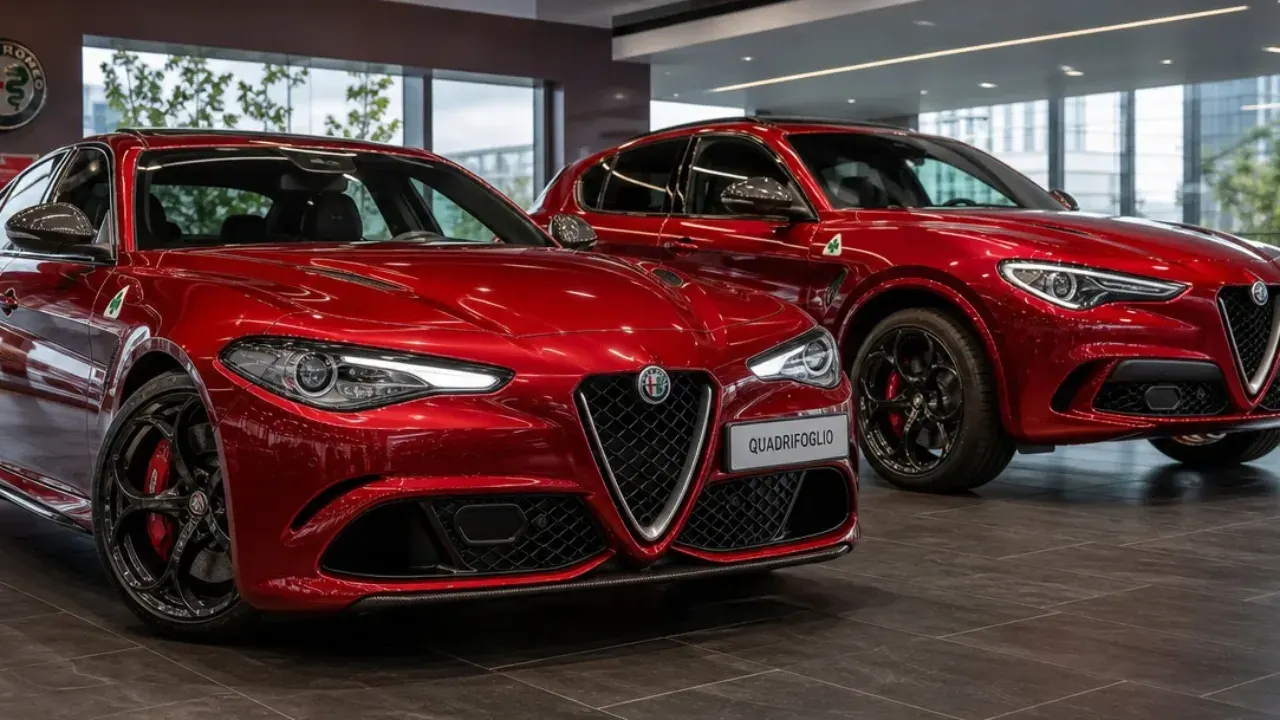
The Giulia and Stelvio strengthened Alfa Romeo’s image as a maker of distinctive and rewarding cars, but their sales never matched those of their main German rivals. Stellantis must therefore preserve their character without repeating costs that the resulting volumes cannot support.
The current models should remain in production until the end of 2027, but their successors are unlikely to arrive immediately afterward. Stellantis must first choose a platform compatible with hybrid and electric powertrains and decide whether to retain separate sedan and SUV models.
Alfa Romeo’s future range will therefore take shape around the Junior, the new compact car, and the C-SUV. The D-segment will remain part of the strategy, but the next Giulia and Stelvio still represent possibilities rather than approved programs.