

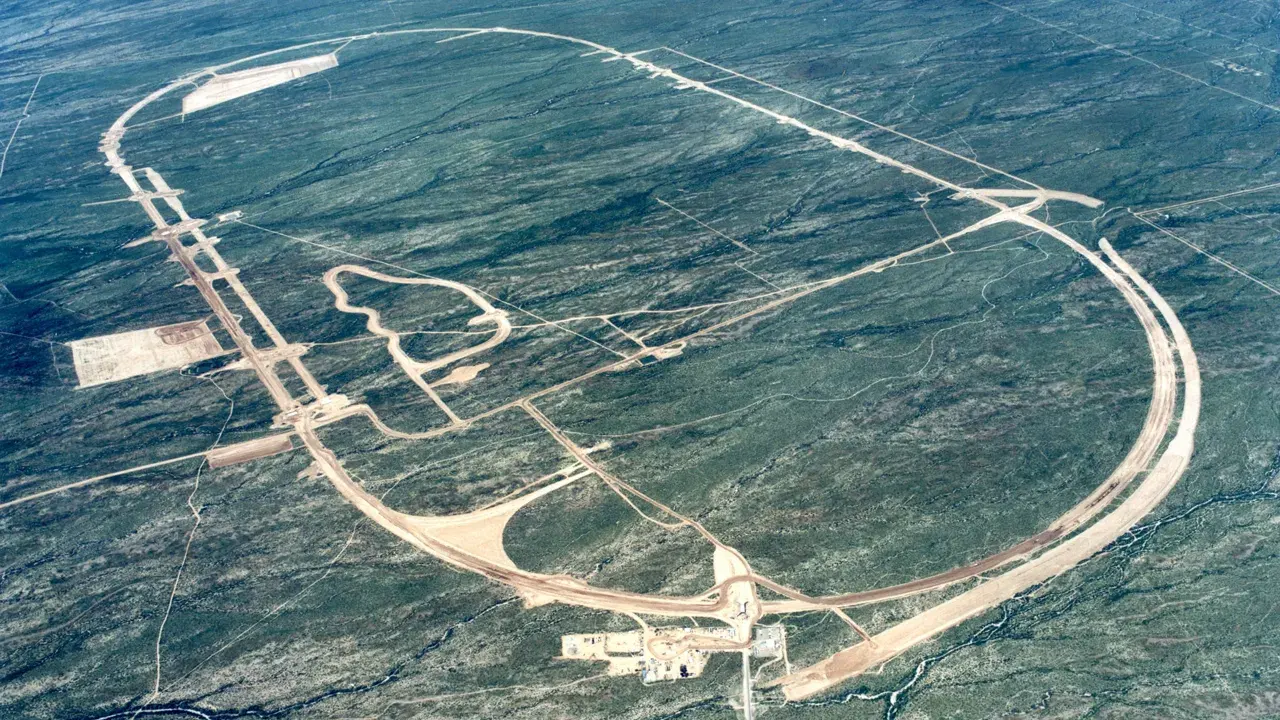
Toyota dropped half a billion dollars on a patch of Arizona desert, 12,000 acres northwest of Phoenix, to be precise, to tell the world, politely but firmly, that it’s not following anyone else’s roadmap.
The Toyota Arizona Proving Ground, TAPG, wrapped up a massive modernization program in December 2025. The numbers are hard to dismiss: 77 miles of test tracks, a brand-new 5.5-mile high-speed oval circuit nested inside the original 10-mile loop, and an entire division dedicated to hydrogen fuel cell vehicle development. The facility, operational since 1993, has effectively been reborn as a multi-technology laboratory where asphalt-pounding tradition meets some of the most advanced energy research happening in the industry today.
The hydrogen program is the centerpiece, and the most provocative statement Toyota is making. On-site, you’ll find the Mirai, a concept Tacoma H2 Overlander, a fuel cell semi-trailer capable of hauling 36,000 kilograms across 400 miles without stopping for a charge, and a Tundra converted into a mobile emergency power generator.
A former straight-line section has been reshaped into a “dog bone” configuration, the kind of multi-directional layout that keeps ADAS engineers both employed and mildly anxious.
Since 2021, TAPG has operated as an open testing ecosystem under the AMTC banner, managed by Intertek Transportation Technologies, welcoming third-party manufacturers, suppliers, and startups. Toyota is essentially running a co-working space for the future of mobility.
Toyota acknowledges, without flinching, that hydrogen faces real obstacles. Production costs remain high, refueling infrastructure is still thin on the ground, and the full decarbonization of the supply chain is a work in progress rather than a done deal. But the company’s position on fuel cells for heavy transport and industrial applications is unambiguous. When refueling speed and range matter more than the number of Superchargers on your route, hydrogen has a structural advantage that kilowatt-hours simply can’t argue away.
Battery costs keep falling, charging networks keep expanding, the EV case writes itself. But Toyota, sitting on 12,000 acres of proof that physical testing still matters in an era of digital simulation, seems perfectly comfortable letting the desert do the talking.