

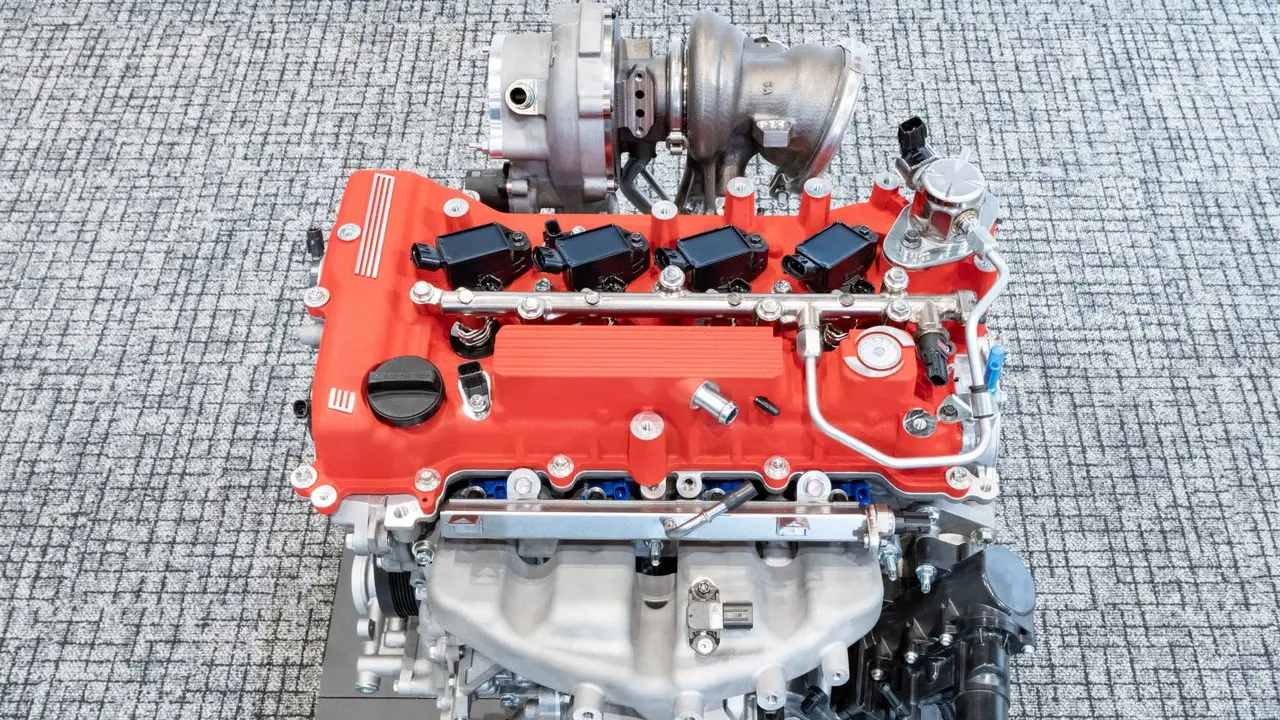
The internet community has a predictable, almost pathological habit of labeling every new Toyota engine with more than three cylinders as “the next 2JZ”. It is a heavy crown to wear, considering the legendary 2JZ-GTE spent three decades cementing its bulletproof, four-digit-horsepower street credibility through broken records and late-night highway runs.
The new Toyota G20E four-cylinder is actually forcing JDM purists and skeptical tuning shops to stop rolling their eyes. With the right aftermarket turbo hardware, this modern architecture is reportedly holding together at a staggering 600-horsepower ceiling. That is a blatant, calculated design choice from a corporate giant that usually spends its board meetings perfecting hybrid synergy drives.
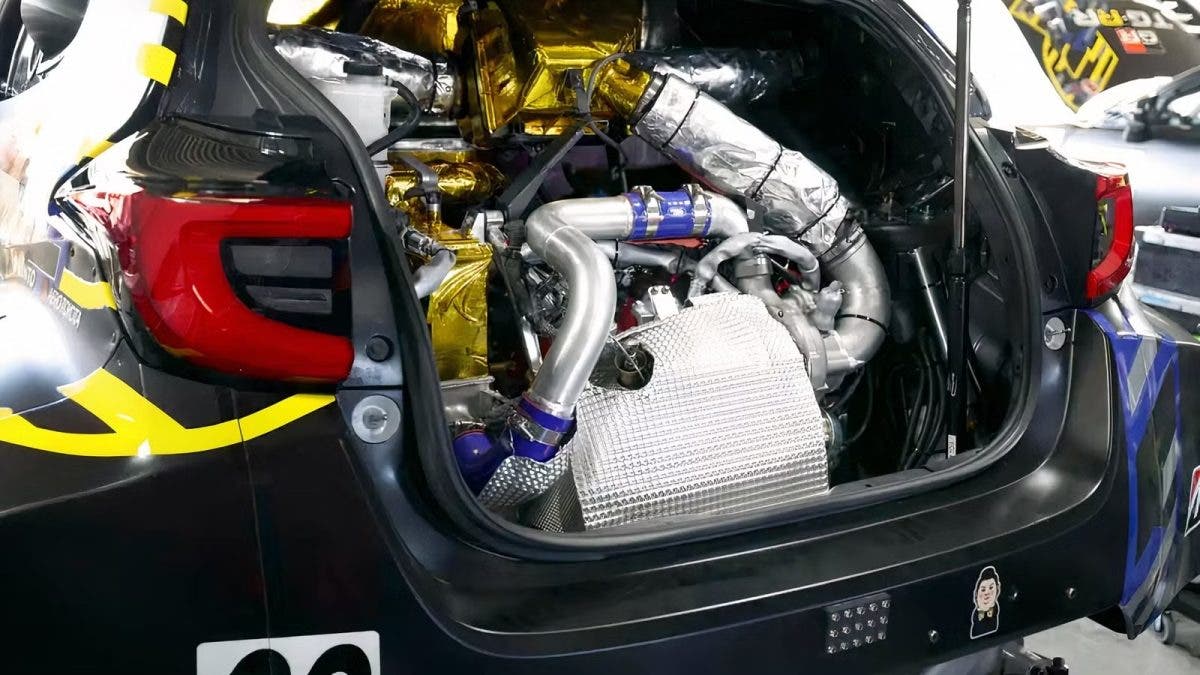
To understand how beautifully unhinged Toyota’s performance engineering department has become, one only needs to look at where the G20E made its grand debut. In June 2026, Toyota unveiled the dual-engine GR Camry concept, a glorious, fever-dream engineering exercise that stuffed the GR Corolla’s three-cylinder G16E-GTS in the front and the G20E four-cylinder in the rear. The result was a bizarre, seven-cylinder, 700-horsepower Frankenstein that put the G20E’s structural integrity and raw potential on full display.
Of course, a compact four-cylinder is a fundamentally different proposition than a massive inline-six. When the original 2JZ left the factory making a gentlemanly, Japanese-market-agreed 276 HP, its true genius lay in its absurdly overbuilt iron block. Tuners quickly realized the factory internals could handle triple the output before throwing a rod.
The G20E follows that exact same philosophical playbook. Toyota is intentionally leaving the heavy lifting to the aftermarket. By giving the G20E a bulletproof bottom end engineered far beyond street-legal requirements, Toyota is practically begging the tuning community to find its breaking point.
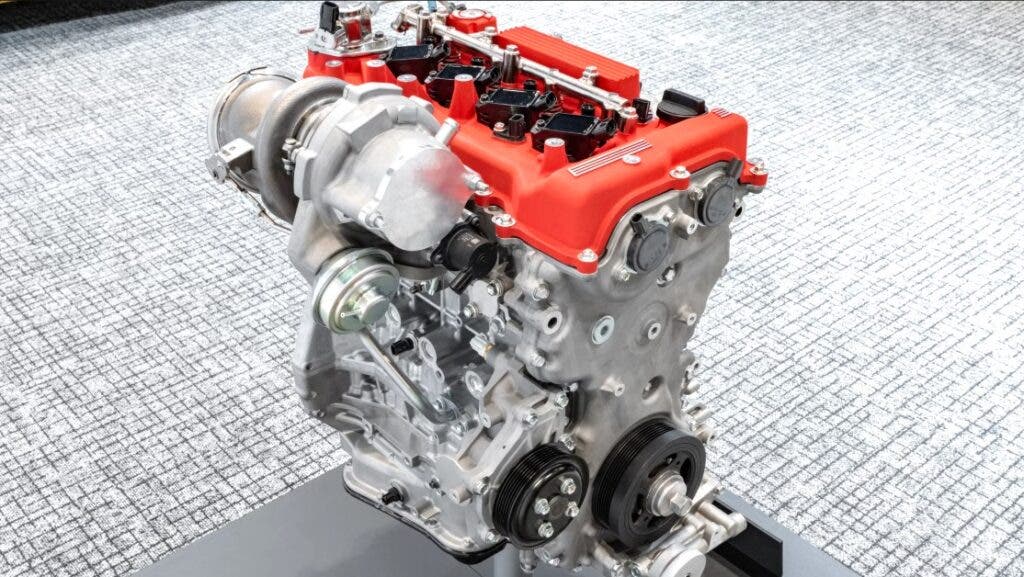
For the next generation of builders, a lightweight four-cylinder platform capable of sustaining 600 HP changes the entire landscape. It offers a much tighter, lighter packaging option than a heavy inline-six, making it a perfect candidate to anchor future lightweight sports car builds as GR models eventually filter into the used car market.