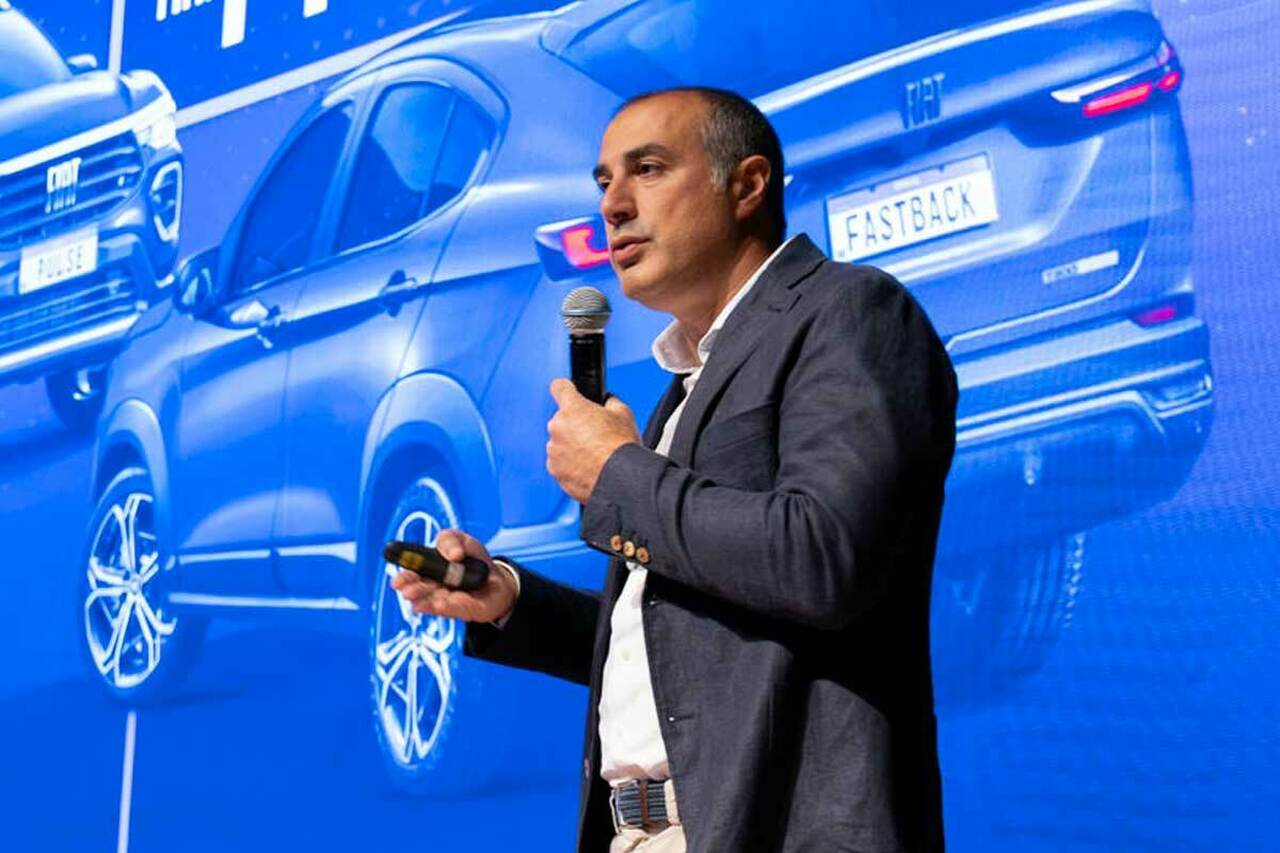
Stellantis wants to increase utilization across its European factories from the current 60 percent to 80 percent. Reaching that target, however, will require a broader product lineup, new industrial partners, and a strategy capable of responding to demand that has become far less predictable than in the past. Emanuele Cappellano, the group’s head of Enlarged Europe, outlined the plan in an interview with Italian newspaper La Repubblica.
Stellantis seeks new partners and models to revive its European plants

Cappellano described the current market as highly volatile. Regulators, automakers, suppliers, and customers are moving at different speeds, while new competitors have built a substantial advantage in batteries, software, and electronics. Stellantis therefore believes it must adjust products and investments quickly instead of relying on a single technology.
Partnerships with Chinese companies form part of that strategy. Cappellano pointed to Leapmotor as an example of the type of cooperation Stellantis wants to pursue. The group controls 51 percent of the joint venture and plays a decisive role in its direction, while providing access to its sales network and manufacturing capacity.
The relationship does not solve Europe’s dependence on technologies and components developed in Asia, however. The gap remains particularly visible in batteries and semiconductors. Rebuilding a complete European supply chain will take years. Stellantis has therefore joined Renault and Volkswagen in supporting an industrial policy centered on “made in Europe” production. The companies want stronger protection for manufacturing, components, distribution, and technical expertise across the continent.
Stellantis still expects the transition to electric vehicles to continue, but it wants regulators to adopt more flexible rules. The gap between emissions targets and actual customer demand remains especially wide in the commercial vehicle market. The disappearance of affordable cars also concerns the industry. Compared with 2019, Europe’s new-car market has lost three million annual sales, with A- and B-segment models accounting for half of that decline.

In Italy, the Cassino plant will continue producing the Maserati Grecale and Alfa Romeo models. Stellantis has also included the facility in projects for the successors to the Maserati Levante and Quattroporte, although it has not finalized the industrial plan. The company is holding talks with two potential partners and expects to make a clearer decision by the end of the year.
At Mirafiori, the Fiat 500 will remain the core product. Cappellano confirmed that a new generation of the city car will arrive in 2030 and suggested that Stellantis will assign additional operations to the Turin plant. Improving European factory utilization will therefore depend on both new models and Stellantis’ ability to integrate outside partnerships without weakening its own industrial expertise.