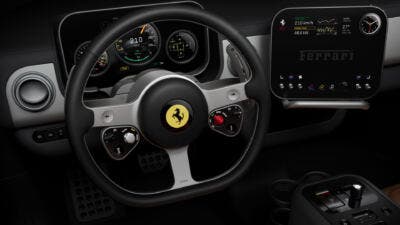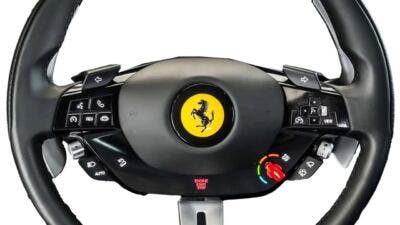
Ferrari has launched a retrofit program that allows Purosangue and 12Cilindri owners to replace the capacitive touch controls on the steering wheel with physical buttons, as Ferrari of Atlanta announced on social media. The procedure does not require replacement of the entire steering wheel or shipment of the car to Italy, because the service center only works on the section that integrates the controls, leaving the airbag cover unchanged and preserving a look very close to the original. The controls for menus, phone functions, and cruise control now become physical and tactile, while those for traction, wipers, and lights remain unchanged.
Ferrari brings back physical buttons with retrofit for Purosangue and 12Cilindri
The decision comes less than a year after Maranello publicly acknowledged that the choice of capacitive controls, introduced starting with the SF90 in the name of a more modern and dramatic cabin, had not worked as expected. Customer feedback had highlighted difficulties in using the controls while driving, especially in terms of immediacy and precision, criticism that had already led the brand to bring back physical steering-wheel buttons on the new Amalfi.
However, extending the fix to models that customers have already received marks a further step, one that remains rather unusual in the supercar sector, where manufacturers rarely go back after a sale and modify such a central element of the onboard experience.

The issue fits into a broader reflection now running through the entire automotive industry. In recent years, the push toward touchscreens and capacitive surfaces has affected both mainstream and premium brands, often at the expense of ergonomics and ease of use, and the gradual return to physical controls by several automakers suggests that the equation between clean design and quality of interaction has not proved as straightforward as many had imagined.
Ferrari stands out, however, because it has offered a response that does not stop with future models but also reaches customers who have already bought the car, an approach that turns a mistake in judgment into an opportunity to strengthen the relationship with its clients.