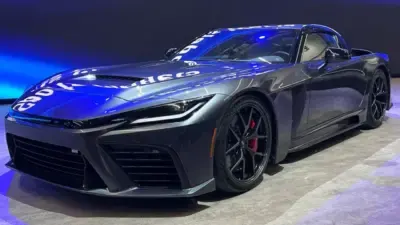
Toyota is finally shedding its sensible skin with the introduction of the GR GT, a machine conceived as a “race car homologated for the road”. Developed in strict parallel with its full GT3-spec racing counterpart, this new flagship, named after the brand’s performance division Gazoo Racing, is the answer to rivals like the Mercedes-AMG GT. Alongside the electric Lexus LFA sibling, the GR GT forms what Toyota modestly calls its “trinity” of high-performance flagships.
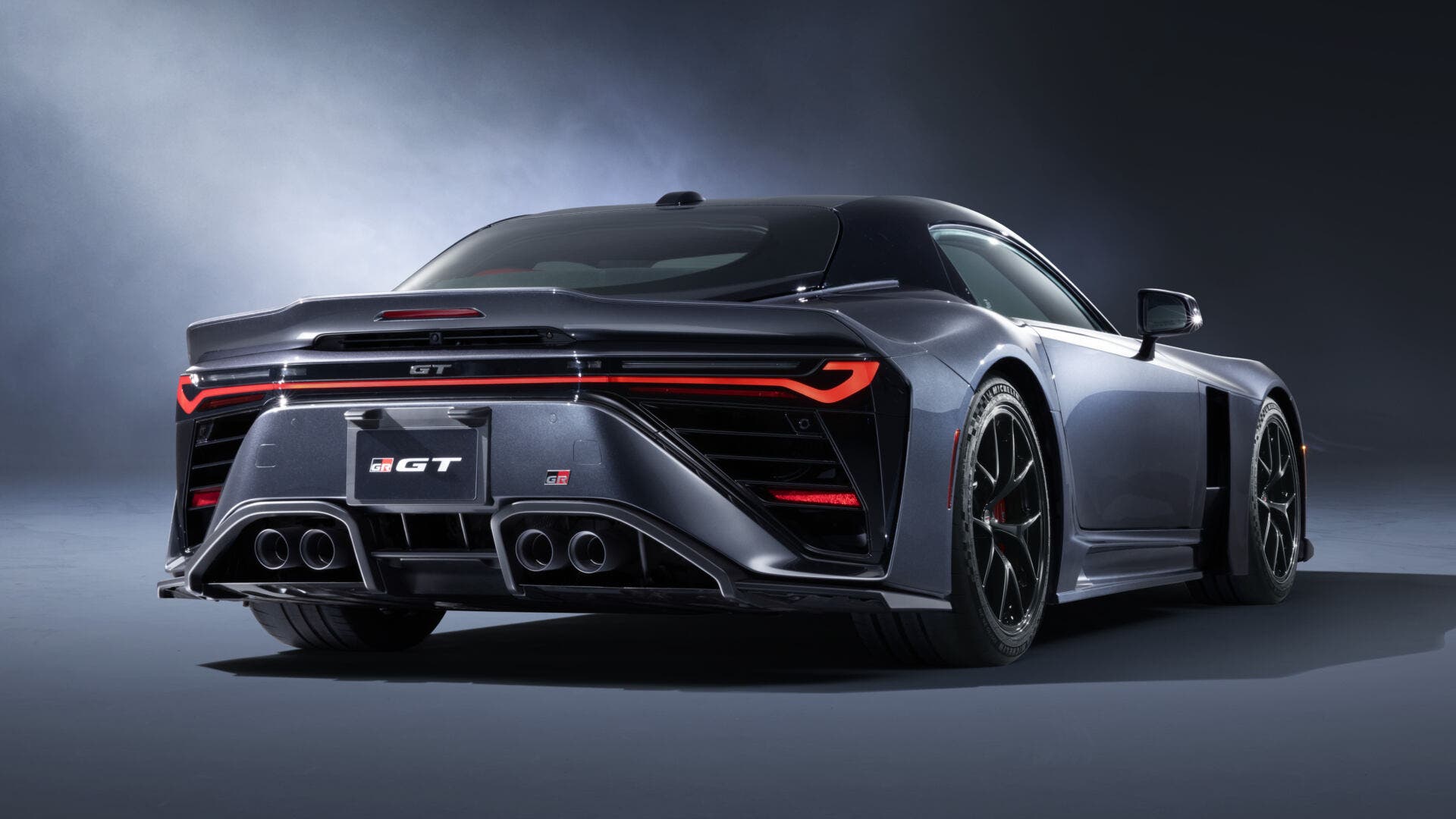
The car’s core mission, guided by “Master Driver” Akio Toyoda and Japan’s top racers, was to achieve a perfect “sense of unity between car and driver”. This philosophy is embodied in the powertrain, a new 4.0-liter twin-turbo V8 paired with a hybrid system. This “hot V” setup, where the turbos sit inside the cylinder banks for a lightweight, compact design, is slated to deliver at least 641 HP and 627 lb-ft of torque to the rear wheels.
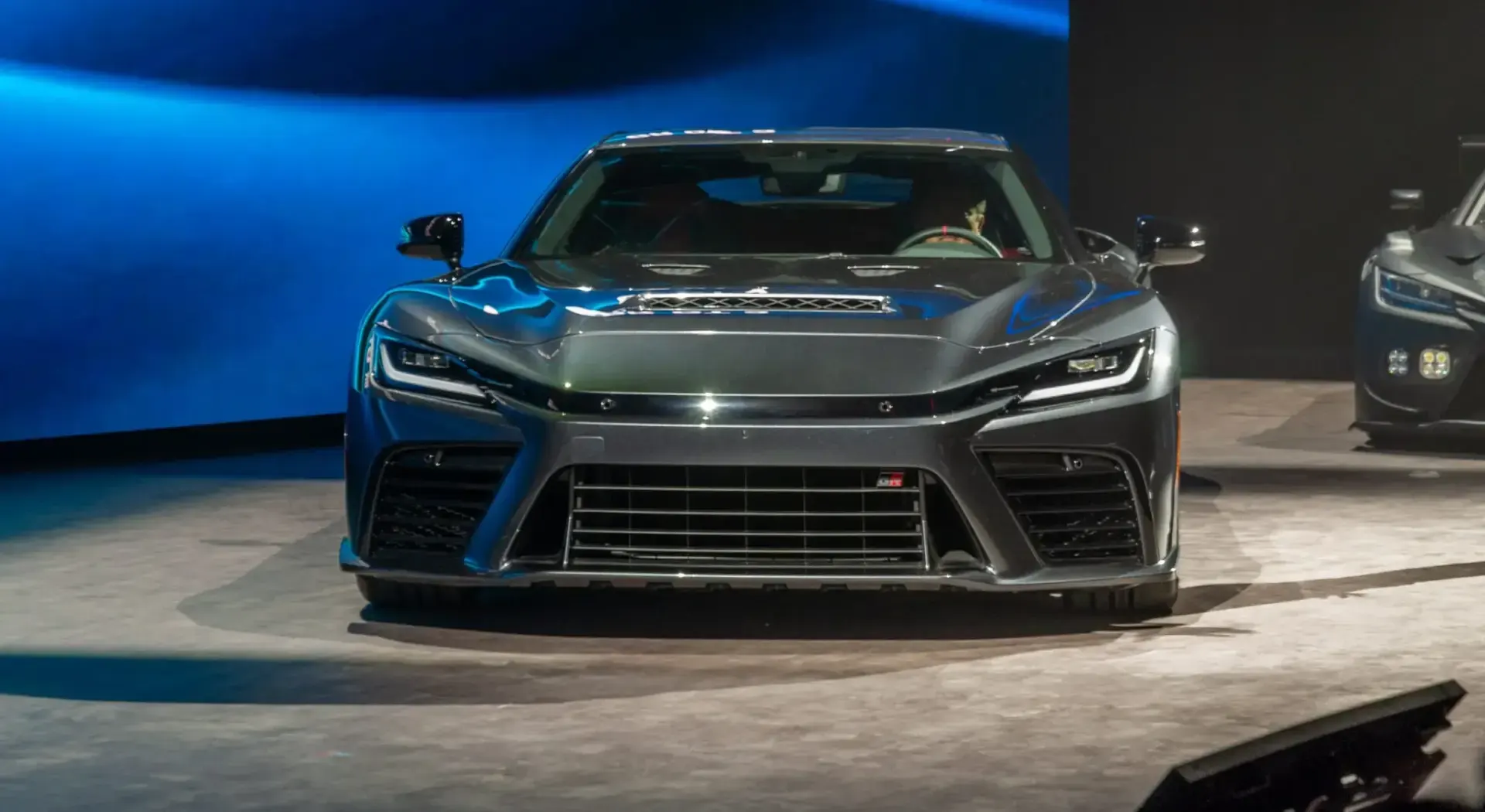
Performance figures are still under wraps, but Toyota promises a top speed of at least 318 mph and a 0-60 mph sprint in the 3.5-second range, suggesting the final power output might exceed current estimates.
The sound, too, was a central engineering priority. Toyota claims the exhaust was “meticulously crafted to produce a synchronized sound” that delivers the distinctive, race-ready roar of a twin-turbo V8. Power is managed by an all-new eight-speed automatic transmission, featuring a wet-clutch setup instead of a torque converter for “world-class shift speeds”. An electric motor sits ahead of the gearbox, smoothing out gear changes by eliminating torque loss.
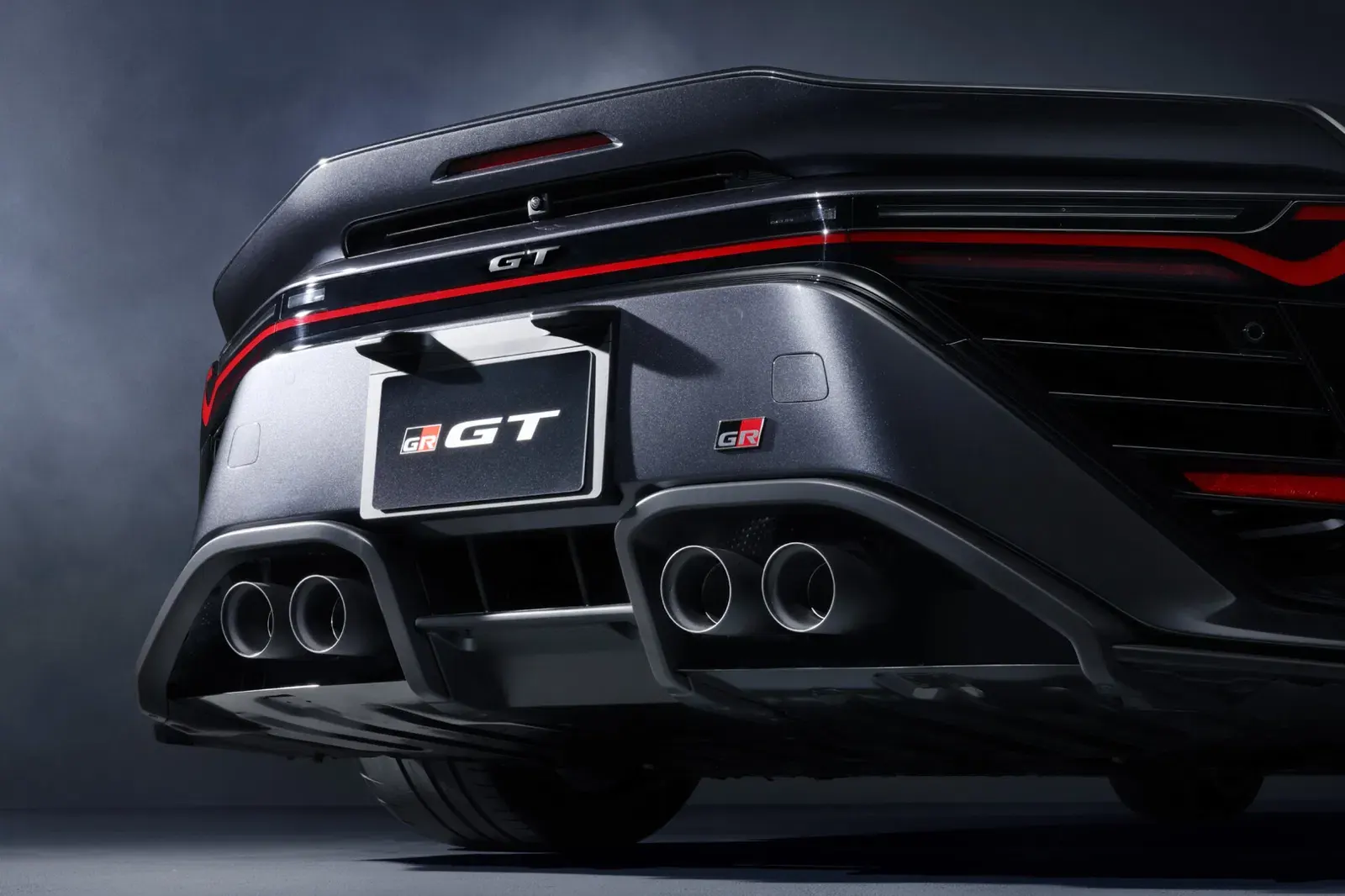
The racing conception is evident in the weight-saving measures. The GR GT is the first Toyota with raw aluminum body panels and aims for a curb weight under 1,750 kg. This makes it a whopping 300 kg lighter than its AWD AMG rival. The resulting 45/55 weight distribution, coupled with a stability control system derived from Toyota’s Le Mans race car, is designed to deliver a perfectly linear response, whether you are on a public highway or a track.