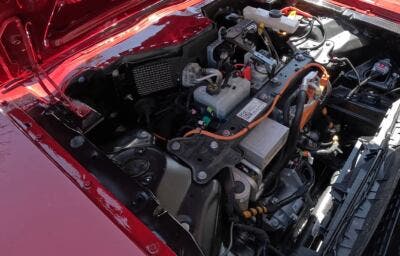
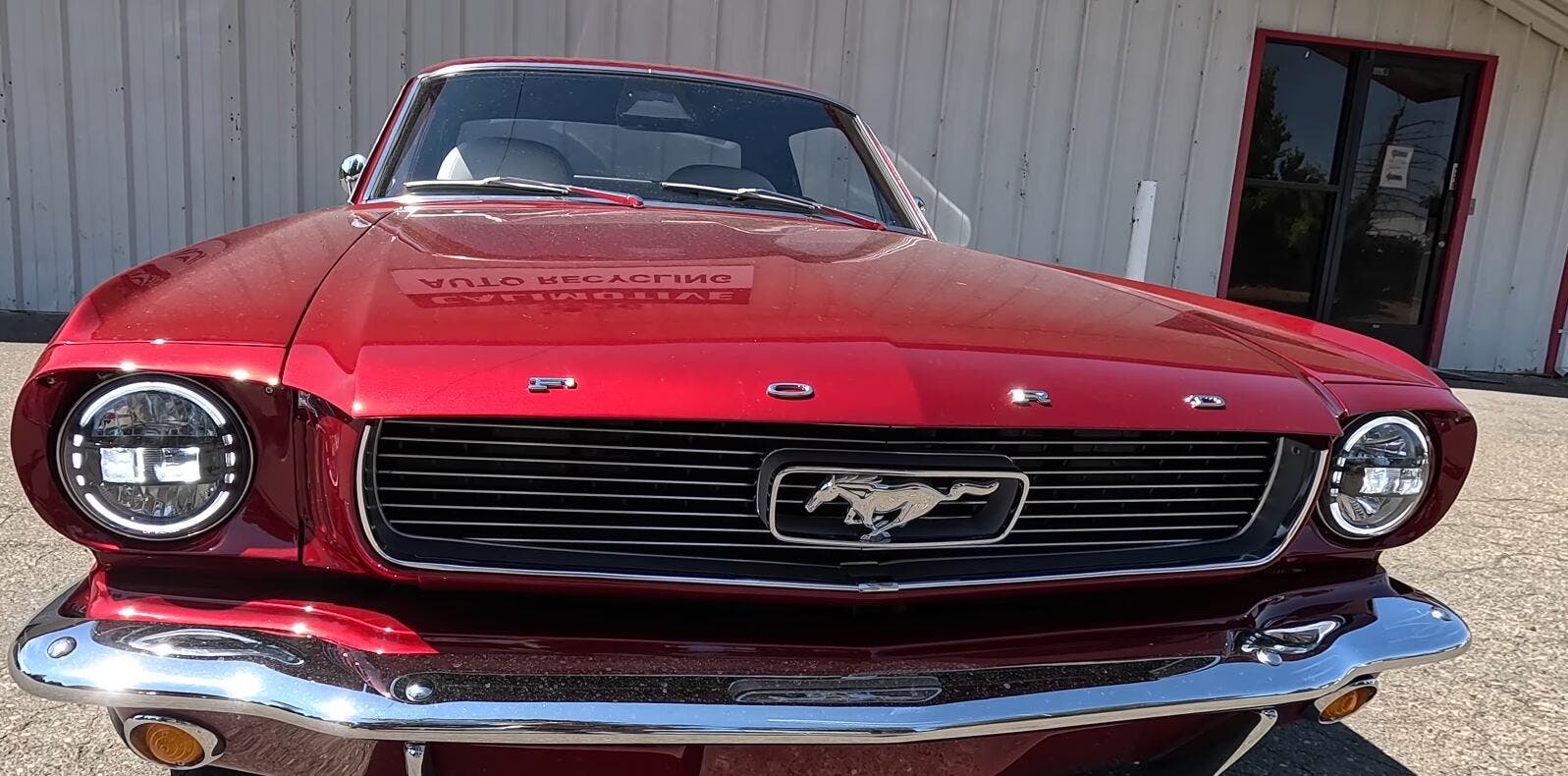
A 1966 Ford Mustang has been transformed into a fully electric vehicle with Tesla hardware, a dual-motor setup producing around 400 hp and even the supervised version of Full Self-Driving. Specialist Yaro Shcherbanyuk completed the project with his family in about two years, with an estimated investment of around $40,000.
1966 Ford Mustang becomes a 400 hp EV with Tesla power
Under the body of the classic muscle car sits the hardware from a dual-motor Tesla Model 3, a solution that allows the Mustang to accelerate from 0 to 60 mph in about 3.5 seconds. That level of performance would have been unthinkable for the car in its original 1960s configuration. Energy efficiency also stays close to that of a standard Model 3, with consumption reported at around 258 Wh per mile, confirming that the mechanical integration went beyond a simple powertrain swap and aimed to preserve the overall balance of the vehicle.
The most surprising part of the project may lie on the software side. The Mustang integrates supervised Full Self-Driving through sensors and cameras similar to those used by Tesla, adapted to a body with radically different shapes and surfaces from a Model 3. Features such as Autopilot, Summon and Sentry Mode work, while the cabin combines the look of the original Mustang with the Model 3’s 15-inch central display, a Cybertruck-inspired yoke steering wheel, heated and ventilated seats and the ability to receive over-the-air software updates.
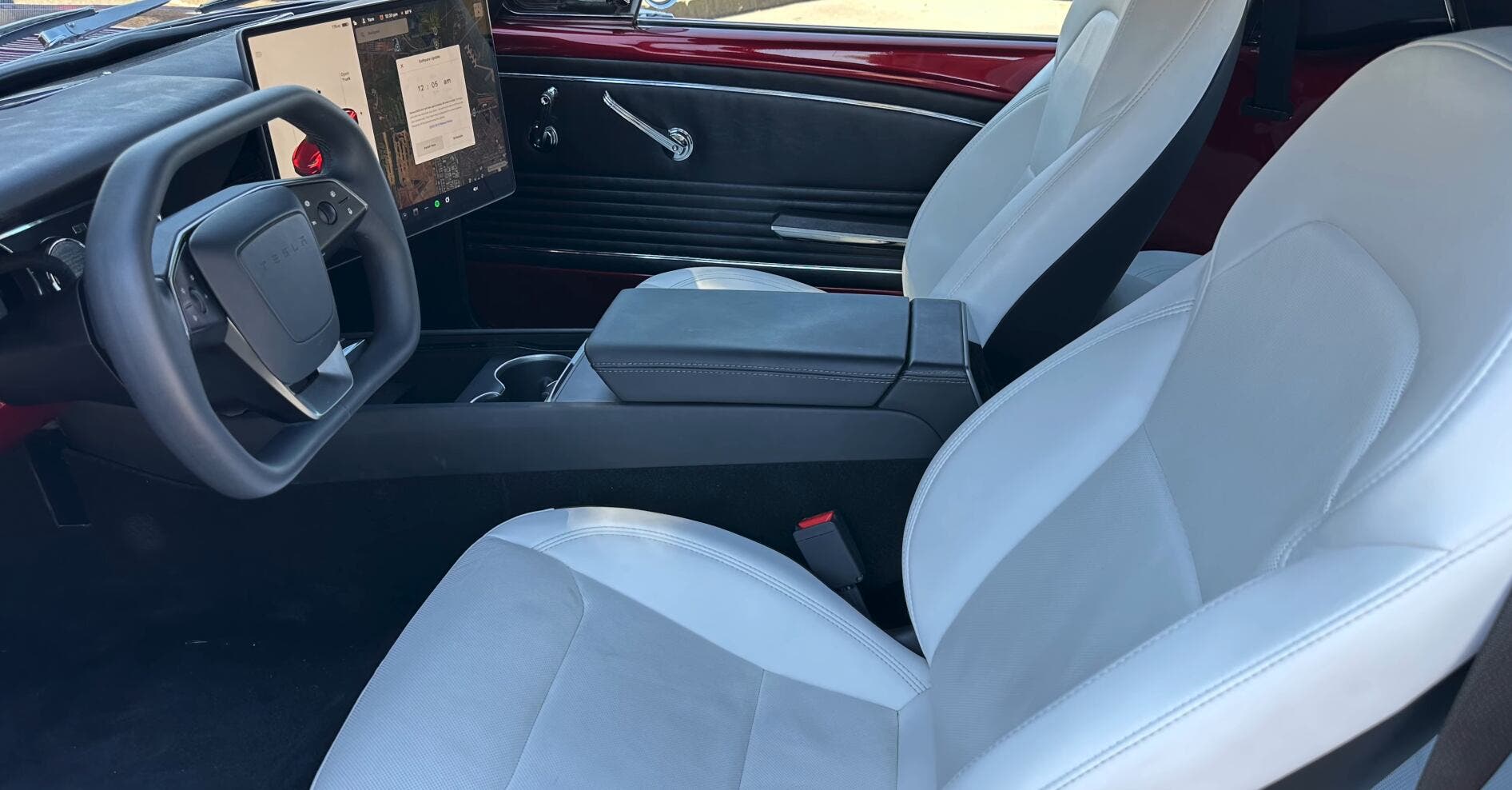
The project fits into an increasingly visible trend in the restomod world, where electric conversions of classic vehicles often use Tesla technology because of component availability, performance and software depth. The case also raises a broader question for major automakers. If an independent workshop can adapt a significant part of Tesla’s technology ecosystem to a 60-year-old car, it becomes reasonable to ask why larger industrial agreements have not yet taken shape in this direction. Ford CEO Jim Farley has publicly ruled out adopting Tesla technology, while Elon Musk has spent years offering Tesla systems to other brands without producing structured collaborations so far.
Shcherbanyuk’s electric Mustang remains a handcrafted project, but it offers an interesting glimpse of how the classic car world could evolve in the coming years. Historic models could become high-performance electric vehicles with advanced digital functions that, until recently, belonged only to the latest-generation cars.