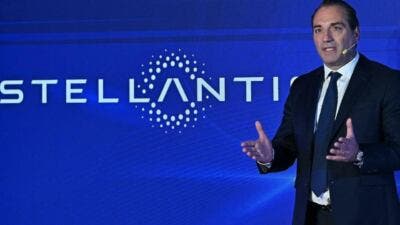
Stellantis closed the first quarter of 2026 with revenue of €38.1 billion, up 6% year over year, and returned to net profit with around €0.4 billion, formally marking the end of the group’s most critical phase over the past year. Adjusted operating income reached €960 million, almost tripling the result recorded in the same period of 2025, supported by higher volumes and by operational management that CEO Antonio Filosa described as the result of the first corrective actions launched to put the group back on a sustainable growth path.
Stellantis returns to profit in Q1, but market caution remains
However, the improvement in the accounts, announced on Thursday, April 30, with figures above analysts’ expectations, did not translate into a positive stock-market reaction. Stellantis shares lost ground in the same session, a sign of caution that reflects a more complex reading than the simple return to profit.
Investor concerns focus first on the composition of the quarterly result. A one-off factor linked to the U.S. Supreme Court’s decision to cancel some tariffs generated estimated refunds of around €400 million, with the impact concentrated mainly in North America. Excluding this contribution, the improvement in profitability would look much less pronounced, while the gap from pre-crisis levels would still remain considerable.
The issue that continues to shape market perception is industrial free cash flow, still negative by €1.9 billion. This figure shows that the ability to generate operating cash remains Stellantis’ main structural weakness. The group will need to show tangible progress in the coming quarters to strengthen the credibility of the recovery now underway.
Attention now turns to the Investor Day scheduled for May 21, when the group will present its new industrial plan and define the strategic direction for the 14 brands in its portfolio. The event will be especially important for understanding Alfa Romeo’s future, including decisions on the next Giulia and Stelvio, and for clarifying the powertrain strategy between electrification, combustion engines, hybrid solutions and possible scenarios after the 2035 regulatory deadline. The market is waiting for precise indications on these points before recalibrating expectations for the stock.