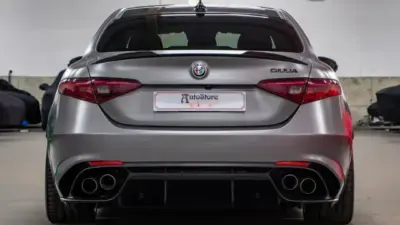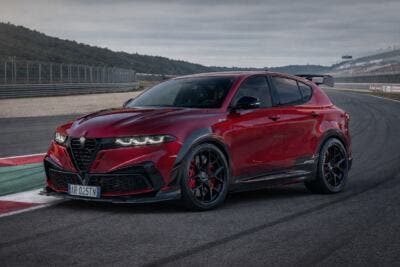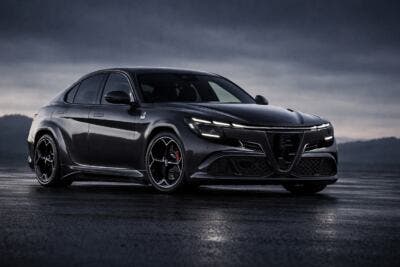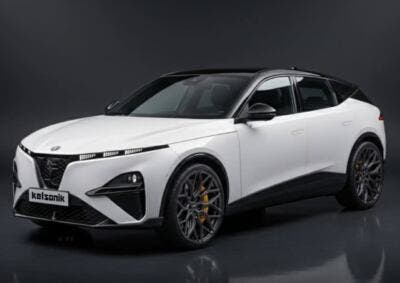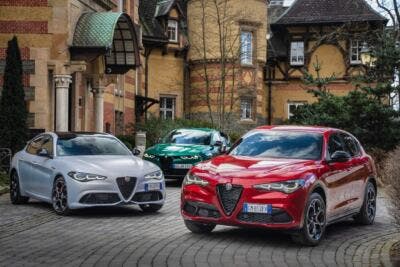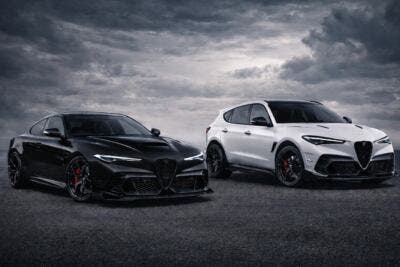
The future Alfa Romeo Giulia and Stelvio should arrive in about two years, but Alfa Romeo has so far released very little official information about either project. A first clarification could come on May 21, when Antonio Filosa presents Stellantis’ program at an event that may offer the first real clues about the technical and industrial direction of the two models that will carry a meaningful part of the brand’s future.
Alfa Romeo’s next Giulia and Stelvio may hinge on one key hybrid decision
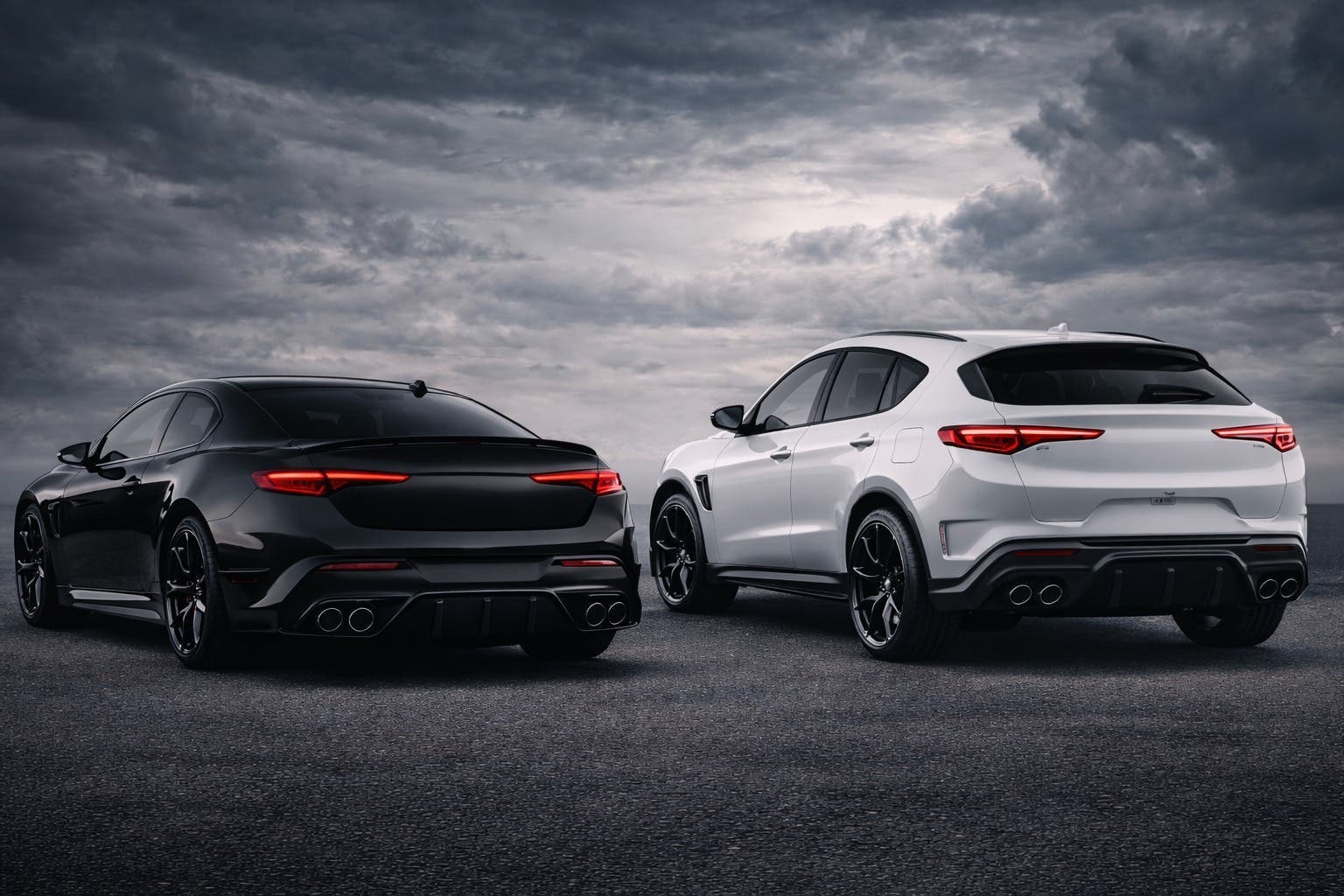
Among the most closely watched topics is, of course, the engine question. The rumors that have surfaced so far suggest Alfa Romeo does not want to give up the more emotional side of its identity. In that sense, reports continue to point insistently toward a future Quadrifoglio variant with a combustion engine, confirming the brand’s intention to keep its sporting heritage alive.
The most interesting issue, however, probably concerns the powertrain that will form the core of the lineup. The most frequent reports now point to a full-hybrid solution rather than a plug-in hybrid. That possibility would also make the project especially significant inside Stellantis, where the group has so far addressed this space mainly with the 213-horsepower 1.6 hybrid developed for the U.S. market, a setup that would almost certainly fall short of what Alfa Romeo needs.
The future 2.0-liter hybrid four-cylinder planned for the Giulia and Stelvio could share some technical links with the experience Maserati has built up, and some reports suggest part of its engineering foundation could draw from work developed around the Nettuno V6, later reworked and reinterpreted in hybrid form. That scenario would also fit with comments made in the past by former CEO Jean-Philippe Imparato, who openly spoke about the need to decide on and fund a hybrid V6 project quickly.
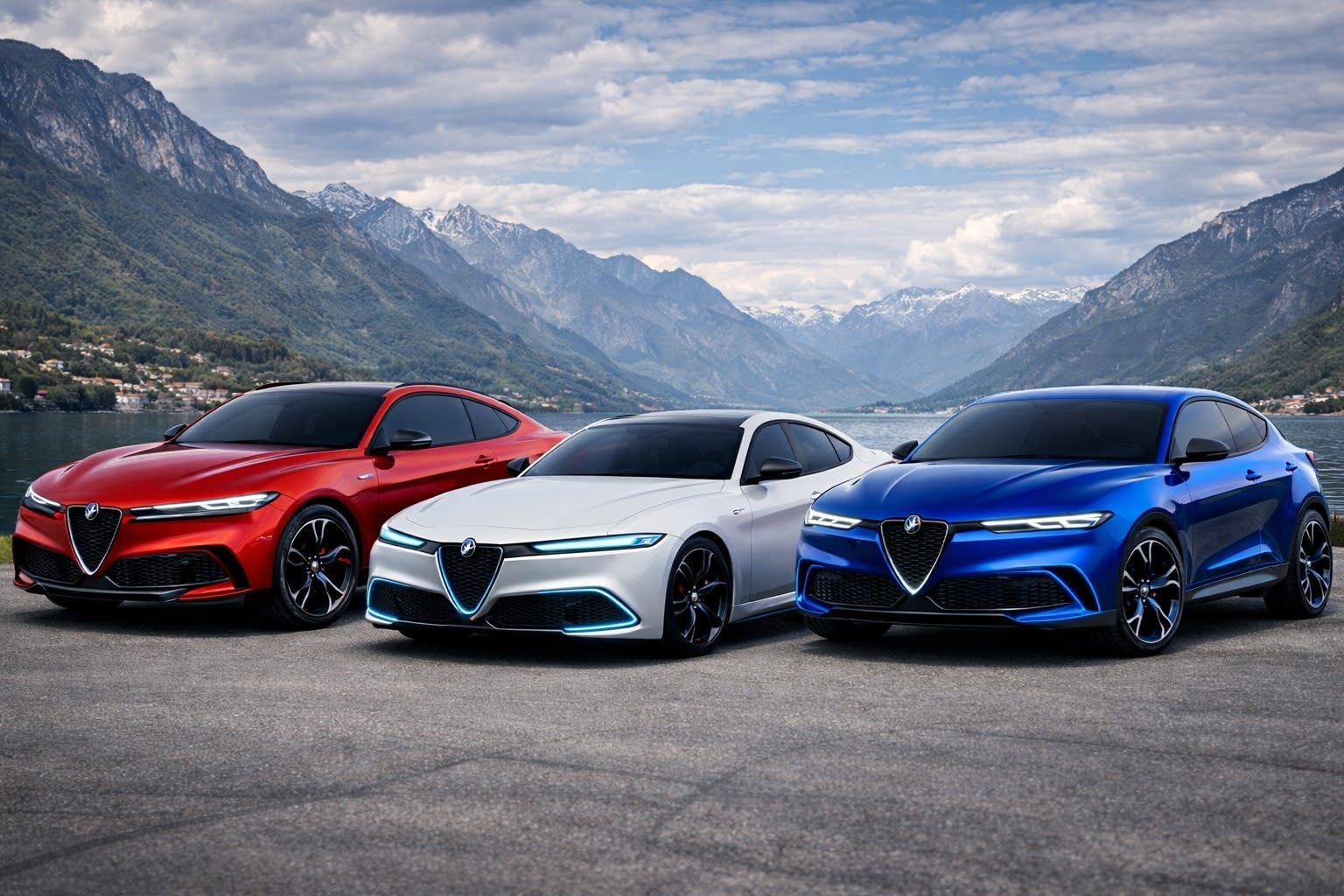
When it comes to performance, Alfa Romeo has little room to move backward. The current Giulia and Stelvio already reach 280 horsepower with the 2.0-liter turbo, and a less powerful replacement would likely look like a retreat that would be hard to justify given the brand’s positioning. That is why the idea of a hybrid version producing more than 300 horsepower is gaining strength, perhaps moving close to the 333 horsepower already delivered by Maserati’s 2.0 mild-hybrid in the Grecale. That kind of output would allow Alfa Romeo to preserve a credible sporting image without ignoring the growing pressure around fuel economy and emissions.
The platform question remains just as central. Until recently, many observers expected the move to STLA Large, but in recent weeks the idea of staying on the Giorgio architecture has regained momentum. If Alfa Romeo confirms that route, it would significantly change the technical reading of both models, although certainty remains limited on this front as well.
Overall, Alfa Romeo seems to be searching for a balance between sportiness, innovation, and sustainability, and that balance will depend above all on the powertrain choice. More than any other element, the engine strategy will define the identity of the next Giulia and Stelvio and, with it, the path the brand will follow in the years ahead.