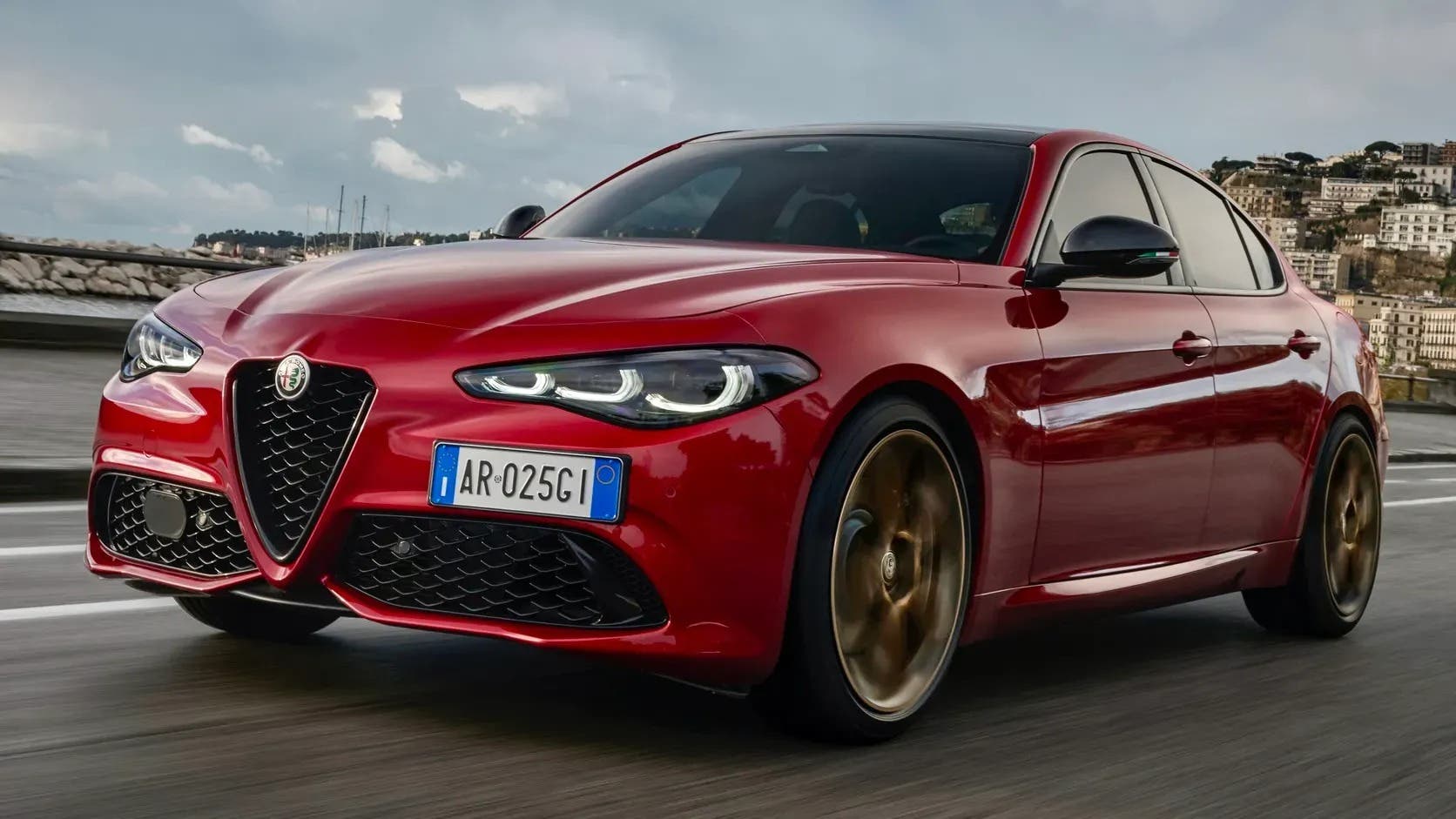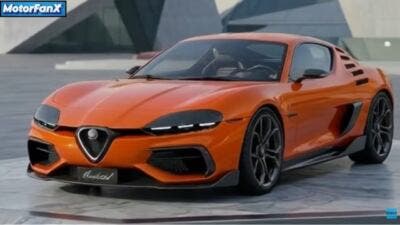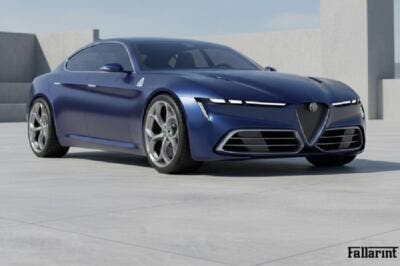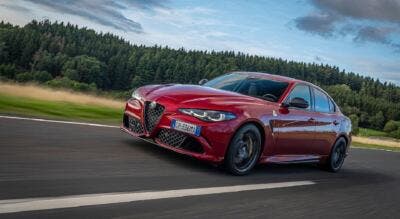
The future Alfa Romeo Giulia Quadrifoglio should keep a combustion engine even in the next generation of the sedan expected in 2028. As the months go by, that choice looks less and less like a rumor and more and more like the path Alfa Romeo has chosen to preserve the connection between performance, sporting character, and the brand’s reputation.
Santo Ficili himself helped strengthen that interpretation when he told Autocar that the world is not yet ready for a fully electric Giulia Quadrifoglio. With that remark, he strongly suggested that the flagship version of the lineup will continue to rely on internal combustion, possibly supported by some form of electrification.
Alfa Romeo Giulia Quadrifoglio may keep internal combustion, but the engine remains the key question
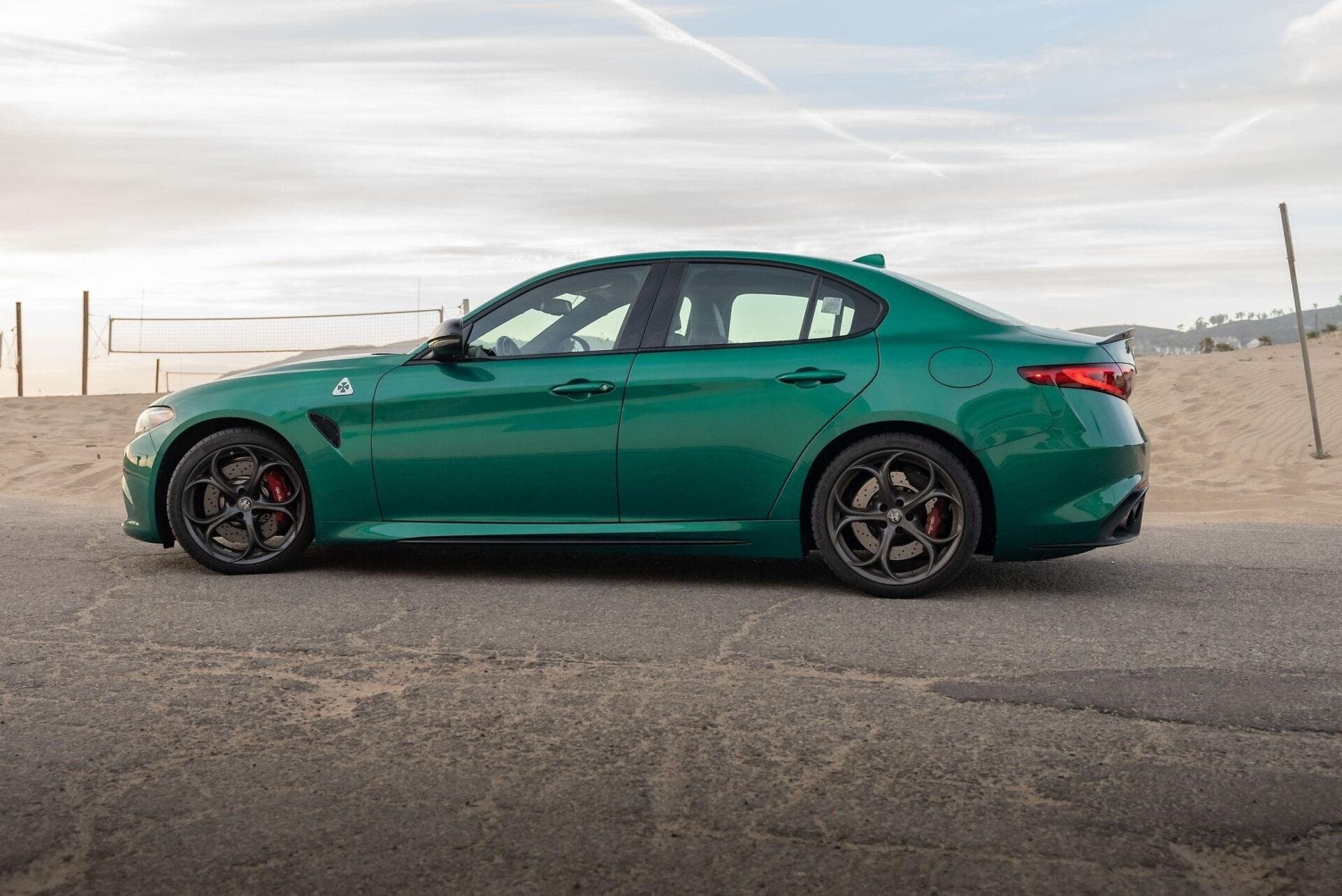
The real question, however, concerns the engine that will sit under the hood, and that answer depends largely on the platform Alfa Romeo chooses for the car. Until recently, many people treated the move to STLA Large as almost certain. In recent months, however, doubts have grown, and speculation has returned around a possible use of Giorgio Evo, the same architecture that underpins the Maserati Grecale.
If Alfa Romeo chooses that architecture, the Nettuno V6 would become a very plausible option, perhaps paired with a partial electric assist. If the company confirms STLA Large instead, it will need to find another solution, unless engineers can still integrate the same engine into the new platform. That technical issue may also have contributed to the delays that the project has already accumulated. Among the alternatives, some reports have also mentioned the 550-horsepower 3.0-liter twin-turbo inline-six already used in the combustion-powered Dodge Charger Daytona.
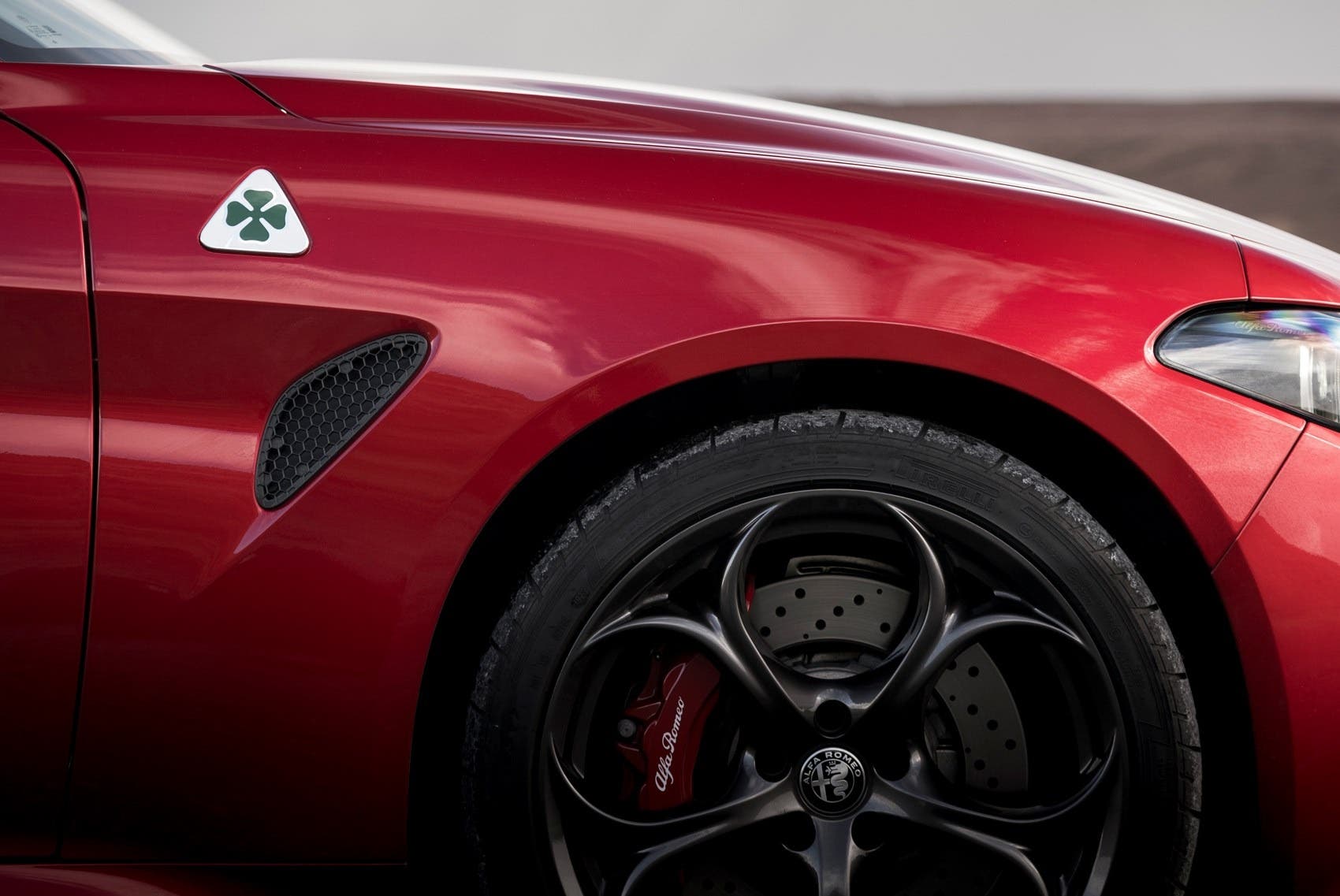
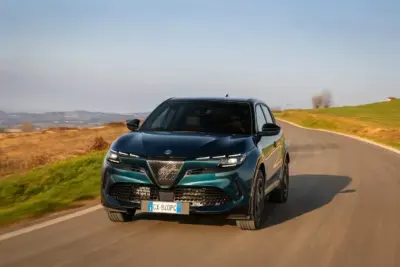
From both a design and engineering standpoint, the new Giulia should change significantly from the original plan. Reports point to a revised front bumper, larger air intakes to improve cooling, and a broader lineup that could also include a four-cylinder mild hybrid and a fully electric variant with more than 640 kilometers of range. The proportions should grow more generous, with sleeker lines and a more carefully developed aerodynamic package than the current model offers. Alfa Romeo is also expected to draw inspiration from the Junior for its new design language, using split headlights, LED light signatures, arrow-style taillights, and a more pronounced spoiler. The brand should also update the Alfa Romeo shield, partly in response to European rules on license plate placement.
Inside, the cabin should adopt a much more modern layout built around a floating central display and a digital reinterpretation of the classic binnacle that has long defined the driving position in Alfa Romeos. The lineup should also include plug-in hybrid versions and electric variants with batteries as large as 118 kWh. In that context, the Quadrifoglio will need to remain the most performance-focused member of the Giulia family while also serving as the most credible link between Alfa Romeo’s sporting tradition and the direction the brand is now taking into the future.