

March was the kind of month that makes Toyota executives reach for the extra-strength antacids. Global sales for the group, Daihatsu and Hino included, slipped by 5.8% compared to last year, stalling out at exactly 983,126 vehicles.
The primary suspect has a very familiar name: the Toyota RAV4. One of the world’s most ubiquitous SUVs is currently trapped in that awkward “restyling limbo”, a commercial purgatory where customers stop buying the current model to wait for the shiny new version, leaving the sales charts looking like a deflated tire.
But here is where the corporate math gets genuinely weird. While sales dropped, global production actually climbed by 3.9% to 1.02 million units. It is a classic case of building cars faster than people can actually sign the financing papers. A production-to-sales imbalance that tells the story of a giant in transition better than any glossy press release ever could. Meanwhile, domestic production in Japan followed the downward sales trajectory with a 3.3% dip, proving that the headache isn’t just a marketing problem.
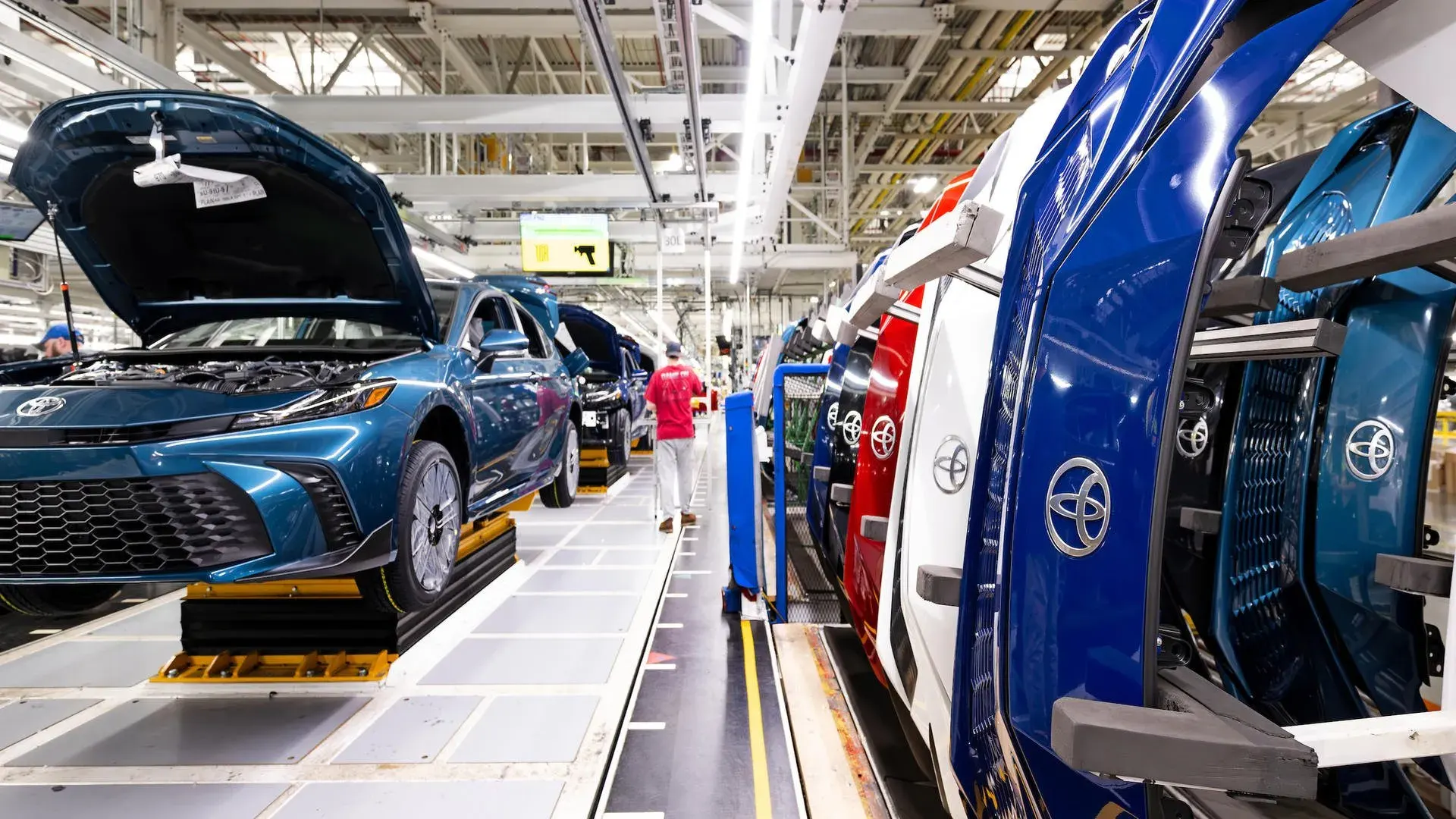
Adding to the misery is a variable like the Middle East. Japanese manufacturers are currently at the mercy of the Persian Gulf for roughly 70% of their aluminum supply. With maritime trade under immense pressure and components stuck in transit, Toyota has already bled about 20,000 units from its monthly domestic output. Even if the Strait of Hormuz cleared tomorrow, the supply chain scarring is deep and won’t heal overnight.
BEV sales more than doubled to 35,524 units, a convenient “point of light” for the brochures. The real heavy lifting is being done by the hybrid fleet, which moved 442,544 units, up 3.7%.
Toyota’s neighbors have full-blown pneumonia. Honda plummeted 13% in March, and Nissan followed suit with a 7% drop. In comparison, Toyota’s decline looks less like a crisis and more like a managed descent. With 11.3 million vehicles sold in 2025, they remain comfortably ahead of Volkswagen.