

At the CES in Las Vegas, Ford revealed new details about the technologies that will power its future models. The American automaker is placing a strong bet on autonomous driving, and the good news is that it will not remain exclusive to premium vehicles.
Ford aims to close the gap that has opened up with competitors in recent years. During CES in Las Vegas, the company outlined its roadmap for the coming years. Beyond electrification, which has taken a new direction following the recent agreement with Renault, Ford plans to accelerate the development of in-car technologies, promising Level 3 autonomous driving by 2028.
Ford targets Level 3 autonomous driving by 2028 and plans to make it accessible
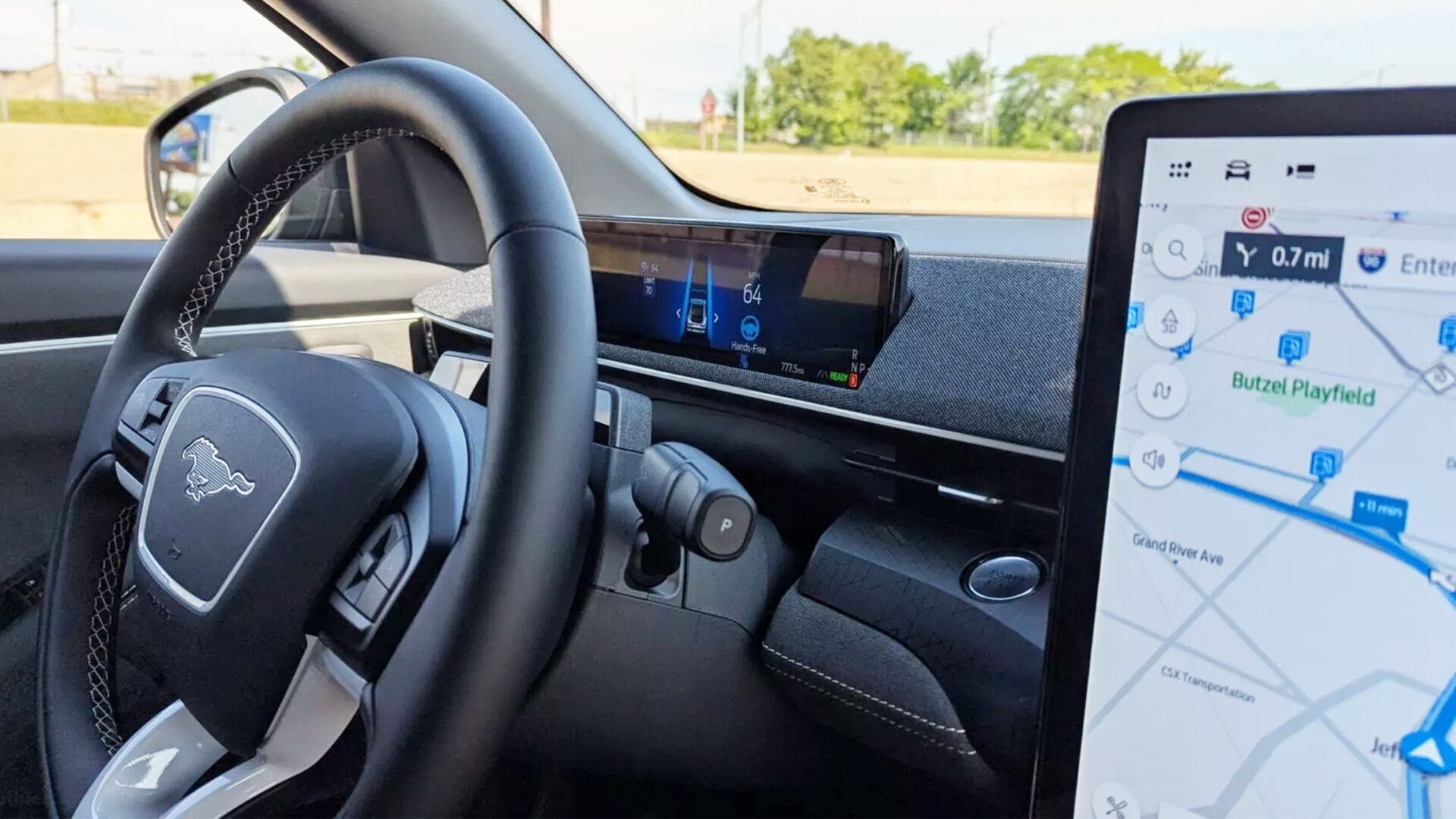
Like all major automakers, Ford already offers a full suite of driver-assistance systems, including adaptive cruise control, lane keeping, and emergency braking. Even so, the brand cannot yet claim a leadership position in this field. Other manufacturers, Tesla, for example, currently provide more advanced systems, even if those solutions still require further refinement.
That said, Ford fully intends to catch up. At CES, the company presented its long-term vision and reiterated its goal of achieving fully autonomous driving by 2028. In practical terms, this means a Level 3 system that allows the driver to disengage from steering, pedals, and constant road monitoring under specific conditions.
The most encouraging aspect is Ford’s intention to “democratize technology.” In other words, this system will not be reserved for high-end models. Doug Field, Ford’s Chief EV Officer, confirmed that the technology will integrate into a future universal Ford platform designed to underpin multiple models. The most affordable vehicle using this architecture could start at around $30,000.
Although the full Level 3 system will not arrive until 2028, Ford plans to roll out new driver-assistance features much sooner. Starting next year, updated systems should progressively appear, offering more advanced functionality and allowing drivers to keep their hands off the wheel for longer periods. Currently, BlueCruise only supports hands-free driving on limited stretches of approved highways.
Field also confirmed that Ford will not rely on external companies for its core in-car technologies. “Too many companies have outsourced their entire internal operations in an effort to stay competitive,” he explained. Instead, Ford will manage the entire development chain in-house, from the vehicle platform to the smallest integrated system, including a new software architecture that will support both infotainment and driver-assistance functions. “By controlling both hardware and software, we can democratize these technologies and make them accessible to everyone, not just a privileged few,” Ford stated at CES.