Ferrari believes it has every right to use the name “Ferrari Luce” internationally and is handling with relative calm the issue raised by Mazda’s recent move, after the Japanese automaker filed an application in Japan on March 4 to register the name “Luce”.
Ferrari defends the Luce name after Mazda’s latest move
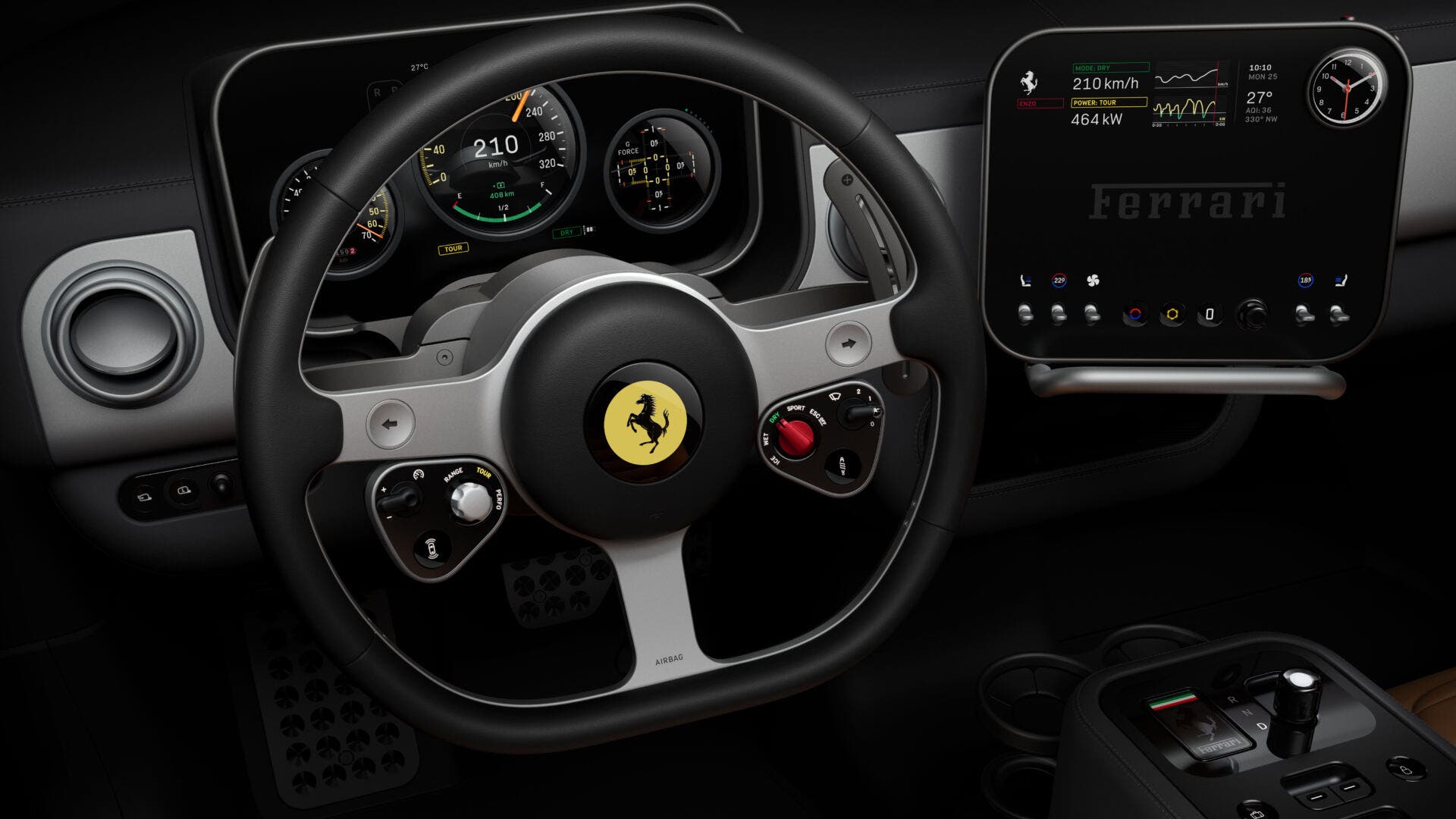
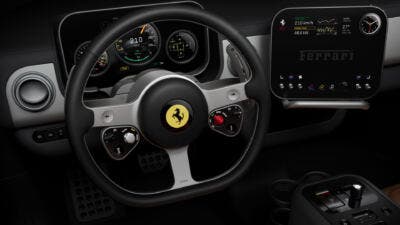
According to what sources close to Maranello suggest, the preliminary checks carried out before Ferrari filed its application on February 9 during the presentation of the future EV’s interior did not reveal any still-valid and incompatible third-party rights, including those previously linked to the Japanese automaker, which had reportedly expired. Ferrari’s position also gains strength from the fact that the registered trademark matches the full name “Ferrari Luce” rather than the simple term “Luce”, a distinction that could prove important from a legal standpoint.
Mazda’s move, however, does not lack historical grounds. The Luce name accompanied several generations of sedans produced between the 1960s and the early 1990s, cars sold in other markets as the Mazda 929 but still tied to that name in Japan, where it continues to carry symbolic weight. Mazda itself recalled that legacy in 2017 when it presented the Vision Coupe as a tribute to the 1969 Luce Rotary Coupe. It is still unclear whether the new filing represents a defensive move, a sign of possible future reuse, or simply an effort to secure the name in the domestic market. Until Mazda clarifies its intentions, the situation will remain open, even if for now it cannot be described as a real clash between the two companies, as happened recently with Tesla over the Cybercab name.
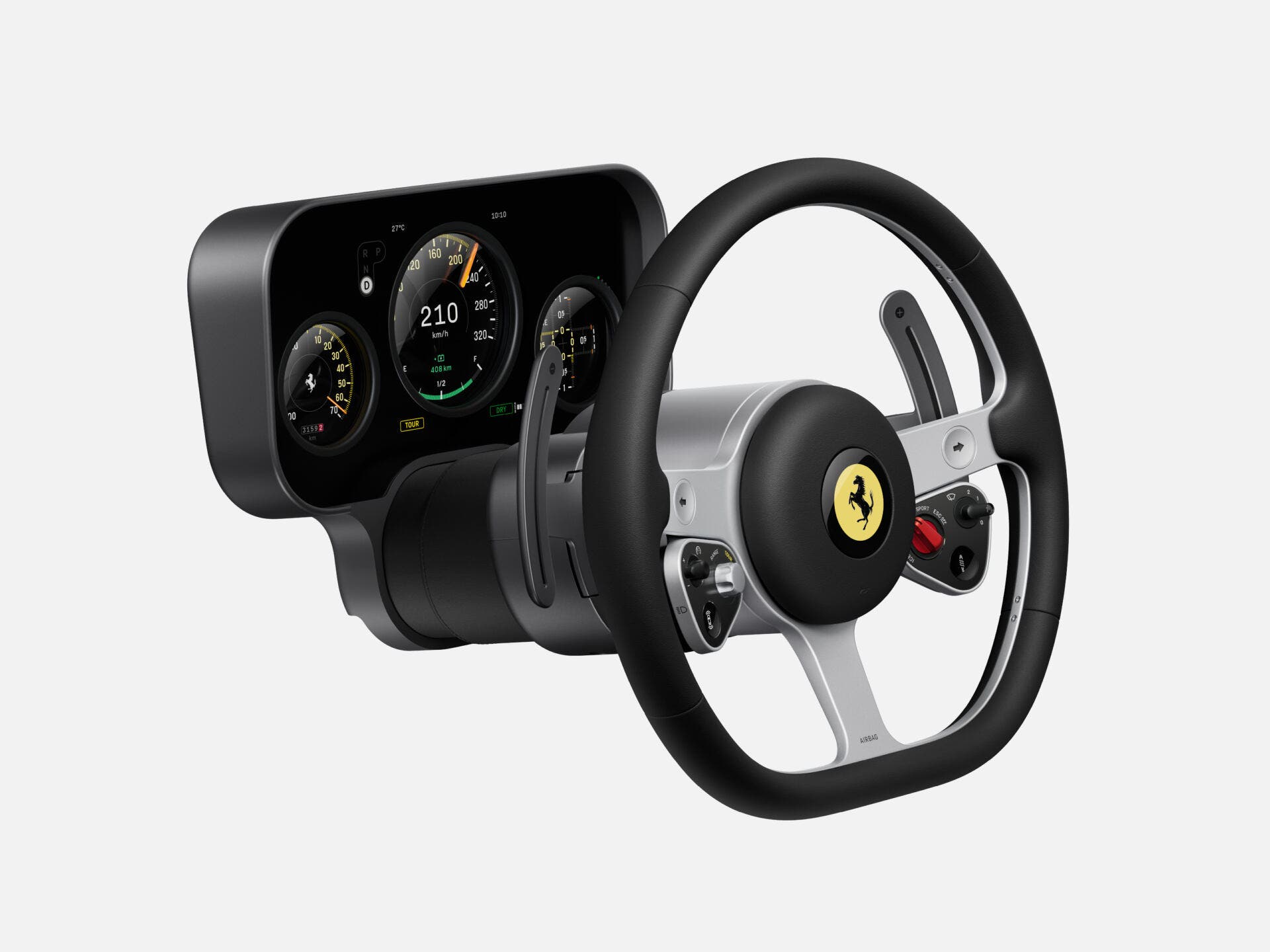
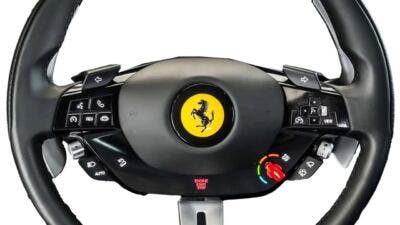
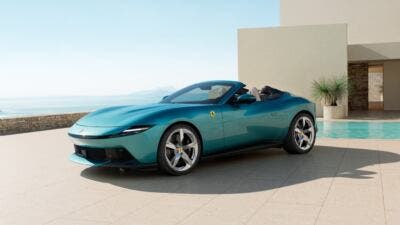
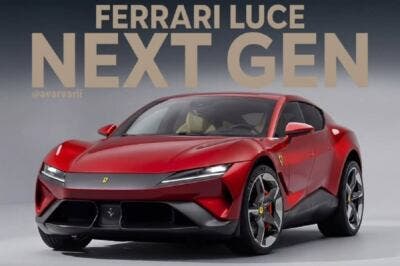
The future Ferrari Luce, expected in 2026, will become the first series-production electric Ferrari in Maranello’s history and will take the Prancing Horse into completely new territory. The technical specifications circulating around the project describe a car with four electric motors, 0 to 100 km/h in 2.5 seconds, a top speed of 310 km/h, a 122 kWh battery compatible with charging speeds of up to 350 kW, and a claimed range of 530 kilometers. Those figures explain the already intense attention surrounding a model that will represent both a symbolic and an industrial turning point for the brand.