

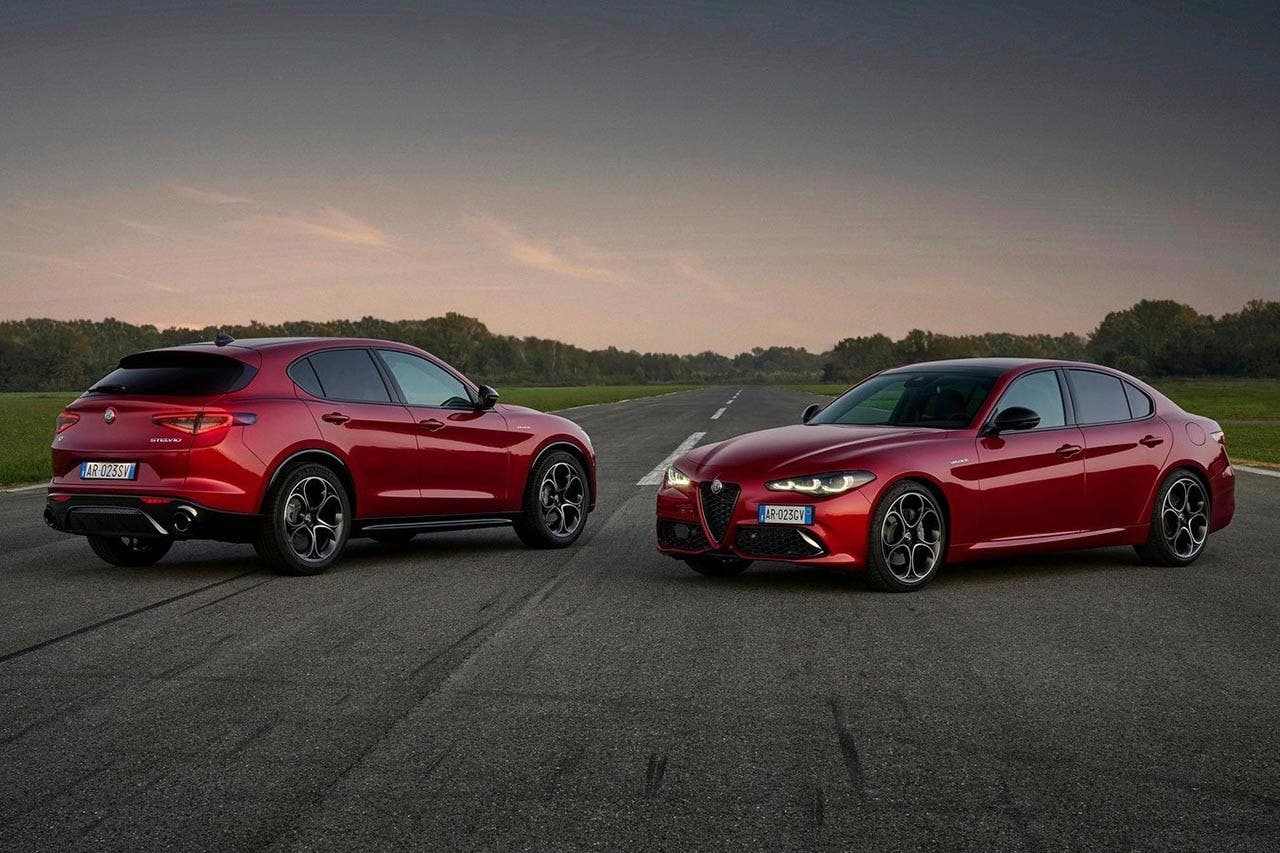
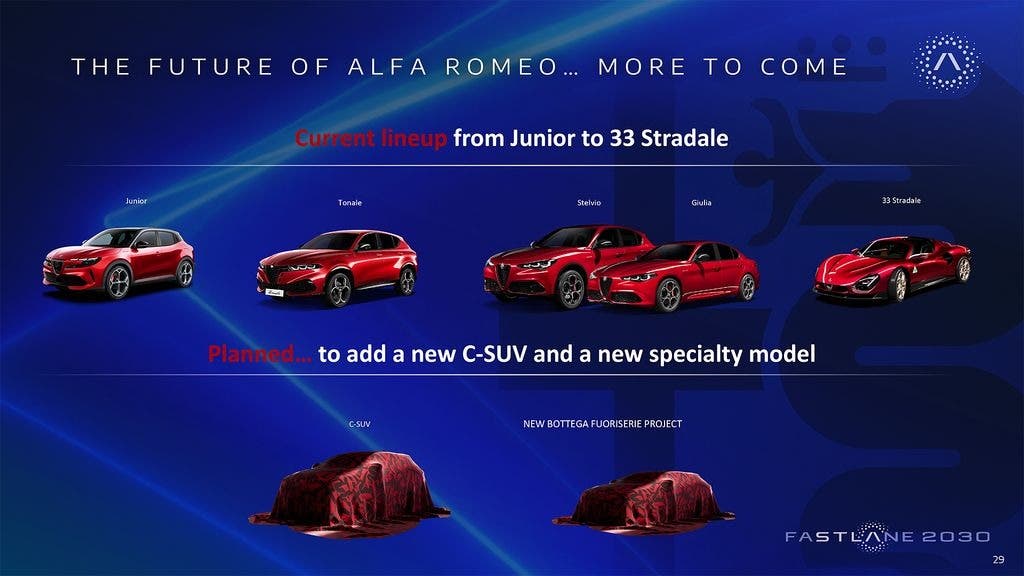
The new Alfa Romeo Giulia and Stelvio do not appear in Stellantis’ FaSTLAne 2030 plan. The slide dedicated to the Biscione during Investor Day does not include the two successors to the models born on the Giorgio platform. Under Carlos Tavares’ management, Alfa Romeo had planned both cars on the STLA Large architecture, with production in Cassino and a fully electric setup, before revising the strategy and pushing the project to 2028 to include hybrid variants as well.
Alfa Romeo confirms new C-SUV as new Giulia and Stelvio disappear from the plan
The STLA Large platform, which debuted with the Dodge Charger, should have taken over from Giorgio for Alfa Romeo too. However, the project has clearly run into technical, industrial and commercial obstacles that affected its feasibility within the expected timeline.
The absence of Giulia and Stelvio from the plan also raises questions about other models linked to that architecture, such as the future Maserati Levante, and especially about the future of the Cassino plant, which should have hosted their production.
The only confirmed new Alfa Romeo model by 2030 is a compact C-segment SUV, which could arrive as early as 2027 and sit between the Junior and Tonale in a highly competitive part of the European market. The model should use Stellantis’ new STLA One platform, a modular multi-energy architecture that would allow Alfa Romeo to offer hybrid and electric versions without locking the project into a battery-only formula.
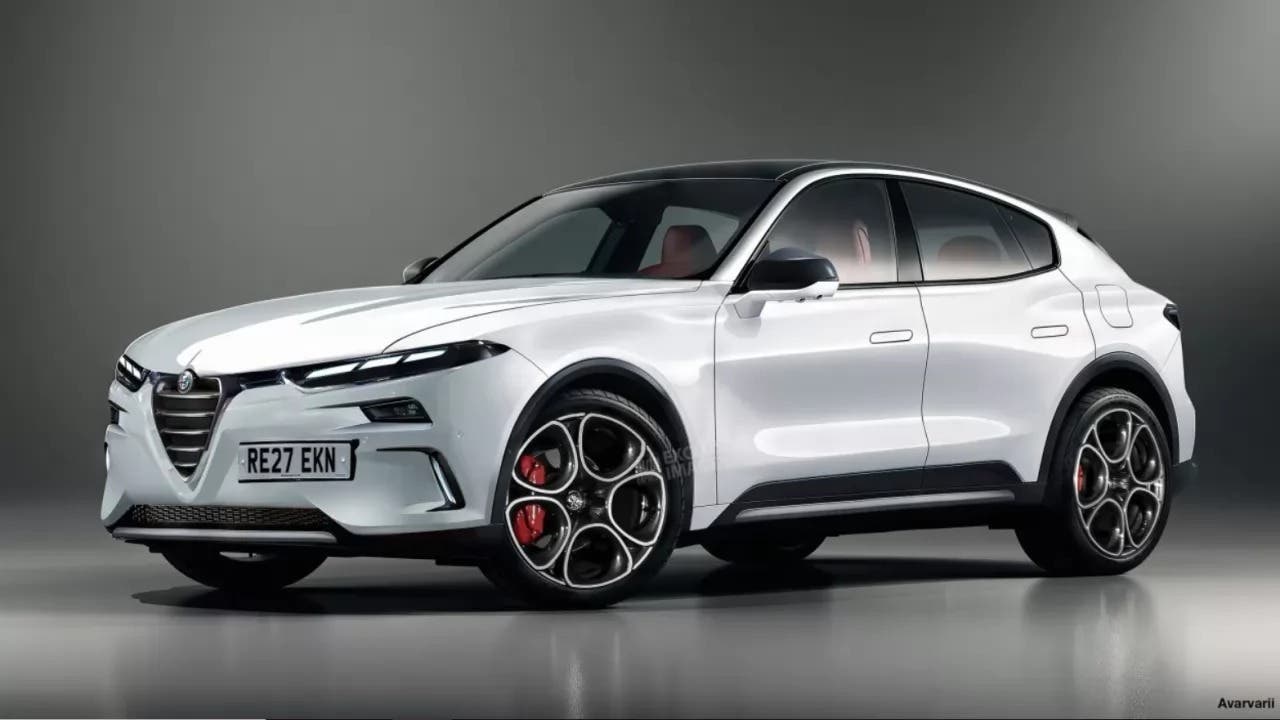
The first teasers shown during the presentation reveal a crossover with soft shapes, but little else. In practice, the C-SUV will become the model tasked with supporting Alfa Romeo volumes over the next few years, while the market waits to understand when and how Stellantis plans to relaunch the upper end of the brand’s range.
The plan also includes a Bottega Fuoriserie project, probably a limited-run car designed to keep Alfa Romeo’s more emotional and exclusive side alive. However, this remains an image-building operation and does not change the substance of a product horizon reduced to only one new series-production model over the next five years.
For Alfa Romeo enthusiasts, the biggest question remains open: when will Giulia and Stelvio return to the lineup, and can Alfa Romeo maintain a credible link with the upper-segment sports cars that have always defined the brand’s identity?