


You are driving a silent electric beast that accelerates like a jet, only to be taunted by a persistent, rhythmic “chirp” coming from somewhere inside the door panel. It is the ghost in the machine, the cheap, single-use plastic clip that was never meant to survive a pothole. Tesla, trying to solve problems we didn’t know could be this complicated, has decided that the humble fastener needs a radical promotion.
According to US Patent 2026/0110320 A1, published on April 23, the wizards in Austin are moving away from the “one-and-done” plastic junk that usually snaps the moment a mechanic looks at it sideways. We’re talking about a structural statement. Tesla’s new design is a four-part, dual-material assembly that looks like a precision-engineered “mushroom”.
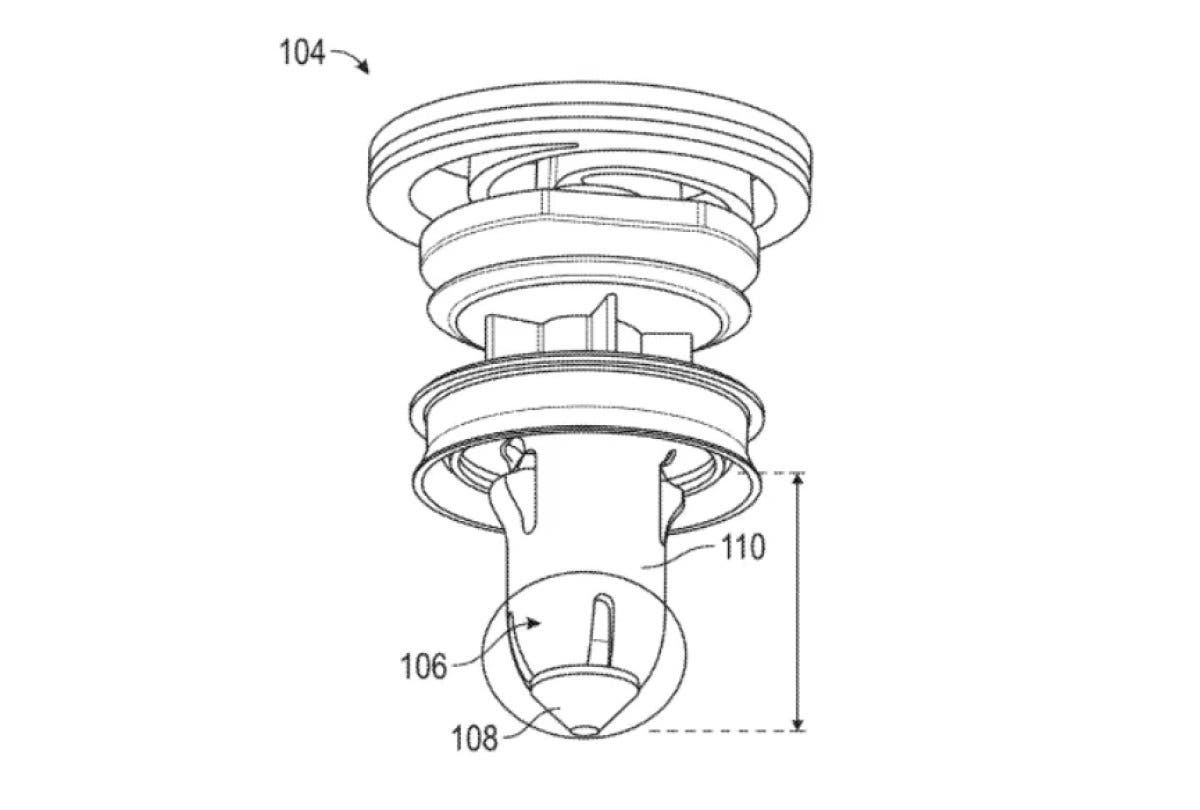
The core, the pins and retaining rings, is made of rigid, glass-fiber-reinforced nylon. This provides the backbone needed to keep your interior from falling into your lap. But the real magic is the Thermoplastic Elastomer (TPE) coating. This soft layer acts as a literal shock absorber for your ears, dampening vibrations before they can transform into those high-frequency squeaks that drive luxury owners to madness.
Tesla’s R&D department apparently spent a significant amount of time with Finite Element Analysis (FEA) to perfect the physics of “pulling stuff apart”. The technical data is surprisingly specific: it takes 31 Newtons to snap the retaining ring into the body, but a massive 243 Newtons to pull it out. Meanwhile, the pin requires only 7 Newtons to insert and 152 Newtons to remove. This calculated discrepancy ensures that when you pull a panel to check the wiring, the clip actually stays intact.
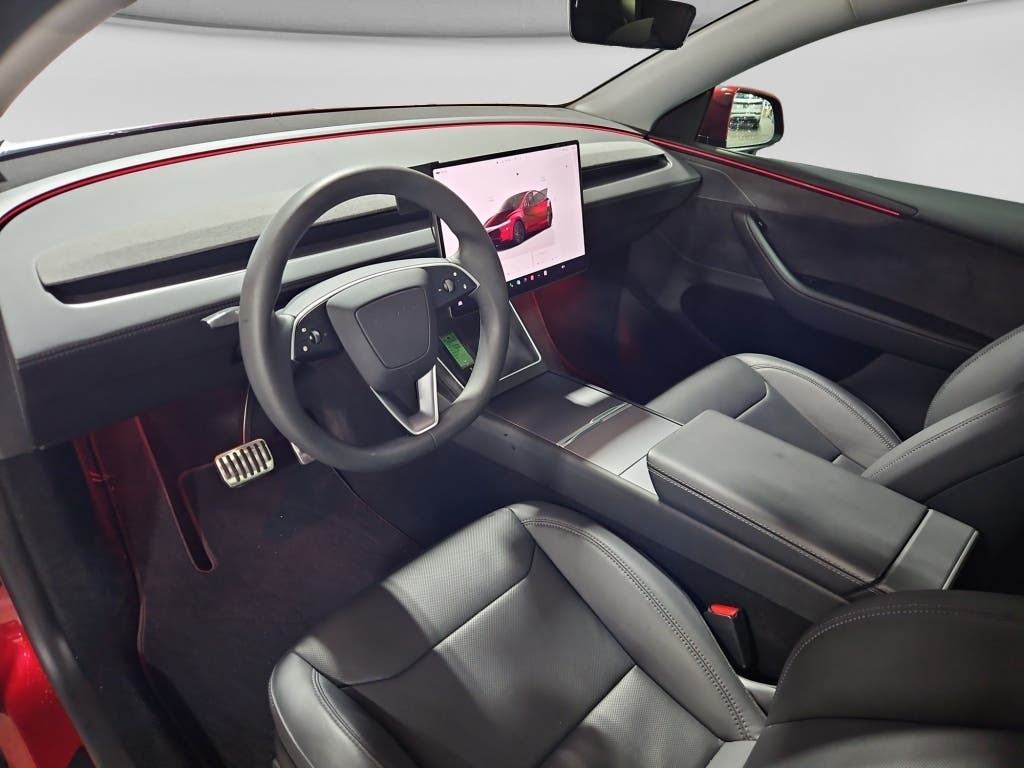
In the grand quest for NVH (Noise, Vibration, and Harshness) dominance, this patent represents the difference between a “quiet” car and a truly silent sanctuary. By absorbing low-frequency road roar and high-frequency panel resonance at the source, Tesla is betting that a better clip is the secret to a refined cabin.