

The new Volkswagen Tukan will use a modified version of the MQB platform, sharing several components with the T-Cross, but with a specific rear section. There, the German automaker has reportedly chosen a rigid axle with semi-elliptic leaf springs instead of the torsion-beam and coil-spring setup used on the old Saveiro.
The solution follows the same construction logic already adopted by the Fiat Strada, prioritizing payload capacity over pure driving dynamics. It also places the Tukan in a highly competitive segment of the South American market, where it will face rivals such as the Fiat Toro, Chevrolet Montana and the future Renault Niagara.
Volkswagen prepares the Tukan to challenge South America’s small pickups
Volkswagen has not officially confirmed the engine lineup yet, but reports so far point to a 1.5 TSI turbo with mild-hybrid technology as the main powertrain. A non-electrified 1.0 turbo could also join the range for entry-level versions, helping Volkswagen keep pricing competitive.
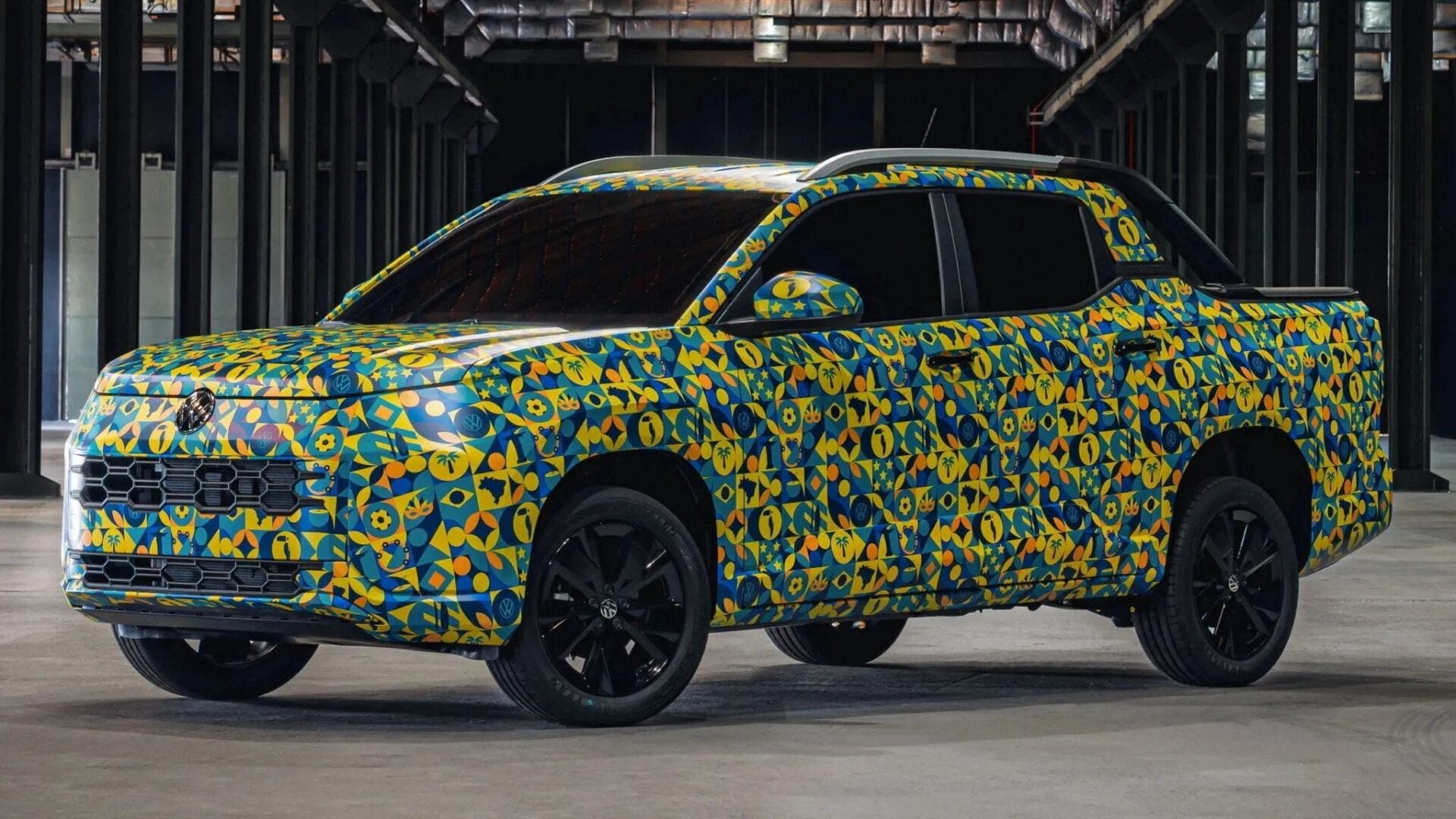
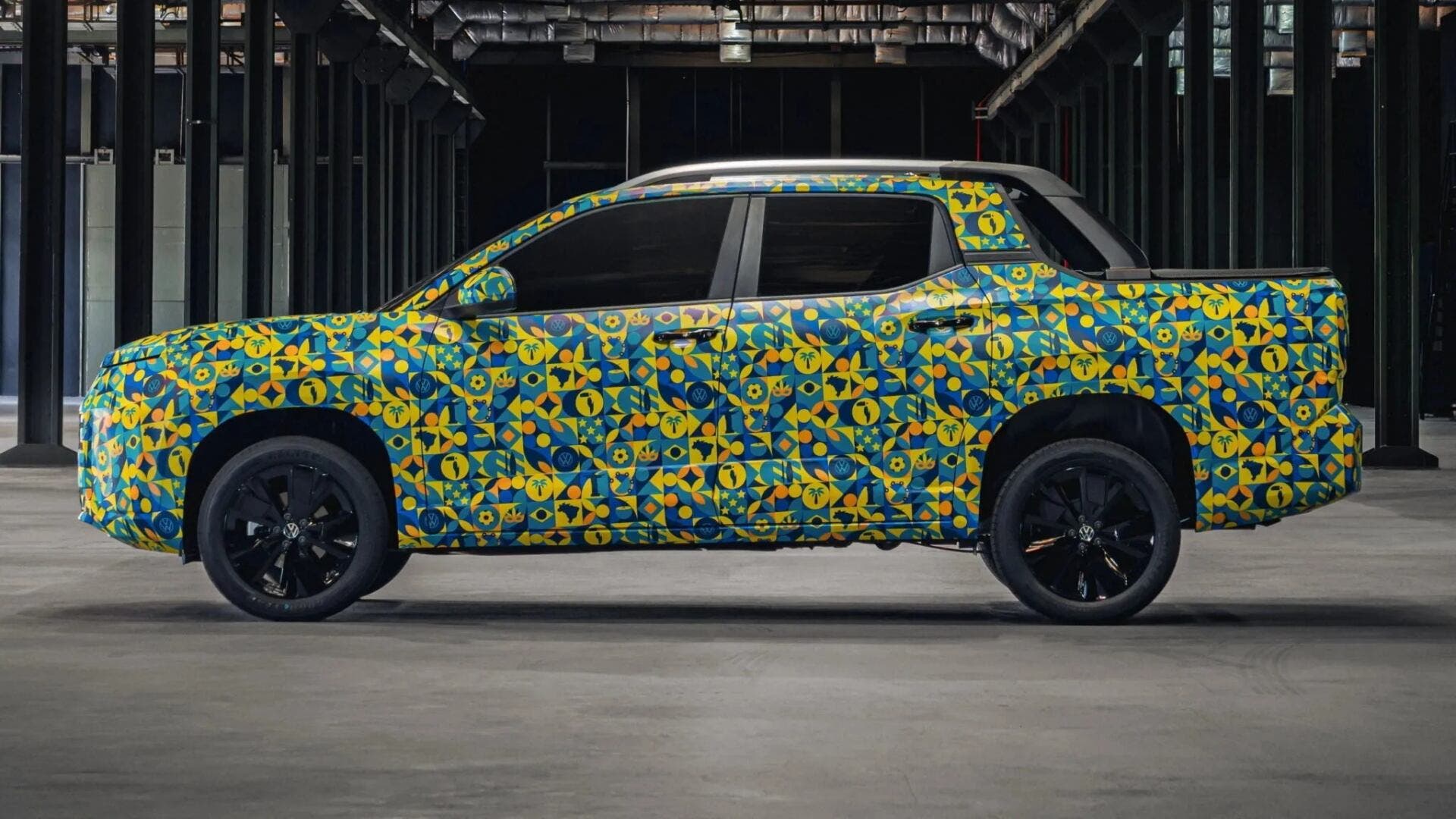
Volkswagen showed a still-camouflaged prototype during an event linked to the Brazilian national team in Rio de Janeiro ahead of the 2026 FIFA World Cup. The temporary livery featured brand logos, references to Brazil, a soccer ball and other patriotic elements.
The pickup has the proportions of a vehicle with a short hood, double cab and compact bed, an approach that makes it look more like an SUV adapted to an open-bed layout than a traditional commercial vehicle.
The front end features sharp LED headlights and a honeycomb-patterned air intake that recalls some styling solutions from the European T-Roc. Along the sides, the Tukan uses squared-off wheel arches, sculpted fenders and generous ground clearance, with roof rails visually connected to the rear sport bar.
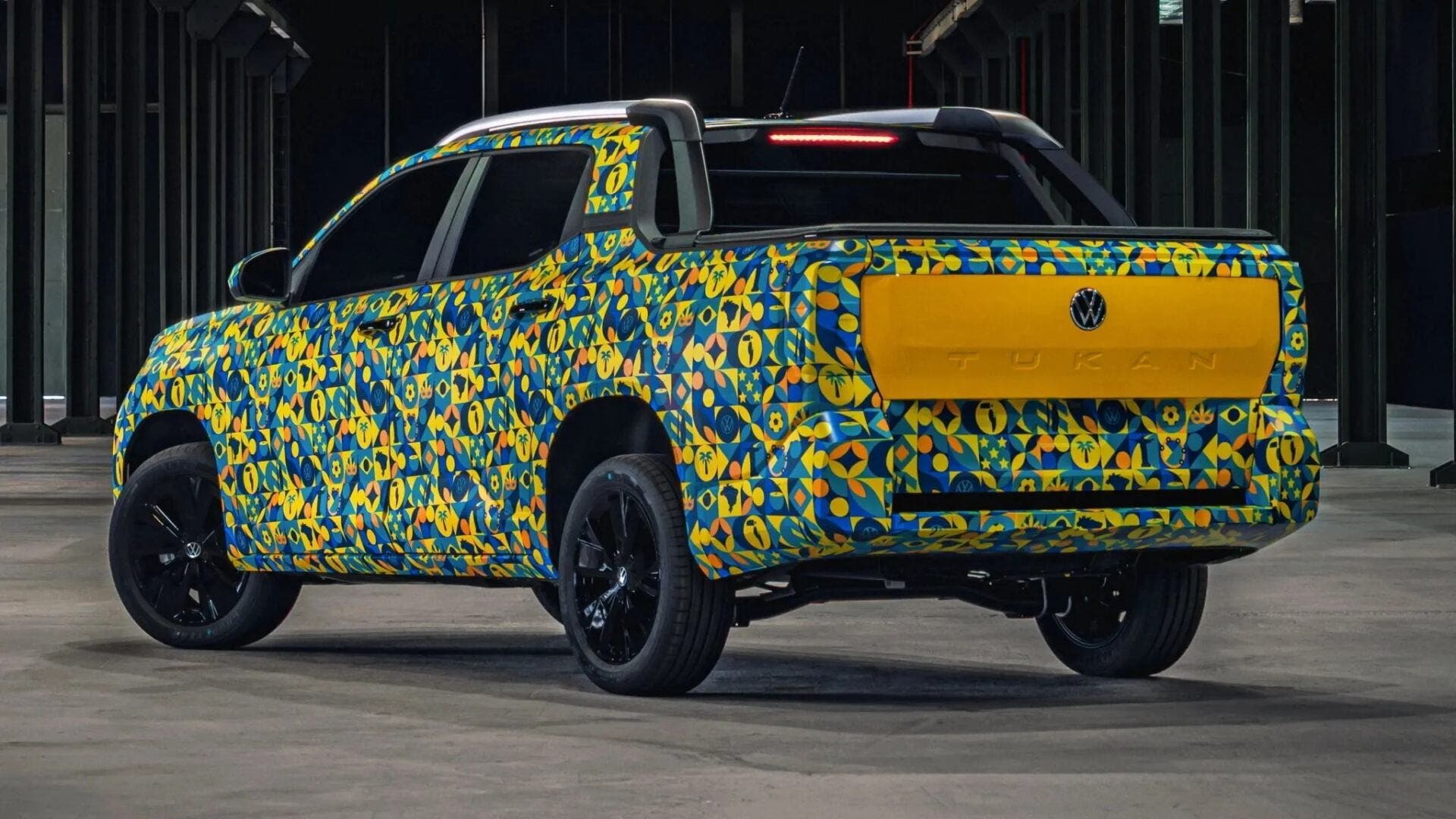
The Tukan name already appears on the prototype’s tailgate, while the Canary Yellow paint previews the launch color shown in the first teaser released in February 2026. The name itself takes inspiration from the South American toucan.
The full reveal should take place around the 2026 FIFA World Cup, using Volkswagen’s sponsorship of the Brazilian national team, while the commercial launch will follow in the following months. Production will take place at the São José dos Pinhais plant in Paraná, with local content of around 76%, as part of a product offensive that includes 21 new models for Latin America by 2028.