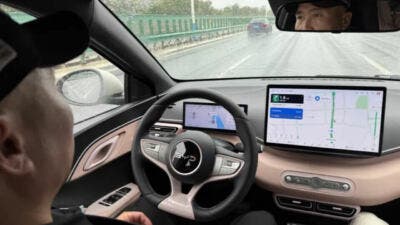
The technological clash between the United States and China has now officially extended to the electric car sector. The US Department of Defense has updated its list of so-called “Chinese military companies”, adding, among others, two of the most recognizable names in China’s new automotive industry: BYD and NIO. The measure falls under Section 1260H of the National Defense Authorization Act and identifies companies that, according to Washington, directly or indirectly contribute to Beijing’s military-industrial strategy.
US adds BYD and NIO to list of “Chinese military companies”
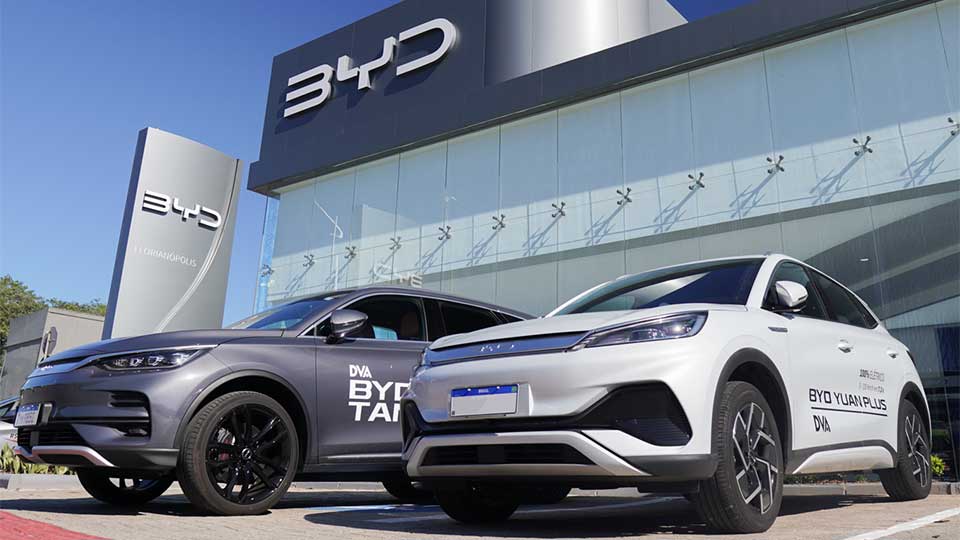
The designation appears to focus on alleged links with SASAC, the Chinese state body that supervises major state-owned enterprises, and with the MIIT, the Ministry of Industry and Information Technology. For NIO, the document refers to a connection with China’s military-civil fusion strategy, while for BYD it cites relationships with the same institutions and a presence in industrial areas considered strategic. These are politically sensitive allegations, aimed at the most advanced and visible face of China’s automotive transformation.
The update, however, does not stop at carmakers. The list also includes key suppliers in the electric vehicle supply chain, starting with the battery sector through CATL, CALB and Eve Energy, groups that today supply many cars sold well beyond China’s borders. It also includes LiDAR manufacturers Hesai and RoboSense, central players in the development of autonomous driving and advanced driver assistance systems, as well as BOE Technology Group, one of the world’s leading display panel producers. The move signals that Washington now views commercial technologies with potential dual-use applications as strategic assets.
Being placed on the 1260H list does not automatically trigger sanctions comparable to those imposed by other US blacklists, but the potential consequences remain significant. The companies involved may face limitations in their dealings with the Department of Defense, restrictions on access to military contracts or federal research funds, and growing caution from Western investors and partners. For many global brands that currently use batteries, sensors and components developed in China, new compliance issues could emerge, especially for those working with US public or military bodies.
The measure has also attracted criticism. John McEntee, a former White House official during the Trump administration and now a lobbyist for Tencent, criticized the expansion of the list to carmakers, arguing that, under the same logic, Ford and General Motors could also be considered American military companies. His objection highlights how thin the line has become between civilian technology and strategic technology in electric mobility, where batteries, software, artificial intelligence and autonomous driving systems are dual-use applications by definition.
The BYD and NIO case shows how competition between Washington and Beijing has moved beyond the traditional boundaries of tariffs, semiconductors and telecommunications. Electric cars, batteries and autonomous driving are now an integral part of a geopolitical clash in which every component can take on strategic value.